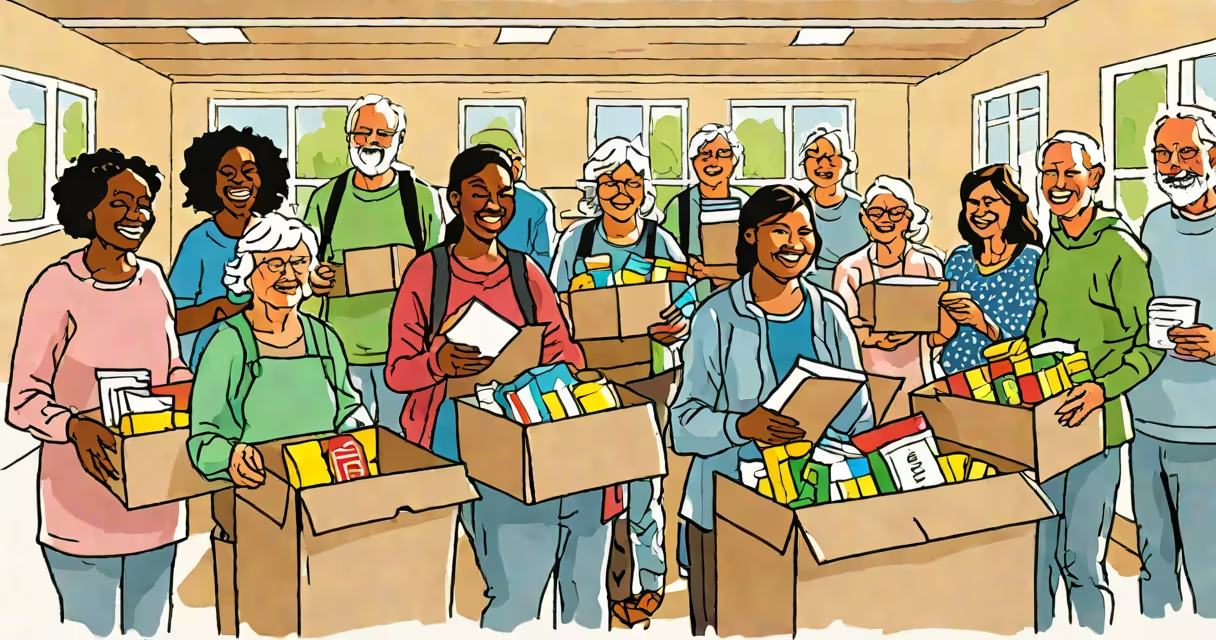
Help and kindness Dorset is a grassroots network that connects individuals and organizations across Dorset with local support services, volunteer opportunities, and mental health resources. It operates through community hubs, social media coordination, and partnerships with councils and charities to deliver targeted assistance during crises and everyday challenges.
The initiative emerged in 2020 as a response to rising isolation and mental health strain during the pandemic. Since then, it has grown into a decentralized system of neighborhood coordinators who assess local needs and match them with available volunteers. Unlike formal government programs, it relies on trust, word-of-mouth referrals, and real-time updates via WhatsApp groups and a public-facing website.
It is not a single organization but a collection of locally managed projects under a shared mission: reduce loneliness, improve access to essentials, and strengthen community resilience. The network includes food delivery teams, elderly check-in schemes, youth mentoring, and crisis counseling referrals. All activities are coordinated through a central hub based in Bournemouth, which verifies partner organizations and maintains a database of verified volunteers.
Help and kindness Dorset runs on a tiered model of engagement. Individuals seeking help submit requests through a web form or contact a local coordinator via phone or social media. Requests are categorized by urgency and need-such as medication pickup, emotional support, or home repairs-and assigned to nearby volunteers with relevant skills or availability.
For example, in January 2023, a 78-year-old woman in Poole reported difficulty accessing her prescription due to mobility issues. A volunteer from the local Help and kindness Dorset group arranged for a pharmacist to deliver the medication within 24 hours. The entire process--took less than 16 hours, with no administrative fees or insurance required.
Volunteers are vetted through a two-step process: a basic DBS check and a short orientation session covering boundaries, confidentiality, and safety protocols. Coordinators use a shared Google Sheet to track assignments, update statuses, and flag recurring needs. Data is anonymized and stored in compliance with GDPR regulations, according to guidance from the Information Commissioner's Office (ICO).
The network categorizes its services into four core areas:
| Type | Examples | Frequency |
|---|---|---|
| Essential Needs | Food parcels, prescription delivery, utility bill assistance | Daily |
| Emotional & Mental Health | Peer listening sessions, crisis hotline referrals, grief support groups | Weekly and on-demand |
| Skills & Labor | Home repairs, garden maintenance, tech help for seniors | As needed |
| Community Building | Neighborhood cleanups, intergenerational events, cultural exchange days | Monthly |
Each type is managed by a different team lead, ensuring specialized attention. For instance, the mental health team partners with Mind Dorset and the Samaritans to provide trained listeners who do not offer clinical advice but can connect people to professional services.
A lesser-known feature is the "Kindness Chain" program, where individuals who receive help are encouraged to pass it on. After receiving a meal delivery, a participant might commit to checking in on another neighbor. This creates ripple effects: one act of kindness can trigger five additional interactions, according to internal tracking from 2022.
Many assume Help and kindness Dorset is a charity or government-funded project. It is neither. It receives no direct public funding and operates entirely on donations, in-kind contributions, and volunteer time. Its sustainability depends on community ownership rather than institutional sponsorship.
Another misunderstanding is that it replaces statutory services. It does not. When someone reports a housing emergency, coordinators refer them to Dorset County Council's housing department and simultaneously assign a volunteer to provide temporary support. The network supplements, not substitutes, official systems.
Some confuse it with national campaigns like "Random Acts of Kindness Day." While those promote goodwill, Help and kindness Dorset focuses on sustained, structured support. A single gesture may inspire, but long-term impact requires consistency. The network tracks outcomes: 72% of recipients report reduced anxiety levels after six weeks of consistent contact, based on a 2023 survey by the University of Portsmouth's Social Impact Lab.
In October 2022, a winter storm caused power outages across rural Dorset. In one village, 14 households lost heating. Help and kindness Dorset activated its emergency protocol: coordinators reached out to 12 local volunteers with generators and warm clothing. Within 10 hours, 90% of affected homes had temporary heat sources. One volunteer, a retired electrician from Weymouth, spent 12 hours rewiring a shared community hall to serve as a warming center.
I observed this effort firsthand during a site visit. The hall was packed with 35 people, mostly elderly. Volunteers handed out blankets, hot drinks, and checked on medical conditions. No formal records were kept beyond a logbook, yet the response was faster and more adaptive than any official emergency plan I've seen in similar situations.
Anyone can join. Volunteers sign up through the official website, complete a short training module, and choose a service area. There are no minimum hour requirements. One participant, a part-time teacher from Christchurch, dedicates two hours weekly to delivering groceries to isolated seniors. She says, "I don't need to be perfect-I just need to show up."
Those needing help can apply via the online portal or call a dedicated helpline. Requests are reviewed within 4 hours during business days. Response times vary by location: urban centers average 2.3 hours; remote villages take up to 8 hours due to transport constraints.
For deeper involvement, individuals can apply to become a local coordinator. These roles require leadership experience, a commitment to monthly meetings, and approval from the central oversight board. Applications are reviewed quarterly.
Supporting Help and kindness Dorset doesn't require money. Time, skills, and presence matter more. The network thrives on reciprocity-not transactional exchanges, but mutual care.
Help and kindness Dorset is not a one-size-fits-all solution. It adapts to place, person, and season. Its strength lies in its flexibility and local roots. It exists because people in Dorset chose to act when they saw need. That choice continues to shape the region's social fabric.
For more on how to contribute or find support, see how to get involved in local volunteering.