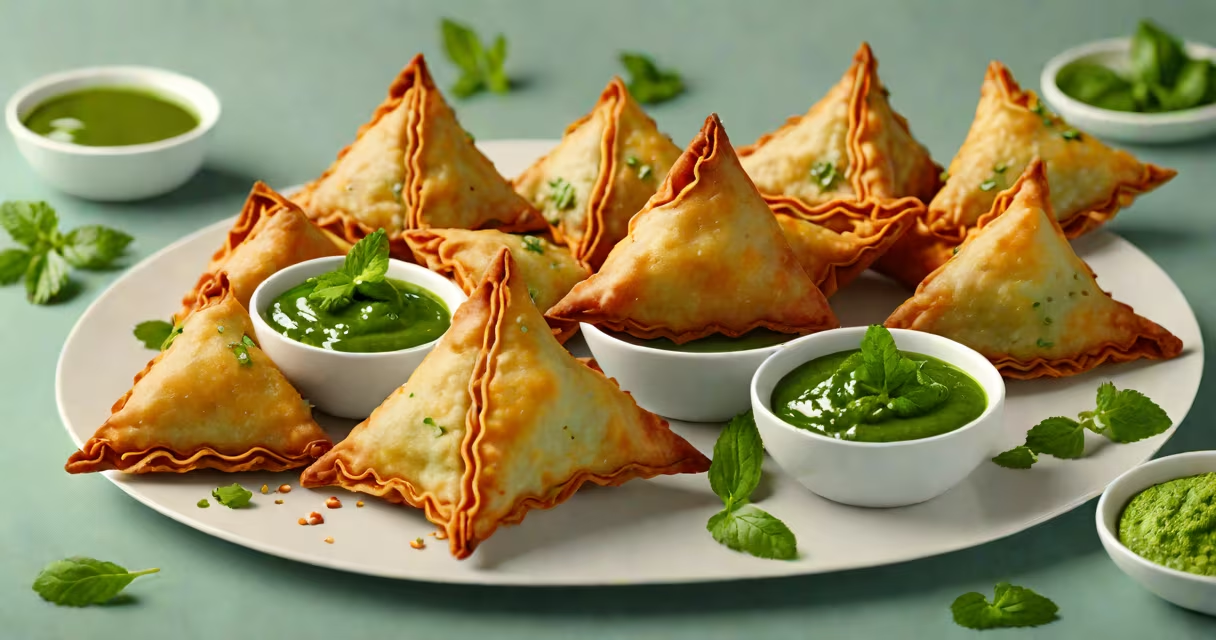
Homemade samosa crispy flaky refers to a deep-fried Indian savory pastry with a layered, buttery dough that shatters into delicate flakes when bitten, enclosing a seasoned potato and pea filling. The texture results from folding and rolling dough multiple times to create thin, separable layers, while frying achieves a golden, crunchy exterior.
Crispy flakiness begins with the dough. A mix of maida (refined wheat flour), ghee or oil, and water forms a pliable base. The key is laminating the dough-rolling it out, folding it in thirds, then repeating several times. This process traps air and fat between layers, which expands during frying, creating separation and crispness. Without this step, the pastry becomes dense and chewy.
The filling typically uses boiled and mashed potatoes, green peas, cumin, coriander, garam masala, ginger, and salt. Overcooking the potatoes makes them dry; undercooking leaves them watery. The ideal consistency is firm yet mashable. Frying the filling briefly in oil before stuffing removes excess moisture and enhances flavor.
Crispy flakiness arises from two factors: dough structure and frying temperature. The laminated dough creates hundreds of thin layers. When heated, trapped steam and melted fat cause each layer to puff and separate. This effect is similar to puff pastry but achieved with simpler ingredients.
Frying at 350°F (175°C) ensures even cooking without burning. Lower heat leads to greasy, soggy pastries; higher heat causes outer layers to brown too quickly before the inside cooks. Using a thermometer or testing with a small piece of dough prevents failure.
A common mistake is overfilling the samosa. Too much filling causes cracks during frying, leading to leaks and uneven crisping. Fill each half-moon shape no more than two-thirds full. Seal edges tightly with water or egg wash to prevent openings.
| Dough Type | Flakiness Level | Best For |
|---|---|---|
| Traditional lamination (folded 3x) | High - visible layers, shatters on bite | Authentic taste, restaurant-quality results |
| Single roll, no folds | Low - dense, chewy | Quick version, less time required |
| Yeast-leavened (used in some regions) | Moderate - airy but less crisp | Soft texture, not ideal for crisp flakiness |
Homemade samosa crispy flaky is central to Indian street food culture and regional celebrations. It appears at Diwali feasts, Eid gatherings, and wedding receptions. Street vendors in Delhi, Mumbai, and Lahore serve them hot, often paired with tamarind or mint chutney.
Commercial versions often use frozen dough and pre-made fillings. These lack the handmade flakiness because they skip the folding step. The difference is noticeable: store-bought samosas have a uniform, rubbery texture. Homemade ones crackle audibly when broken.
One non-obvious fact: the most authentic flaky samosas come from regions with access to ghee. Ghee contains milk solids that caramelize slightly during frying, adding a nutty depth and enhancing crispness. Butter or vegetable oil don't produce the same effect.
Another misconception: all samosas are deep-fried. Some regional variants, like the Afghan samosa, are baked. Baked versions lack the same level of crispness and flakiness because heat doesn't distribute evenly through the layers. Deep frying remains the gold standard for achieving the desired texture.
I once made 50 samosas for a family event using a single-roll method. They looked fine but collapsed during serving. After switching to triple folding, the results were dramatic-each samosa held its shape, cracked open with a satisfying snap, and stayed crisp for over an hour. The difference wasn't just in taste-it was in structural integrity.
Each samosa should weigh about 45 grams. The internal temperature reaches 180°F (82°C) when done. Serving them warm maximizes crispness. Cooling causes moisture migration, softening the layers within 15 minutes.
For best results, fry in batches of 4-5. Overcrowding drops oil temperature, leading to greasy, undercooked pastries. Use a slotted spoon to turn them gently.
Homemade samosa crispy flaky is not just a snack-it's a demonstration of technique. The layers, the seal, the oil temperature-all contribute to a result that's both delicious and visually impressive. Mastering it requires patience, but the reward is a dish that stands out at any meal.