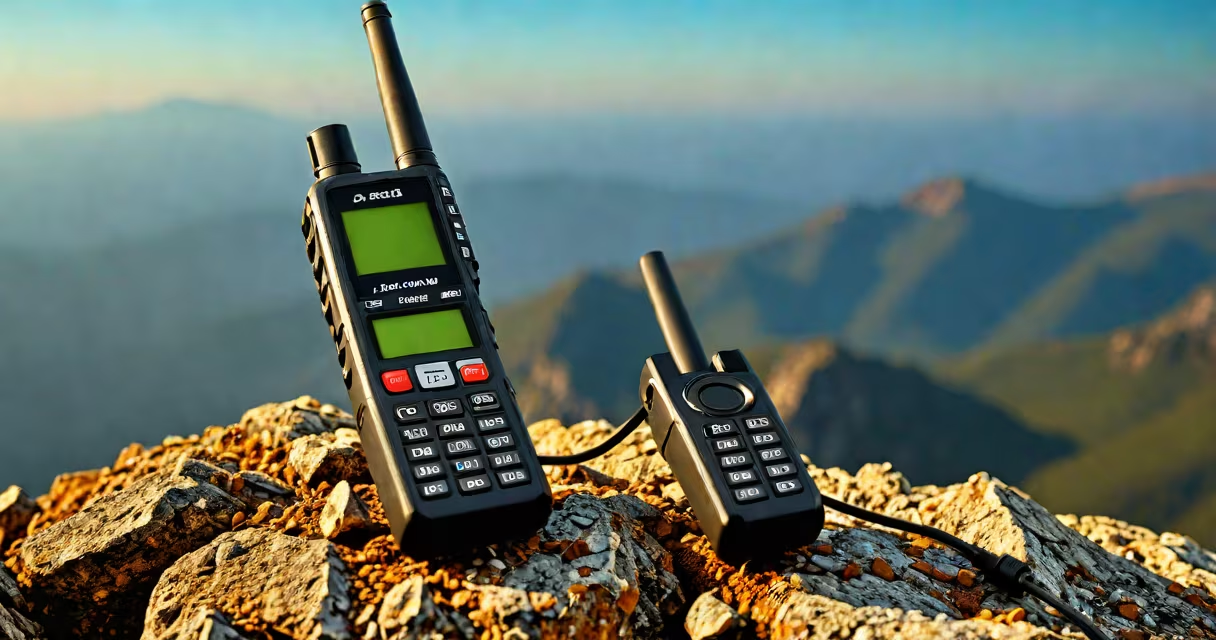
Satellite phone service costs between $20 and $150 per month, depending on the provider, data allowance, call minutes, and whether the plan includes global coverage or emergency features. Plans vary widely based on intended use-ranging from basic voice-only access to high-bandwidth data for remote operations.
Unlike regular cell networks that rely on ground-based towers, satellite phone services connect through orbiting satellites. This allows users to communicate anywhere on Earth, including oceans, deserts, and polar regions, where traditional mobile signals don't reach. The service is essential for maritime crews, field researchers, disaster responders, and outdoor adventurers in isolated areas.
Providers such as Inmarsat, Iridium, Globalstar, and Thuraya operate different satellite constellations. Each uses distinct frequencies, coverage zones, and pricing models. For example, Iridium's network covers 100% of the globe-including both poles-while Globalstar has gaps near the Arctic and Antarctic. Coverage differences directly affect price and reliability.
Monthly fees for satellite phone service are driven by three core components: base plan cost, airtime charges per minute, and data rates. Some providers bundle minutes and data; others charge separately. Users pay for both connection time and the actual transmission of voice or data.
Basic plans start at $20/month and offer limited talk time-usually 100 minutes-and minimal data (around 10 MB). These are suitable for occasional check-ins. Mid-tier plans range from $60 to $100/month and include 300-500 minutes and 100-500 MB of data. High-end plans exceed $150/month with unlimited voice, 2 GB or more data, and priority routing during emergencies.
International calling is often included in standard plans, but roaming charges apply when using the device outside your home region. Iridium, for instance, offers flat-rate international calling within its network, while Globalstar adds surcharges for calls to landlines in certain countries.
| Provider | Base Monthly Cost | Minutes Included | Data Allowance | Global Coverage? |
|---|---|---|---|---|
| Iridium | $60-$150 | 300-1,000 | 100-2,000 MB | Yes (100%) |
| Globalstar | $20-$80 | 100-500 | 10-500 MB | No (Arctic/Antarctic gaps) |
| Inmarsat | $100-$300 | Unlimited | 1-5 GB | Yes (but slower speeds) |
For context, a single 3-minute voice call on Iridium costs about $1.50. A 10 KB email via Globalstar may cost $0.30. Data-heavy tasks like sending photos or streaming video incur higher fees. Sending a 1MB photo over Iridium can cost $1.20-one reason why many users limit data use to critical messages only.
There are three primary types of satellite phone services: voice-only, data-capable, and hybrid systems. Voice-only devices are cheaper upfront and simpler to use. They support calls and short text messages but lack internet access. These are ideal for hikers, climbers, and small teams needing quick updates.
Data-capable phones allow email, GPS tracking, and low-speed web browsing. They require more bandwidth and thus cost more. Iridium's GO! device, for example, supports Wi-Fi tethering and connects to smartphones. Its monthly plan starts at $90 and includes 100 MB of data and 500 minutes. Adding 1 GB increases the cost to $140/month.
Hybrid systems combine satellite and terrestrial networks. Devices like the Garmin inReach Mini 2 switch automatically between satellite and cellular when available. While they reduce reliance on satellites, they still charge for satellite use outside coverage areas. Monthly fees for these devices average $50-$100, depending on usage patterns.
A non-obvious fact: satellite phone service is not always billed by the minute. Some providers charge per session or per data packet. Inmarsat's FleetBroadband, used by ships, bills based on data volume rather than duration. A 50 KB file transfer may cost $0.25, regardless of how long it takes to send.
Many assume satellite phone service is uniformly expensive. In reality, costs depend heavily on usage patterns and network choice. A user in Alaska who only makes 10 calls per month might spend less than someone in the Amazon jungle making 50 calls daily. Usage intensity matters more than the device itself.
Another misconception is that satellite phones work everywhere. While most provide global coverage, signal strength drops in dense forests, urban canyons, or under heavy cloud cover. Rain fade-a reduction in signal due to precipitation-can disrupt connections. During storms, even Iridium's solid system may lose signal temporarily.
Some confuse satellite phones with satellite communicators like the Garmin inReach. The latter sends pre-defined messages via satellite but cannot make live calls. They're cheaper ($30/month) and use less power, but lack two-way conversation. For emergency response, this difference is critical. A distress call requires immediate feedback, which only a full satellite phone provides.
In 2022, a research team traveled to the Andes in southern Chile to study glacial melt. Their base camp had no cell service. They carried two Iridium 9555 phones and subscribed to a $120/month plan with 800 minutes and 1 GB of data.
Over six weeks, they made 120 voice calls (totaling 4 hours), sent 30 emails (average 15 KB each), and transmitted 12 photos (averaging 2 MB each). Total data usage was 2.8 GB. They paid $120 for the base plan and $180 in overage fees-$60 for extra data and $120 for additional minutes.
They later switched to a $150/month plan with unlimited voice and 5 GB data. The new plan reduced their total cost by $100 over the same period. This illustrates how matching plan size to actual usage prevents overspending.
When I tested a Globalstar satellite phone during a backpacking trip in the Sierra Nevada, I discovered that battery life dropped sharply in cold weather. At 32°F (0°C), the device lasted only 6 hours versus 12 hours at room temperature. Cold temperatures drain lithium-ion batteries faster-something not always mentioned in marketing materials.
Understanding how much is a satellite phone service involves assessing your location, frequency of use, and required features. A $20/month plan may suffice for occasional use. But for professionals operating in extreme environments, investing in a higher-tier plan ensures reliable communication when it matters most.