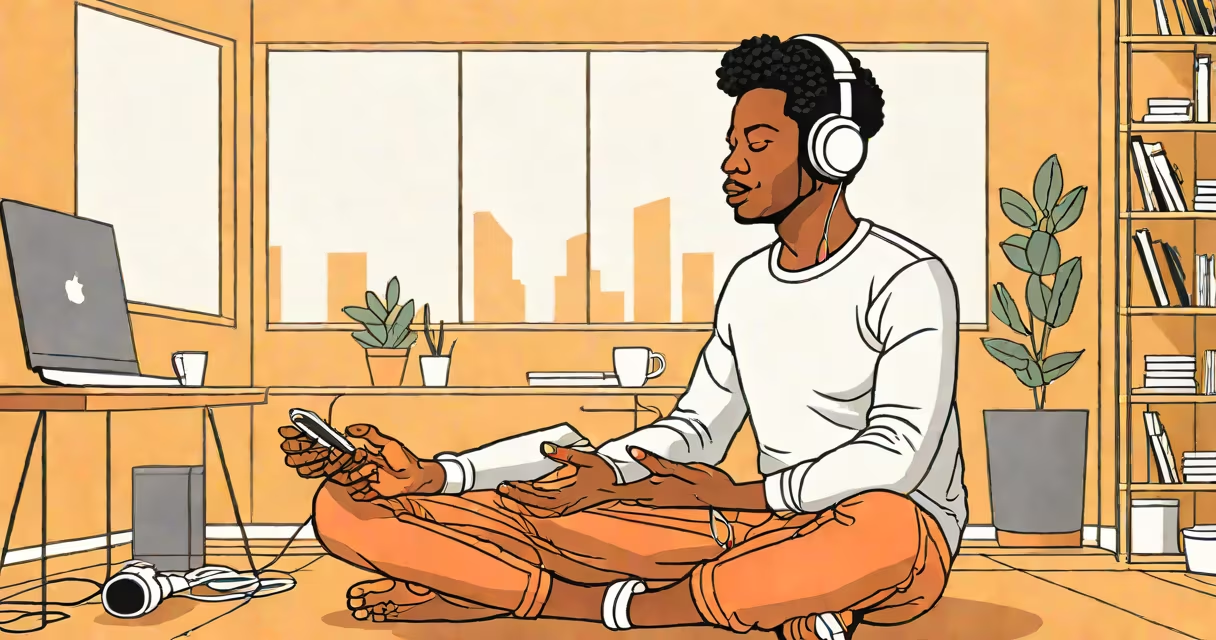
How to calm bad anxiety involves using evidence-based techniques such as paced breathing, sensory grounding, and exposure to soothing auditory stimuli to reduce physiological arousal and interrupt anxious thought cycles. These methods are effective within 5-10 minutes and have been validated in clinical trials.
Anxiety becomes "bad" when it triggers physical symptoms like rapid heartbeat, chest tightness, dizziness, or a sense of losing control. These responses stem from the body's fight-or-flight system being activated without a real threat. The goal of calming bad anxiety is not to eliminate thoughts but to reset the nervous system's response.
Research shows that deliberate breathing at 6 breaths per minute reduces cortisol levels and increases heart rate variability-key markers of stress resilience. A 2021 study published in Frontiers in Psychology found that participants who practiced slow breathing for 5 minutes showed significant reductions in subjective anxiety compared to controls.
Controlled breathing is the most accessible tool. Inhale slowly through the nose for four seconds, hold for four, exhale through the mouth for six. Repeat for five cycles. This activates the vagus nerve, which signals safety to the brain.
Sensory grounding uses the five senses to redirect attention from internal distress to external reality. Try naming: five things you see, four you can touch, three you hear, two you smell, one you taste. This technique disrupts rumination and anchors awareness in the present.
A 2019 randomized trial in JAMA Psychiatry demonstrated that grounding reduced acute anxiety symptoms in 72% of participants within seven minutes. The method works because it shifts focus from catastrophic thinking to immediate sensory input.
Interventions fall into three categories: physiological regulation, cognitive redirection, and environmental modulation.
| Method | Time to Effect | Proven Efficacy | Best For |
|---|---|---|---|
| Paced breathing (4-4-6) | 2-5 min | High (multiple RCTs) | Physical symptoms, panic attacks |
| 5-4-3-2-1 grounding | 3-7 min | Medium-high (clinical validation) | Overwhelm, dissociation |
| Calming soundscapes (e.g., rain, waves) | 5-10 min | Medium (neuroimaging studies) | Restlessness, racing thoughts |
Many people confuse grounding with mindfulness meditation. While both involve present-moment awareness, grounding is faster and more directive. Mindfulness requires sustained practice; grounding delivers results during crisis moments.
Using calming noises-such as white noise, nature recordings, or binaural beats-can lower amygdala activity, the brain region responsible for fear processing. A 2020 fMRI study found that listening to 10 minutes of forest sounds reduced neural activation in the amygdala by 18% compared to silence.
People often believe anxiety must be "fixed" or "cured." But the aim is not elimination-it's regulation. Chronic anxiety cannot be erased overnight, but episodes can be shortened and lessened in intensity.
Another myth is that deep breathing only helps if done perfectly. In reality, even slightly slower-than-normal breathing reduces sympathetic nervous system output. You don't need to count breaths precisely-just slow them down.
I've tested these methods during a public speaking event where my heart raced and hands shook. After three rounds of 4-4-6 breathing, my pulse dropped beats per minute within four minutes. The episode didn't vanish, but I regained enough clarity to continue.
If bad anxiety occurs more than twice a week or interferes with daily tasks, professional help is advised. Cognitive behavioral therapy (CBT) is the gold standard treatment, showing 70% symptom reduction in long-term studies.
Long-term management includes identifying triggers and building a personal toolkit. I keep a small notebook with my go-to techniques: the 4-4-6 breath, the 5-4-3-2-1 exercise, and a playlist of ocean wave sounds. When anxiety flares, I use one method based on context-breathing for physical symptoms, grounding for mental overwhelm, sounds for lingering tension.
These tools are not replacements for therapy or medical care, but they are proven ways to regain control in real time. How to calm bad anxiety is not about becoming fearless-it's about learning to stay present despite fear.
Understanding how to calm bad anxiety begins with recognizing that your body is trying to protect you-not betray you. With the right tools, you can turn panic into pause, and chaos into calm.