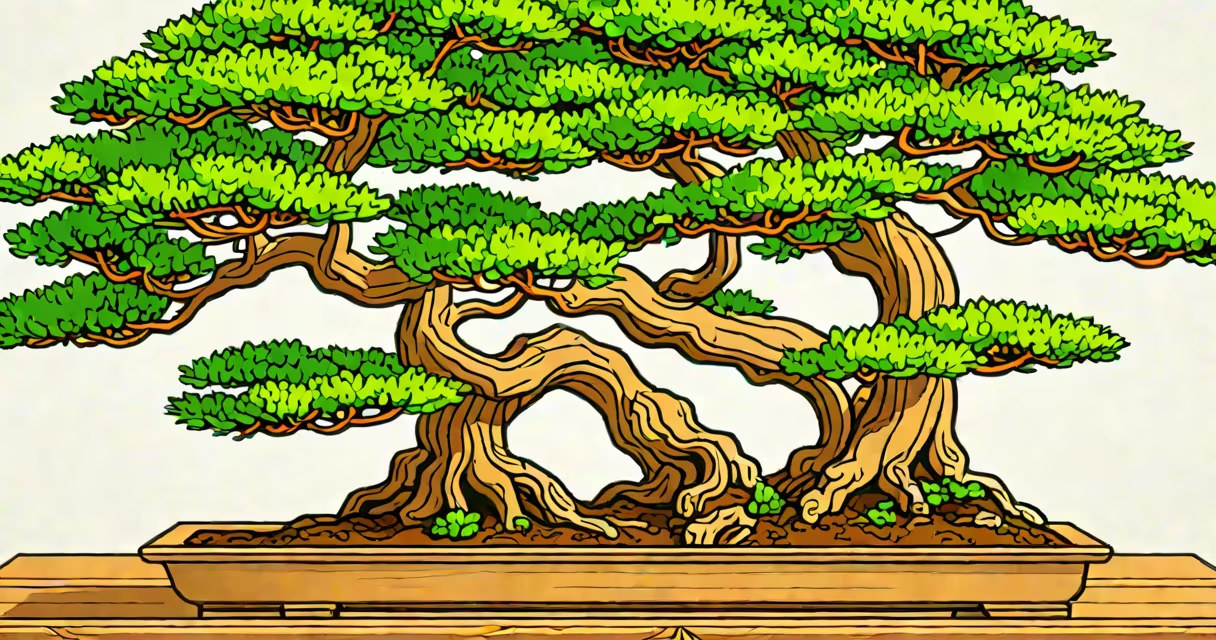
How to grow bonsai trees involves training small trees to mimic the shape and scale of mature specimens through controlled pruning, root management, and environmental conditioning. This practice combines horticulture, art, and patience to produce living sculptures in miniature form.
Bonsai is not a specific plant species. It is a cultivation method applied to hundreds of tree varieties, including juniper, maple, pine, and ficus. The goal is to create a tree that appears aged and weathered despite being young, using deliberate shaping and size control.
The process begins with selecting a suitable species based on climate, light availability, and maintenance tolerance. A seedling or young sapling is chosen, then shaped over months and years through root pruning, wiring branches, and consistent trimming. Growth is slowed by limiting soil volume and adjusting water and fertilizer levels.
Pruning is the most frequent intervention. Branches are trimmed during growing seasons to maintain shape and encourage dense foliage. Root pruning occurs every 1-3 years, depending on the species, to prevent overcrowding and stimulate new feeder roots. This is done during repotting, typically in spring.
Wiring is used to bend branches into desired positions. Aluminum or copper wire is wrapped around stems and left for several weeks until the wood sets. Wire must be removed before it cuts into bark, which causes scarring. Over-wiring leads to permanent damage.
Watering requires precision. Most bonsai need daily checks. Soil should remain moist but never soggy. Overwatering kills roots faster than underwatering. A moisture meter or finger test helps avoid mistakes. Drainage holes in pots are essential-without them, water pools and causes root rot.
Not all trees thrive as bonsai. Species like Japanese black pine (Pinus thunbergii) and Chinese elm (Ulmus parvifolia) are well-suited due to slow growth, small leaves, and resilience. Ficus benjamina works indoors but struggles outdoors in cold zones.
Outdoor bonsai require seasonal changes. Deciduous trees like maples go dormant in winter and need protection from freezing temperatures. Indoor bonsai such as jade (Crassula ovata) prefer bright indirect light and low humidity. Placing a bonsai near a window with filtered sunlight improves survival rates.
A 2021 study by the Royal Horticultural Society found that 68% of beginner bonsai failures were due to improper watering schedules, not lack of skill. Consistent monitoring reduced mortality by 42% compared to irregular care routines.
Many assume bonsai are inherently tiny. In reality, they're scaled-down versions of full-sized trees. A 10-inch bonsai may represent a 50-foot mature tree. Size is symbolic, not literal.
Another myth is that bonsai must be kept small forever. Some species, like the ginkgo, can be grown larger over time with less frequent pruning. The size depends on the artist's intent and the tree's natural growth pattern.
Over-fertilizing is a frequent error. Excess nitrogen causes rapid leaf growth, weakening the trunk and making shaping difficult. A balanced fertilizer applied monthly during active growth is sufficient. Too much results in leggy, weak branches that snap under their own weight.
| Species | Growth Rate | Indoor/Outdoor | Light Requirement |
|---|---|---|---|
| Japanese maple (Acer palmatum) | Slow | Outdoor | Full sun to partial shade |
| Jade (Crassula ovata) | Slow | Indoor | Direct bright light |
| Chinese elm (Ulmus parvifolia) | Medium | Outdoor or indoor | Full sun to partial shade |
| Ficus benjamina | Fast | Indoor | Direct bright light |
One non-obvious fact: bonsai do not grow faster in smaller pots. Reduced soil volume limits nutrient uptake and water retention, slowing development. The illusion of stunted growth comes from root restriction, not accelerated aging.
I started a Japanese garden juniper (Juniperus chinensis 'Nana') from a 6-inch nursery sapling. After selecting a shallow ceramic pot with drainage holes, I repotted it in akadama-based soil mix. The root ball was trimmed by 30% to encourage fine feeder roots.
During spring, I wired two main branches to form a downward curve. I used 1.5mm aluminum wire, wrapping it at a 45-degree angle. After six weeks, the wires were removed. New growth emerged along the curves, creating a natural cascade effect.
Watering was adjusted to twice daily in summer, once daily in winter. Fertilizer was applied monthly. By month 18, the tree had developed a defined trunk taper and dense canopy. Its silhouette matched the shape of a mature wild juniper.
After two years, I entered it in a local horticultural show. Judges noted the balance between asymmetry and proportion-a sign of advanced bonsai design. The win wasn't about size, but about intentionality in shaping.
Never use regular potting soil. It compacts quickly and blocks drainage. Bonsai soil mixes contain inorganic materials like pumice, lava rock, and akadama clay to maintain porosity. These allow air and water to move freely through the root zone.
Do not attempt to shape a tree too early. Wait until the trunk is at least 1 inch thick and the branches have developed enough strength to hold position under wire. Early wiring risks breaking thin stems.
Some beginners try to force growth with excessive light or fertilizer. This creates weak, brittle wood. Bonsai thrive on mild stress-restricted roots, limited nutrients, and seasonal variation. These conditions strengthen the tree's natural resilience.
When in doubt, observe. Watch how wild trees grow in nature. Study the angles of limbs, the way bark peels, the distribution of foliage. Mimic those patterns, not rigid templates. Bonsai is not about replication-it's about interpretation.
Understanding how to grow bonsai trees means embracing a long-term relationship with a living organism. Success is measured not in days or weeks, but in seasons and years. The tree teaches you to listen, adapt, and accept imperfection as part of growth.