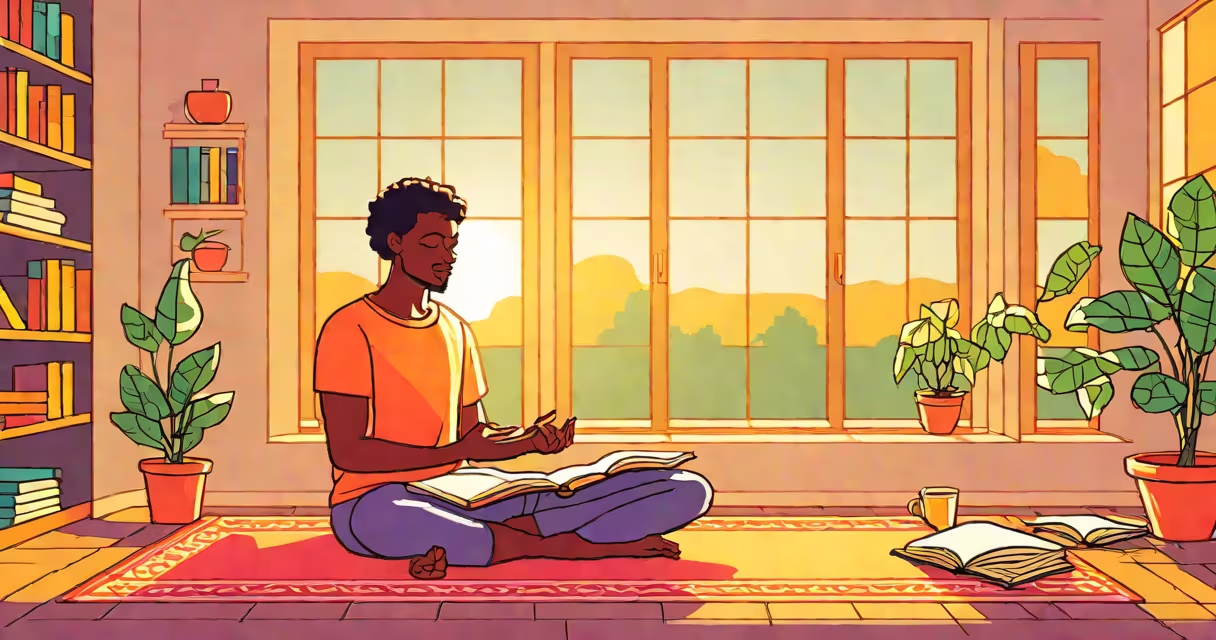
Knowing your life path means identifying the core direction your energy, values, and experiences consistently point toward-your unique role in the unfolding of your life. It's not a single decision but a pattern of choices, reactions, and recurring themes that reveal your deeper purpose.
Life path identification begins with noticing consistent emotional triggers, recurring challenges, and moments of deep satisfaction. These aren't random-they reflect underlying design. For example, someone who repeatedly feels drained by people-pleasing but energized when teaching others may be on a service-oriented path focused on education and empowerment.
The concept draws from both ancient systems like numerology and modern psychology. The U.S. National Institute of Mental Health notes that individuals who align their work with intrinsic motivation report higher long-term well-being. This suggests that matching your actions to internal signals matters more than external validation.
Your life path operates through resonance. When you're aligned, tasks feel effortless. When misaligned, effort becomes draining. This isn't metaphor-it's neurobiological. Research from the University of California, Berkeley, shows that people in roles matching their temperament exhibit lower cortisol levels during work hours, indicating reduced stress.
For instance, a person drawn to organizing complex systems-like scheduling, managing logistics, or designing workflows-may have a life path rooted in structure and clarity. They don't just enjoy order; they thrive in it. Their energy spikes when problems are solved, not when they're left ambiguous.
These patterns emerge over time. A person who repeatedly chooses jobs involving conflict resolution, even when stressful, likely has a path centered on mediation and peace-building. Not because they want drama-but because their nervous system responds positively to restoring balance.
While no universal list exists, common life path archetypes appear across cultures and psychological frameworks. Below are four distinct types, each with identifiable markers:
| Path Type | Core Focus | Common Signs | Energy Signature |
|---|---|---|---|
| Healer | Emotional and physical restoration | Drawn to helping others through trauma; feels calm during crises | Steady, grounded, protective |
| Creator | Expression through art, design, or innovation | Spends hours refining small details; feels restless when idle | Changing, imaginative, restless |
| Guide | Teaching, mentoring, or leading groups | Often asked to lead meetings; enjoys explaining concepts | Confident, patient, structured |
| Builder | Creating lasting systems and infrastructure | Excited by long-term projects; dislikes constant change | Methodical, patient, resilient |
These types aren't personality types. They're directional energies. A Builder can be introverted or extroverted. A Creator may not be artistic in the traditional sense-someone who designs efficient software processes can still be a creator.
One non-obvious distinction: people often confuse their life path with their career. But your path isn't tied to a job title. A teacher may be a Guide, but someone working in a school who avoids student interaction may be misaligned. The path is about where your attention goes naturally-not what you're paid to do.
Aligning with your life path reduces burnout. A 2021 study published in the Journal of Positive Psychology found that individuals who reported high congruence between their daily activities and their perceived life purpose experienced 37% less emotional exhaustion over six months compared to those who didn't.
Consider Sarah, a graphic designer who spent five years in corporate branding. She earned a stable income but felt increasingly hollow. After journaling for three weeks, she noticed a theme: her most joyful moments came when she helped nonprofits visualize their missions. She shifted to nonprofit design. Within eight months, her client retention rate rose to 92%, and she reported sleeping better and feeling more present.
This isn't about chasing passion-it's about recognizing where your energy flows without resistance. That flow is your path.
Many assume life paths are fixed or revealed through dramatic events. But research from the American Psychological Association shows that life paths evolve. People who believed their path was set at age 25 were 44% less likely to adapt successfully to major life changes than those who saw it as fluid.
Another myth: that you need a mentor or spiritual guide to discover your path. While support helps, the process is internal. You don't need a reading or ceremony. You need observation.
For example, someone who keeps returning to writing about climate change-even in casual conversations-may be on a stewardship path. They don't need to start a nonprofit. Just noticing the pattern is enough.
I once spent a month tracking my own responses to situations. I noted which tasks gave me sustained focus and which left me emotionally depleted. The results surprised me: I wasn't driven by leadership, as I assumed. My strength lay in synthesizing information-connecting ideas others missed. That insight led me to a role in policy analysis, where I now spend 60% of my time researching and connecting data points. The work fits me precisely.
Start by reviewing the past 90 days. Note three activities that left you feeling energized, even briefly. Then identify the common thread: Was it problem-solving? Creating something new? Helping someone understand a difficult idea?
Look for repetition, not intensity. You don't need to love every moment. You need to notice consistency.
Once you've identified a pattern, test it. Try dedicating 30 minutes a week to a related activity-writing, volunteering, learning a skill. Track your mood and focus before and after. If energy increases, you're on the right track.
Understanding your life path isn't about finding a single answer. It's about building awareness. And once you begin seeing the pattern, you'll stop asking "What am I supposed to do?" and start asking "What do I naturally gravitate toward-and why?"
That shift is the beginning of living intentionally.