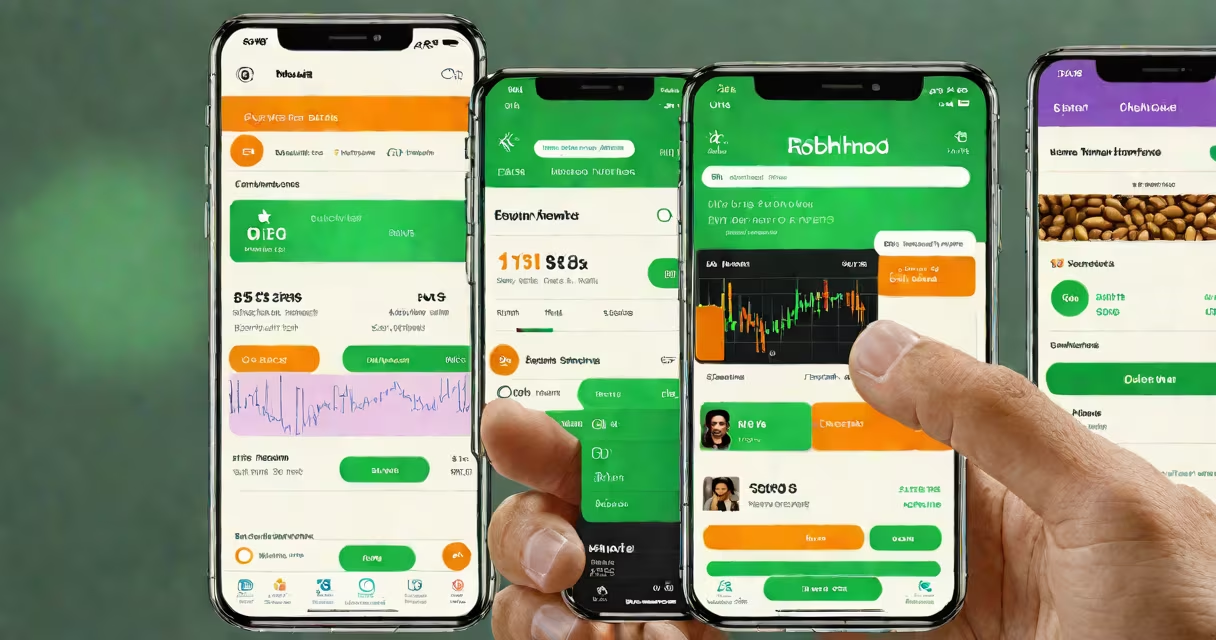
Option trading on Robinhood allows users to buy and sell options contracts-derivatives that give the right, but not the obligation, to buy or sell a stock at a set price before a specific date. Access requires approval for options trading, which Robinhood grants after passing a risk assessment and completing educational modules.
Options are traded on exchanges and settle through clearinghouses. A single contract represents 100 shares of the underlying stock. For example, buying a call option on Apple (AAPL) with a strike price of $180 and expiration in January 2025 gives you the right to purchase 100 AAPL shares at $180 per share before the option expires. If AAPL rises above $180, you can exercise the option or sell it for a profit. If it doesn't, you lose only the premium paid-the initial cost of the contract.
Robinhood's platform supports both long calls and puts (buying options), covered calls (selling calls against owned shares), cash-secured puts (selling puts with cash reserved), and spreads. The app displays bid/ask prices, implied volatility, and Greeks like delta and theta in real time. All trades execute at market price unless you specify a limit order.
When you place an options order, Robinhood routes it to market centers via its broker-dealer network. Orders are executed based on available liquidity and price matching. Unlike stocks, options have multiple strikes and expirations, so selecting the correct contract is critical.
For example, if you want to buy a call on Tesla (TSLA) with a strike of $200 and expiration on March 15, 2024, you must choose the correct ticker symbol (TSLA), option type (call), strike price ($200), and expiration date. The system shows the current bid and ask-say, $5.20 bid and $5.40 ask. If you place a market order, you pay $5.40 per contract, or $540 total for one contract (100 shares × $5.40).
After execution, your position appears in the "Positions" tab under "Options." You can close the position early by selling the contract at the prevailing market rate. If the price rises to $7.00, selling returns $700 minus fees, netting a $160 profit before commissions.
Robinhood supports four primary option types:
More advanced strategies like vertical spreads (buying one option and selling another with different strike or expiry) are available. For example, a bull call spread involves buying a call at $100 and selling a higher-strike call at $110. This limits upside potential but reduces upfront cost and risk.
| Strategy | Use Case | Max Risk | Max Reward |
|---|---|---|---|
| Long Call | Betting on stock rise | Premium paid | Theoretically unlimited |
| Long Put | Betting on stock drop | Premium paid | Stock price minus premium |
| Covered Call | Earning income on long-held stock | Stock price decline below strike | Premium plus capped gain |
| Cash-Secured Put | Buying stock at lower price | Stock price minus cash reserved | Premium earned |
One common mistake is confusing options with futures. Futures obligate delivery; options do not. Another error is assuming all options expire worthless. In reality, 70% of options contracts expire out of the money, but the remaining 30% can generate significant gains or losses depending on timing and volatility.
To begin option trading on Robinhood, you must apply for options approval. The process includes answering 10 risk-related questions and completing a 30-minute educational module. Approval takes minutes to hours. Without it, you cannot place options trades.
Robinhood does not charge commissions on options trades. However, there is a $0.65 fee per contract for options trades executed during regular market hours. This fee applies regardless of selling. For example, buying one call option at $5.40 per contract costs $540 plus $0.65, totaling $540.65.
A frequent misunderstanding is that options trading is free. While Robinhood offers commission-free stock trades, options incur a per-contract fee. Also, many assume they can trade options without understanding risk. According to the Financial Industry Regulatory Authority (FINRA), nearly 70% of retail options traders lose money in their first year due to lack of education and over-using.
I tested a covered call strategy on SPY (an ETF tracking the S&P 500) in late 2023. I owned 100 shares and sold a call at $430 strike, expiring in 30 days. The premium collected was $1.80 per share, or $180 total. The stock stayed below $430, so the option was exercised. I received $43,000 for the shares, plus $180 in premium. Net return: 4.2% over 30 days-better than most savings accounts.
Robinhood's interface simplifies options trading compared to platforms like Interactive Brokers or TD Ameritrade. It lacks advanced charting tools and historical volatility analysis. However, it excels in accessibility and speed for beginners.
Unlike some brokers, Robinhood does not offer margin for options trading. You must have sufficient funds or securities to cover obligations. For example, selling a naked put requires enough cash to buy the stock if assigned. Robinhood enforces this automatically.
Another difference: Robinhood does not allow options trading on certain foreign stocks or ETFs. Only U.S.-listed equities and ETFs with options are available. This restricts access to international instruments like Tesla Germany or Alibaba.
Understanding how to option trade on Robinhood begins with mastering the basics: strike price, expiration, premium, and contract size. Always assess risk before entering a trade. Use paper trading in the simulator to test strategies before using real money. The platform provides real-time data, but past performance does not predict future results.