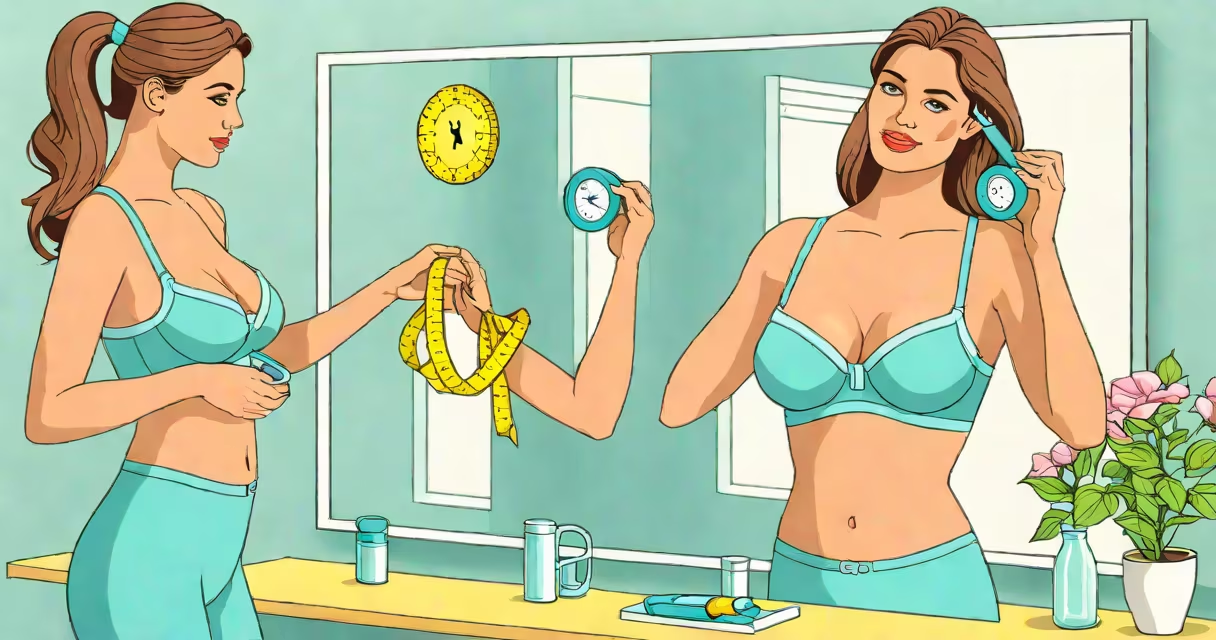
How to measure bra cup involves taking precise body measurements to determine your cup size, which is derived from the difference between your bust and band measurements. This process ensures a proper fit and prevents discomfort or poor support.
Cup size is not a standalone number-it's calculated from the gap between your bust and underbust measurements. A 1-inch difference equals an A cup, 2 inches equals a B, 3 inches a C, and so on. The system uses letters to represent increments, not absolute sizes.
Measuring correctly requires a flexible tape measure, a mirror, and consistent posture. Measurements taken while lying down or slouching lead to inaccurate results. Always stand upright with shoulders relaxed and arms at your sides.
The bra cup size is determined by subtracting your underbust measurement (just below the bust) from your bust measurement (around the fullest part of the chest). The resulting number corresponds to a letter grade based on standard sizing charts.
For example, if your underbust measures 32 inches and your bust measures 36 inches, the difference is 4 inches. That translates to a D cup. This method applies across brands, though fit can vary slightly due to construction differences.
According to the National Association of Professional Women (NAPW), nearly 80% of women wear the wrong bra size. Misfit often stems from incorrect cup measurement rather than band size errors. Accurate cup measurement reduces strain on shoulders and prevents breast tissue compression.
Use a soft, non-stretchable measuring tape. Place it horizontally around your torso, just beneath the breasts, ensuring it lies flat against the skin without digging in. Take the measurement at the level of the nipple line.
Next, measure around the fullest part of your bust, keeping the tape parallel to the floor. Do not pull tight-just snug enough to avoid gaps. Repeat both measurements twice to confirm consistency.
Subtract the underbust number from the bust number. Use the following chart:
| Difference (inches) | Cup Size |
|---|---|
| 1 | A |
| 2 | B |
| 3 | C |
| 4 | D |
| 5 | DD |
| 6 | D |
| 7 | E |
| 8 | F |
Some brands use different labeling systems. For instance, UK sizing may label a 4-inch difference as a DD, while US standards call it a D. Always check the brand's specific size chart.
One frequent error is measuring while wearing a thick shirt or bra. Fabric adds bulk and distorts the result. Remove all clothing during measurement and ensure the tape doesn't ride up or sag.
Another mistake is measuring too high or too low on the bust. The tape must stay parallel to the ground and follow the natural curve of the chest. Use a mirror to verify alignment.
I once measured my own bust using a tape from a craft kit and got a 3-inch difference-resulting in a C cup. But when I repeated it with a proper tailor's tape, the measurement dropped to 2.75 inches. That small variation changed my cup size. The difference matters when choosing a well-fitting bra.
An ill-fitting bra causes shoulder pain, back strain, and long-term posture issues. A properly sized cup supports the breast tissue evenly, reducing sagging over time. According to the American Academy of Orthopaedic Surgeons, poorly fitting bras contribute to chronic musculoskeletal discomfort in 40% of women who report daily pain.
Cup size affects comfort during movement. A cup that's too small compresses tissue, leading to bruising or restricted circulation. A cup that's too large lacks containment, causing bounce and discomfort during activity.
For example, a woman with a 34-inch underbust and 38-inch bust has a 4-inch difference-meaning a D cup. Wearing a 34C instead would leave her with excess space and inadequate support, especially during exercise.
Cups come in various shapes and depths. Full coverage cups extend under the breast to provide maximum support. T-shirt bras have shallow, smooth cups ideal for thin fabrics. Sports bras often feature molded or encapsulated cups designed to minimize motion.
Deep cups offer more volume and are better suited for larger busts. Shallow cups work well for smaller frames but can cause spillage in larger sizes. The depth of the cup impacts how much material covers the breast tissue.
When shopping, always try on multiple styles. A 38D cup from one brand may feel loose compared to another. Try on bras with similar band sizes but different cup constructions to compare fit.
Many assume cup size reflects breast volume. That's false. A D cup in a 32-band size is smaller than a D cup in a 38-band size. The letter alone doesn't indicate size-band and cup together define the full size.
Another misconception is that cup size changes frequently. Your cup size remains stable unless there's a significant weight change, pregnancy, or hormonal shift. Most women maintain the same cup size for years.
Some think "DD" and "D" are interchangeable. They're not. DD is two letters past D. In most systems, DD = 5-inch difference. Using the wrong letter leads to poor fit and discomfort.
Take Sarah, a 30-year-old office worker. She wears a 36B bra. Her underbust measures 34 inches. Her bust measures 37 inches. The difference is 3 inches-so she should be a 34C, not a 36B.
She tried a 34C bra and found it fit perfectly. The band sat flat, the cups enclosed her breasts without spilling, and the straps stayed in place. Switching improved her posture and eliminated shoulder pain.
This shows that relying on brand size alone leads to mismatched fits. Measuring your cup correctly reveals your actual size.
Understanding how to measure bra cup empowers you to choose a bra that fits your body-not your old size. Always double-check your measurements before buying online. Use a reliable tape and follow the steps precisely.