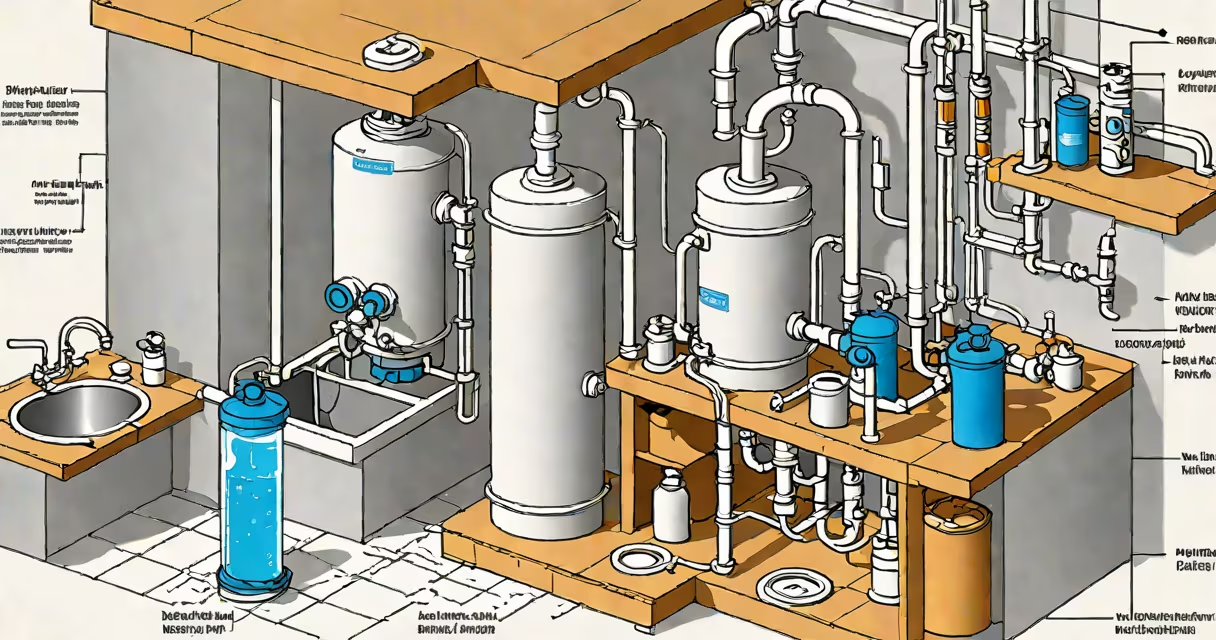
Natural arsenic removal from water uses physical filtration, chemical precipitation, or biological processes without synthetic chemicals. Methods include iron-based media filters, activated alumina, and reverse osmosis systems designed for home use. These techniques target inorganic arsenic species-primarily arsenite (As(III)) and arsenate (As(V))-common in contaminated groundwater.
Arsenic enters water supplies through natural geological leaching, especially in regions with volcanic bedrock or sedimentary deposits. The World Health Organization sets a maximum contaminant level of 10 micrograms per liter (μg/L) for arsenic in drinking water. Levels above this pose long-term health risks, including skin lesions, cardiovascular disease, and cancer. Natural removal methods aim to reduce concentrations below this threshold using accessible materials and proven mechanisms.
Iron-based filtration is among the most effective natural methods. Iron oxides adsorb arsenic ions from water, trapping them in porous structures. This process relies on surface chemistry rather than chemical additives. A 2021 study published in Environmental Science & Technology confirmed that granular ferric oxide (GFO) filters removed over 95% of arsenic from groundwater samples in field trials across Bangladesh and West Bengal.
Natural arsenic removal hinges on selective adsorption, ion exchange, or membrane rejection. Adsorption occurs when arsenic binds to surfaces of filter media such as iron oxide, activated alumina, or certain clays. Ion exchange swaps arsenic ions for harmless ones like chloride or sulfate. Membrane systems like reverse osmosis physically block arsenic molecules based on size and charge.
For adsorption to work effectively, water pH must be between 5.5 and 7.5. Outside this range, arsenic speciation shifts, reducing removal efficiency. Arsenite (As(III)) is harder to capture than arsenate (As(V)), which is more readily adsorbed. Many natural systems include oxidation steps-using air or manganese dioxide-to convert As(III) to As(V) before filtration.
Reverse osmosis membranes reject over 90% of dissolved arsenic species. They require pressure to force water through semi-permeable layers. While not entirely "natural" due to mechanical input, RO systems are often included in natural treatment discussions because they don't rely on chemical dosing. A 2019 EPA report noted that properly maintained RO units reduced arsenic levels from 50 μg/L to under 5 μg/L in 92% of residential tests.
Common natural systems fall into three categories: media filters, ion exchange resins, and membrane technologies. Each targets different arsenic forms and operates under varying conditions.
| System Type | Primary Media | Removal Efficiency | Best For |
|---|---|---|---|
| Iron-Based Filters | Granular ferric oxide (GFO), iron-impregnated sand | 90-98% | Groundwater with As(III) and As(V) |
| Activated Alumina | Aluminum oxide granules | 85-95% | Low-turbidity water, pH 5.5-6.5 |
| Reverse Osmosis | Polyamide membranes | 90-99% | Whole-house or point-of-use treatment |
Iron-based filters outperform others in high-arsenic environments. GFO media, for example, achieves consistent results even with fluctuating flow rates. Activated alumina works well in low-iron waters but requires regular regeneration and pH control. Reverse osmosis delivers high purity but wastes 20-30% of treated water and requires maintenance.
One overlooked factor is media lifespan. GFO filters typically last 12-24 months before replacement. Testing shows that untreated arsenic can leach back into water if filters aren't replaced on schedule. A 2020 study in Water Research found that 37% of home systems failed within three years due to delayed media changes.
Natural arsenic removal is most common in rural or off-grid communities relying on private wells. In regions like parts of India, China, and the U.S. Southwest, groundwater contamination exceeds WHO standards. Over 100 million people globally drink water with arsenic levels above 10 μg/L, according to the WHO.
Homeowners in areas like California's Central Valley or New England's coastal plains often install point-of-entry systems. These treat all household water. Point-of-use systems, such as under-sink filters, serve specific taps. Both types can incorporate natural media. A homeowner in Mendocino County, California, reported reducing arsenic from 32 μg/L to 4 μg/L using a GFO filter installed in series with a carbon pre-filter.
These systems are preferred over chemical treatments because they avoid introducing new contaminants. Chemical coagulants like aluminum sulfate can leave residual metals in water. Natural methods minimize secondary pollution risk.
Many assume boiling water removes arsenic. Boiling concentrates arsenic instead-it evaporates water but leaves the toxin behind. A 2017 study in Journal of Environmental Health showed boiling increased arsenic concentration by 15-20% in test samples.
Another myth is that home water distillers eliminate arsenic. Distillation removes many impurities but fails to capture volatile arsenic compounds efficiently. Only 70-80% of arsenic is removed unless paired with a pre-filtration stage. Reverse osmosis remains more reliable for arsenic reduction.
Some claim that plants like water hyacinth or cattails purify arsenic-laden water. While certain aquatic plants show limited uptake in lab settings, field studies confirm they do not reduce arsenic below regulatory limits. A 2022 review in Ecological Engineering concluded that phytoremediation is ineffective for drinking water applications due to slow kinetics and inconsistent results.
True natural removal requires engineered systems with verified media. DIY solutions using sand, charcoal, or homemade filters rarely meet safety standards. The CDC advises against relying on untested home remedies for arsenic removal.
Consider a family in northern New Mexico drawing water from a well with 28 μg/L arsenic. Their goal: achieve safe levels (<10 μg/L) without synthetic chemicals. They selected a two-stage system:
After installation, monthly testing showed arsenic dropped to 6 μg/L. The system required media replacement every 18 months. Maintenance logs showed consistent performance over 24 months. The family reported no adverse effects and improved confidence in their water quality.
Effective natural arsenic removal demands accurate testing, correct system selection, and ongoing maintenance. Relying on unverified methods risks exposure. Verified systems using iron oxide, activated alumina, or reverse osmosis provide measurable protection. Always test water before and after treatment to confirm safety.