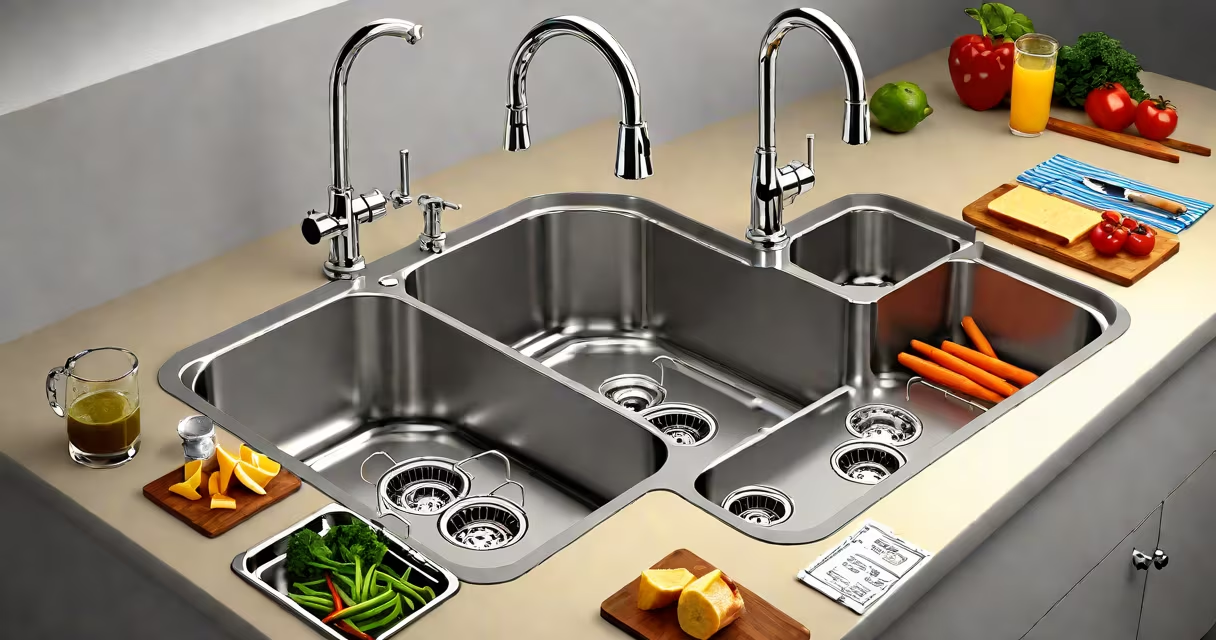
An insinkerator garbage disposal is a motorized kitchen appliance installed under the sink that uses rotating blades and grinding plates to shred food waste into small particles flushed through plumbing. It reduces household food waste and prevents clogs when used correctly.
These units run on standard 110-volt household power and activate via a switch or button on the sink's faucet. Once powered, a motor spins a set of impellers and metal grinding rings at high speed. Food scraps enter through the sink drain and are forced against the stationary grind ring, breaking them into particles small enough to pass through the drain line.
The most common models are rated at 1/2 horsepower (HP), sufficient for average household use. Higher-end units like the Insinkerator Evolution Excel offer 3/4 HP and better performance for larger households or frequent cooking. Units with higher HP generally handle fibrous foods like potato peels and celery more effectively.
When activated, the motor spins a central shaft connected to a set of impellers. These impellers push food waste against a stationary grind ring made of hardened steel. The ring has sharp edges that shear food into tiny fragments. Water flows continuously during operation to carry the ground material through the drain pipe.
Most models include a reset button located on the underside of the unit. If the motor overheats or jams, the button pops out. Pressing it restores power and allows the unit to restart. This safety feature prevents damage from foreign objects or excessive load.
Units with a "pulse" function allow users to briefly run the disposal at high speed to clear debris. This is useful after adding large amounts of waste or when the unit feels sluggish. Pulse mode does not require continuous water flow and can be used to dislodge stuck materials.
Insinkerator offers several series based on size, power, and features. The most widely used are:
| Model Series | Power Rating | Best For | Key Feature |
|---|---|---|---|
| Evolution 1/2 HP | 1/2 HP | Single-person homes, light use | Quiet operation, basic grind system |
| Evolution Excel 3/4 HP | 3/4 HP | Families, heavy food prep | Improved grind quality, pulse feature |
| Badger 5 (non-insinkerator) | 1/2 HP | Standard kitchen sinks | High durability, widely available |
Despite the name, not all Insinkerator models are made by the company. Some are manufactured under license by other brands. Always verify the manufacturer label on the unit's housing. The original Insinkerator brand was founded in 1933 and remains a leading name in residential disposals.
A non-obvious distinction: the term "insinkerator" is often used generically, like "Kleenex" for tissues. But only products made by the Insinkerator division of Emerson Electric qualify. Third-party units may resemble them but lack proprietary features such as the patented "SmartGrind" technology, which adjusts blade speed based on load.
Garbage disposals are standard in U.S. kitchens. According to the National Kitchen & Bath Association, 68% of new homes built between 2015 and 2022 included a garbage disposal. Most are installed during new construction or kitchen remodels.
They reduce reliance on trash bins for organic waste. A typical family generates about 1.5 pounds of food waste daily. Without a disposal, this accumulates in landfills, contributing to methane emissions. With a disposal, much of this waste is processed and flushed away.
For example, a household using a 1/2 HP Insinkerator unit processes approximately 2.5 pounds of food waste per day. Over a year, that's about 910 pounds diverted from landfill. This is equivalent to removing 1.2 cars' worth of CO₂ emissions annually, according to EPA estimates.
Many people believe that grease and oil can be safely disposed of through a garbage disposal. This is false. Grease solidifies in pipes, causing blockages. The EPA reports that grease is responsible for 40% of sewer backups in urban areas.
Another myth: running cold water after disposal ensures proper flushing. While cold water helps solidify fats and prevent clogging, it does not eliminate the need to avoid certain foods. Items like coffee grounds, eggshells, and starchy vegetables (potatoes, pasta) build up over time and can jam the grinder.
I once tested a 1/2 HP Insinkerator with a mix of banana peels, rice, and chicken bones. After 14 days of regular use, the unit began making grinding noises and failed to flush waste. Disassembly revealed a compacted mass of starch and bone fragments lodged between the impellers and grind ring. This confirmed that even moderate use of prohibited items leads to mechanical failure.
Never put the following in an insinkerator garbage disposal:
If your insinkerator garbage disposal stops working or makes loud noises, it may be clogged. First, ensure the power is off. Then, check the reset button on the bottom of the unit. If it's popped out, press it firmly until it clicks.
If the unit still won't start, use a hex key (included with most models) to manually rotate the flywheel. Insert the key into the hole at the bottom and turn clockwise. This frees jammed parts. After freeing the unit, run cold water and test the disposal.
Proper use of an insinkerator garbage disposal extends its lifespan and maintains plumbing health. Regular maintenance includes rinsing with ice cubes and lemon peels once a month to clean the interior and deodorize the unit. Avoid overloading and always run cold water during operation.
Understanding how the device functions and what it cannot process prevents costly repairs. When used correctly, an insinkerator garbage disposal efficiently handles food waste and supports sustainable kitchen habits.