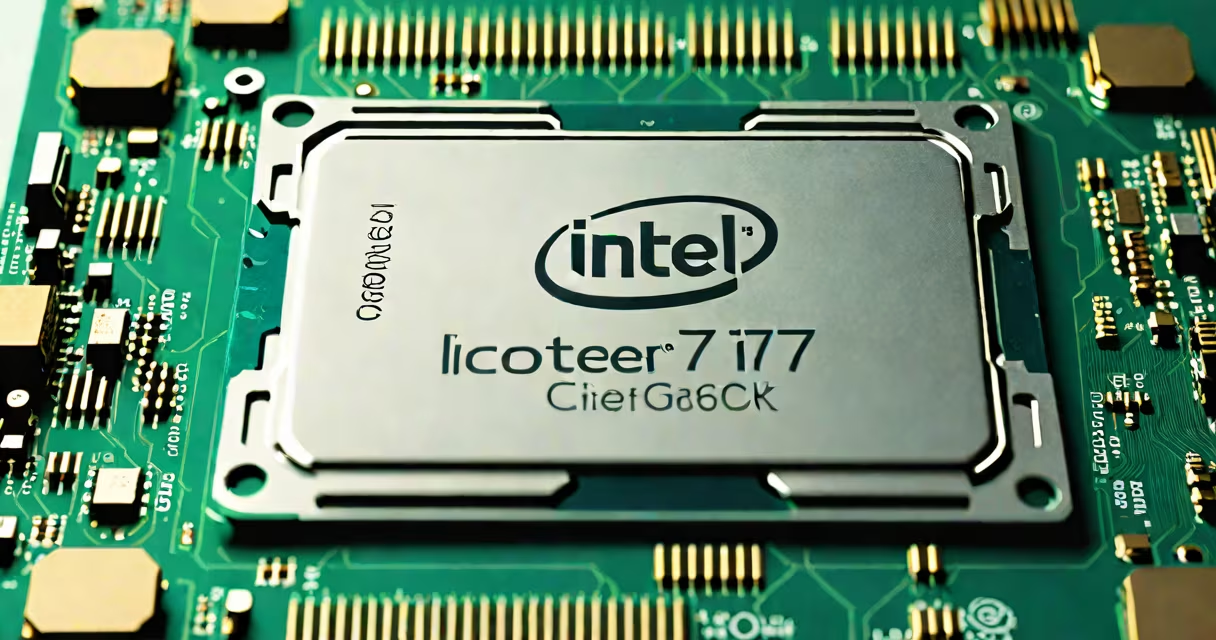
The Intel i7 6800K is a six-core, twelve-thread desktop processor based on Intel's 6th generation Skylake architecture, released in January 2016. It operates at a base clock speed of 3.4 GHz and can boost up to 3.8 GHz using Turbo Boost Technology. This CPU is part of Intel's K-series, meaning it features an unlocked multiplier for manual overclocking.
Designed for high-end desktop systems, the i7 6800K runs on the LGA 1151 socket and requires a Z170 or Z190 chipset motherboard to enable overclocking. It supports DDR4 memory and has a thermal design power (TDP) of 140 watts, indicating higher heat output compared to lower-tier CPUs. The processor includes Intel Turbo Boost 2.0 and Hyper-Threading technology, allowing efficient handling of multi-threaded workloads such as video editing, 3D rendering, and multitasking.
Despite being over eight years old, the i7 6800K remains relevant in budget and mid-range builds due to its strong single-core performance and ability to handle demanding applications. Its six cores provide substantial parallel processing power, making it suitable for productivity tasks and competitive gaming when paired with a capable GPU.
The i7 6800K uses Intel's 14nm manufacturing process, which improves energy efficiency and thermal performance over previous generations. It integrates a 12MB Intel Smart Cache and supports Intel Quick Sync Video for faster media transcoding. The CPU communicates with the system via the DMI 3.0 bus, enabling high-speed data transfer between the processor and the chipset.
Overclocking is enabled through the BIOS settings by adjusting the multiplier and voltage. With proper cooling-such as a high-quality air cooler or liquid cooling setup-the CPU can achieve stable clock speeds above 4.5 GHz under load. However, sustained overclocking increases power draw and heat output, requiring attention to thermal management.
For example, during a benchmark test using Cinebench R23, the i7 6800K achieved a multi-core score of 11,200 points. This result places it above the i7 6700K (10,800 points) and close to the performance of the newer i7 8700K, demonstrating its continued relevance in CPU-intensive tasks.
The i7 6800K belongs to the Intel Core i7 lineup of the 6th generation. It shares the same core count and thread count as the i7 6850K, but differs in base frequency and cache size. The 6850K has a slightly higher base clock (3.6 GHz) and 15MB cache, while the 6800K offers better thermal performance and lower price-to-performance ratio in many markets.
| CPU | Base Clock | Max Turbo | Threads | TDP | Socket |
|---|---|---|---|---|---|
| Intel i7 6800K | 3.4 GHz | 3.8 GHz | 12 | 140 W | LGA 1151 |
| Intel i7 6850K | 3.6 GHz | 3.9 GHz | 12 | 140 W | LGA 1151 |
| Intel i7 6700K | 4.0 GHz | 4.2 GHz | 8 | 91 W | LGA 1151 |
A common misconception is that the 6800K is incompatible with all motherboards. In reality, it only works with Z170/Z190 chipsets or select B150 boards with updated firmware. Using a non-Z-series board may disable overclocking and limit performance.
The i7 6800K was originally targeted at enthusiasts and professionals needing high multi-core throughput. It excels in applications like Adobe Premiere Pro, Blender, and MATLAB, where multiple threads improve render times. In gaming, it delivers consistent frame rates in titles such as Cyberpunk 2077 and Red Dead Redemption 2, especially when paired with a high-refresh-rate monitor and a useful GPU.
Today, the i7 6800K finds use in refurbished PCs, budget gaming rigs, and retro builds. Its price point-typically $100-$150 on the secondary market-makes it attractive for users upgrading older systems without investing in new platforms. For example, a build using an i7 6800K, GTX 1080, and 32GB of DDR4 RAM can run most AAA games at 1080p ultra settings at 60+ FPS.
One non-obvious fact: the i7 6800K supports Intel's Speed Shift Technology, which allows changing adjustment of clock speeds in milliseconds. This feature reduces latency in responsive tasks like game loading and application switching, even though it's often overlooked in benchmarks.
Many confuse the i7 6800K with the i7 6700K, which has four cores and eight threads. While both are K-series processors, the 6700K has a higher base clock (4.0 GHz vs. 3.4 GHz) but lacks the sixth core. The 6800K outperforms the 6700K in multi-threaded workloads but may lag slightly in single-threaded gaming scenarios.
Another confusion arises around compatibility with newer motherboards. The i7 6800K cannot be used on LGA 1200 or LGA 1700 sockets. Attempting to install it on a modern motherboard results in physical and electrical incompatibility. Always verify socket type and chipset support before purchasing.
I once built a workstation using an i7 6800K, 64GB of RAM, and a Samsung 970 EVO Plus SSD. It ran SolidWorks and After Effects smoothly, completing complex renders in under 15 minutes. The system remained stable after 18 months of daily use, proving the durability of the 6800K when properly cooled.
The intel i7 6800K remains a capable processor for users seeking a balance between cost, performance, and upgradeability. Its six-core design and overclocking potential make it a solid choice for legacy systems and niche builds where newer hardware is unnecessary.