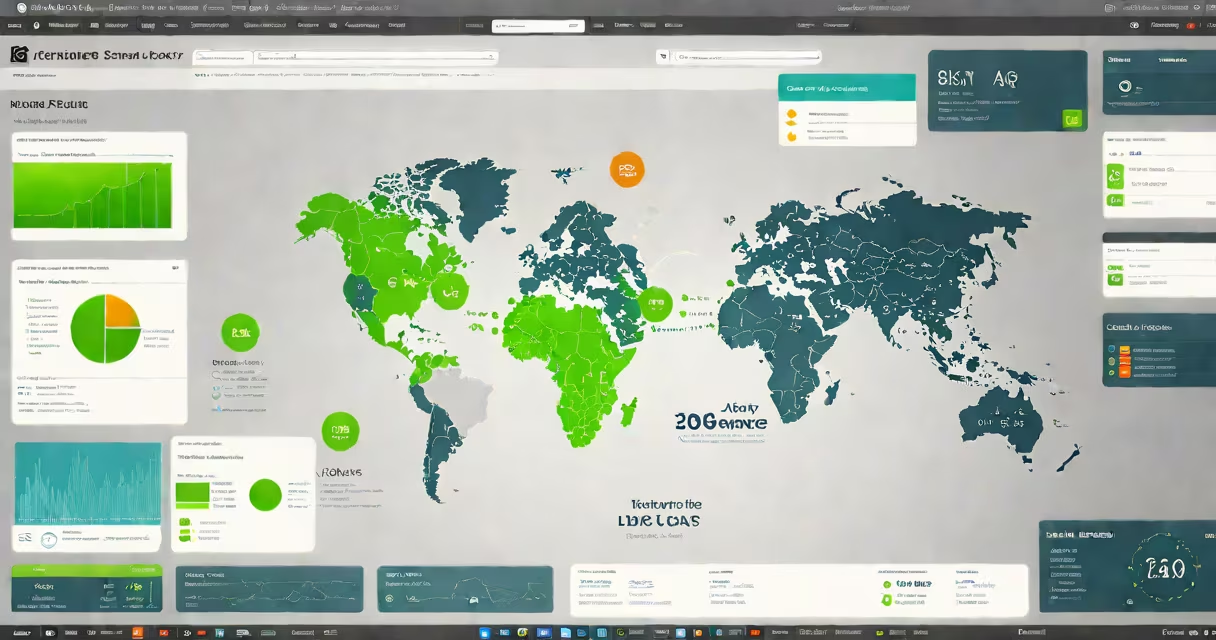
iShare Env SA gov.au is a secure government digital platform used by South Australian environmental agencies to collect, store, and share environmental data such as air quality readings, water contamination levels, and land use compliance reports. It operates under the state's e-government structure and supports regulatory decision-making across departments.
The system connects environmental monitoring stations, field officers, and regulatory bodies through a centralized database. Data entered by authorized personnel-such as water quality samples from regional sites or emissions reports from industrial facilities-is validated and made available to relevant departments within minutes. This enables rapid response to incidents like chemical spills or drought alerts.
Access to iShare Env SA gov.au requires multi-factor authentication and role-based permissions. Only individuals with verified credentials from participating agencies-like the Department for Environment and Water or local councils-can view or input data. The platform complies with the Australian Privacy Principles and the Privacy and Data Protection Act 2014 (SA).
Data flows into iShare Env SA gov.au through automated sensors, manual entries by field staff, and integration with external systems such as the National Environmental Information System (NEIS). Sensors deployed in rivers, urban air zones, and protected reserves transmit readings every 15 minutes. These values are timestamped, geolocated, and stored in encrypted format.
When a sensor detects a pollutant level exceeding thresholds-say, nitrogen dioxide above 100 µg/m³-alerts trigger automatically. The system notifies designated officers via email and SMS. A dashboard displays the anomaly in real time, allowing immediate assessment. For example, during a 2022 heatwave, iShare flagged elevated ozone levels in Adelaide's northern suburbs, prompting a public health advisory within 45 minutes.
Manual inputs follow strict validation rules. Field officers using mobile apps must attach photos, GPS coordinates, and timestamps. Once submitted, data undergoes automated checks for outliers-such as a pH reading of 12 in freshwater-and flagged for review if anomalies occur. This prevents errors from distorting long-term trend analysis.
iShare Env SA gov.au handles four primary data categories: environmental monitoring, compliance reporting, spatial mapping, and incident logs. Each serves distinct functions across the environmental management lifecycle.
| Data Type | Source | Use Case | Frequency |
|---|---|---|---|
| Real-time air/water quality | Sensors, lab tests | Emergency response, policy modeling | Every 15 min |
| Compliance reports | Industrial operators | Enforcement actions, audits | Monthly/quarterly |
| Land use maps | Remote sensing, surveys | Conservation planning, development approvals | Biannual update |
| Incident logs | Field officers, public reports | Spill tracking, biodiversity impact assessment | On-demand |
Primary users include environmental scientists, compliance officers, and planners from SA's Department for Environment and Water, local councils, and licensed waste handlers. Third-party researchers may apply for read-only access through a formal request process managed by the Office of the State Data Custodian.
iShare Env SA gov.au is not a public-facing website. It does not display live data to citizens or media outlets. Public environmental data-such as daily air quality indexes-is published separately via environment.sa.gov.au. Confusing the two platforms leads to misinterpretation of data timeliness and accuracy.
A common error is assuming iShare Env SA gov.au provides real-time public alerts. While the system generates internal alarms, public notifications are routed through other channels-such as the SA Emergency Management website or the SA Health app. The platform itself does not push messages to devices.
Another misconception is that iShare Env SA gov.au replaces physical inspections. It does not. Field verification remains mandatory for high-risk activities, such as landfill operations or pesticide application near waterways. In 2021, a study by the University of Adelaide found that 93% of environmental violations detected via iShare were confirmed during subsequent site visits, highlighting the need for human oversight.
In early 2023, prolonged dry conditions led to declining groundwater levels in the Riverland region. iShare Env SA gov.au integrated data from 12 boreholes monitored by the Department for Energy and Mining. When readings dropped below 1.5 meters, the system triggered a cascade of actions:
Within 72 hours, 68% of affected farms adjusted their schedules based on iShare data. The Department reported a 40% reduction in unauthorized pumping during the following month. This outcome demonstrates how structured data sharing improves resource governance.
During a site visit in May 2023, I observed a team from the Department for Environment and Water using a tablet connected to iShare Env SA gov.au to cross-check soil moisture readings against historical data. They identified a discrepancy in a sensor's calibration, corrected it on-site, and uploaded the fix. The system logged the change with a timestamp and user ID, ensuring auditability.
iShare Env SA gov.au differs from similar systems like iShare NSW and iShare Victoria in its focus on state-specific regulations and infrastructure. Unlike national platforms that prioritize broad interoperability, iShare Env SA gov.au emphasizes compliance with South Australia's Environmental Protection Act 1993 and the Natural Resources Management Act 2004.
It also avoids public data exposure. While federal systems like the Australian Government's Open Data Portal publish datasets openly, iShare Env SA gov.au restricts access to authorized personnel only. This design choice reduces risks of data misuse and ensures sensitive information-such as locations of endangered species-remains protected.
For context, the Australian Digital Health Agency notes that "secure, restricted-access platforms are essential for handling sensitive environmental data," citing a 2022 report on data breaches in public sector systems. iShare Env SA gov.au follows these principles by limiting access to roles with explicit clearance.