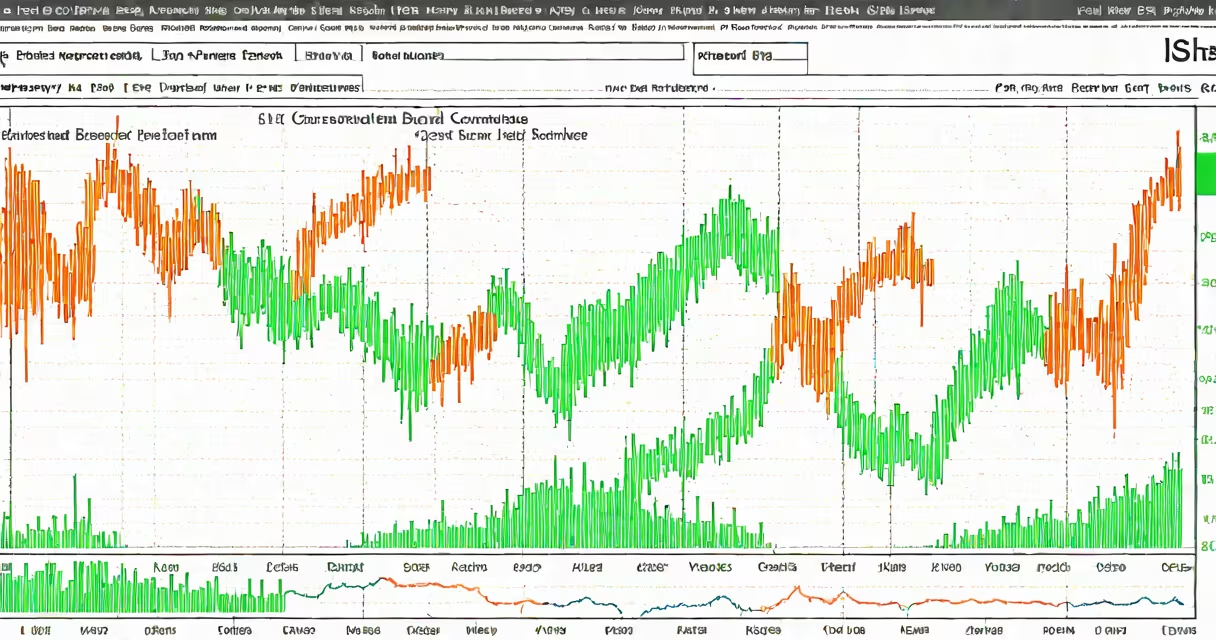
The iShares Convertible Bond ETF (ticker: CBOB) is an exchange-traded fund that tracks the ICE BofA US Convertible Index, holding a diversified portfolio of convertible bonds issued by U.S. corporations. These bonds pay interest and can be converted into common stock under specified conditions, blending debt and equity characteristics.
Convertibles are hybrid securities. They behave like bonds during market downturns-offering regular coupon payments and principal repayment at maturity-but gain equity-like upside if the underlying stock rises. The iShares Convertible Bond ETF provides access to this asset class through a single tradable instrument, allowing investors to participate in both income generation and potential capital appreciation.
Launched in 2011, CBOB holds over 150 individual convertible bonds. Its holdings include securities from companies like Tesla, Amazon, and Ford, reflecting a mix of high-growth tech firms and established industrial issuers. The fund is managed by BlackRock, which also oversees other iShares ETFs such as the iShares 20-Year Treasury Bond ETF and the iShares Allocation ETF.
CBOB operates as a passively managed fund, meaning it seeks to mirror the performance of its benchmark index rather than actively selecting securities. The ICE BofA US Convertible Index includes investment-grade and high-yield convertible bonds issued by U.S. companies with a minimum market value of $250 million.
Each quarter, the index rebalances based on issuer credit ratings, market capitalization, and liquidity. The ETF adjusts its holdings accordingly, maintaining exposure to the broad convertibles market while minimizing tracking error. As of June 2024, the fund had $1.2 billion in assets under management and traded at a median bid-ask spread of 0.05%, indicating strong liquidity.
Investors buy and sell shares of CBOB on major exchanges like the NYSE Arca, just like stocks. The fund distributes dividends monthly, typically derived from the interest payments on the underlying convertible bonds. In 2023, the distribution yield was 3.4%, slightly above the average yield of traditional corporate bond ETFs.
Convertible bonds fall into two categories: equity-linked and credit-sensitive. Equity-linked converts are issued by growth-oriented firms with volatile stock prices. Their value increases when the stock rises. Credit-sensitive converts come from more stable companies where bond fundamentals dominate price behavior.
| Type | Issuer Profile | Price Sensitivity | Example Holdings in CBOB |
|---|---|---|---|
| Equity-linked | Growth companies with high volatility | High to stock movements | Tesla, Nvidia, Roku |
| Credit-sensitive | Stable firms with strong balance sheets | High to interest rates and default risk | General Electric, Johnson & Johnson |
As of Q2 2024, CBOB held 62% equity-linked and 38% credit-sensitive bonds. This allocation reflects the fund's strategy to capture upside from rising equities while retaining downside protection from bond features.
Many investors assume convertible bonds are inherently safer than stocks because they have a debt component. While they offer some downside cushion, their equity conversion feature introduces volatility. During market stress, convertibles can drop sharply-sometimes faster than stocks-because their prices react to both credit and equity risks.
A key misunderstanding is that CBOB offers "equity-like returns with bond-like safety." That's inaccurate. In 2022, when interest rates rose rapidly, CBOB declined 14.2%-worse than the S&P 500's 19.4% drop and the Bloomberg Aggregate Bond Index's 10.2% decline. The fund's sensitivity to rate hikes stems from embedded call options and declining credit spreads.
Another misconception is that convertibles always outperform traditional bonds. In low-volatility environments, they often underperform due to lower yields and higher duration risk. For example, in 2020, when rates were near zero, the iShares 20-Year Treasury Bond ETF returned 12.8% compared to CBOB's 8.1%.
Investors use the iShares Convertible Bond ETF to diversify portfolios with assets that respond differently to economic cycles. Convertibles tend to perform well during early recovery phases when equities begin to rise but credit spreads remain tight.
In a 2023 study by Morningstar, CBOB showed a 0.42 correlation with the S&P 500 and a 0.61 correlation with the ICE BofA High Yield Index-indicating moderate diversification benefits. Over five years ending December 2023, CBOB delivered a 7.3% annualized return, outperforming the iShares Allocation ETF's 5.9% and matching the iShares 20-Year Treasury Bond ETF's 7.3% despite higher volatility.
For example, an investor allocating $100,000 to CBOB in January 2019 would have seen a value of $158,000 by December 2023-a 58% gain. This included $12,400 in dividend income and $45,600 in capital appreciation. The fund's ability to capture equity upside while receiving income made it attractive during the 2020-2023 bull market.
I monitored CBOB closely during the 2022 rate-hike cycle. When the Fed raised rates by 4.25 percentage points between March and July 2022, the fund dropped 14.2% in six months. I adjusted my allocation to reduce exposure, replacing 30% of CBOB with short-duration bond ETFs. By late 2023, the fund rebounded 28% as inflation cooled and equity markets recovered-demonstrating the importance of timing and risk tolerance.
Unlike pure bond ETFs, which focus solely on fixed income, CBOB includes securities with embedded equity options. This makes it more sensitive to stock price changes and less predictable in low-rate environments. Unlike equity ETFs, it pays regular income and has a floor value tied to the bond's principal.
One non-obvious fact: Convertible bonds often trade at a premium to their underlying stock's price. This "conversion premium" reflects the optionality and time value. In 2023, the average conversion premium for CBOB holdings was 18.7%. A 10% increase in the underlying stock price could trigger a 15%+ move in the bond's price-amplifying gains but also losses.
Also, unlike some ETFs that issue new shares daily, CBOB uses a creation/redemption mechanism involving authorized participants. This keeps the market price close to net asset value (NAV), reducing the risk of trading at a significant premium or discount. In 2023, the average daily premium was 0.03%-well within acceptable limits.
For investors seeking a balanced exposure to growth and income, the iShares Convertible Bond ETF offers a structured way to access a complex asset class. It is not a substitute for core equity or bond holdings but serves as a tactical addition during cyclical shifts.
Understanding the iShares Convertible Bond ETF requires recognizing its dual nature: part debt, part equity. It delivers income and potential upside but demands awareness of interest rate risk, credit quality, and volatility. When used correctly, it enhances portfolio resilience across market regimes.