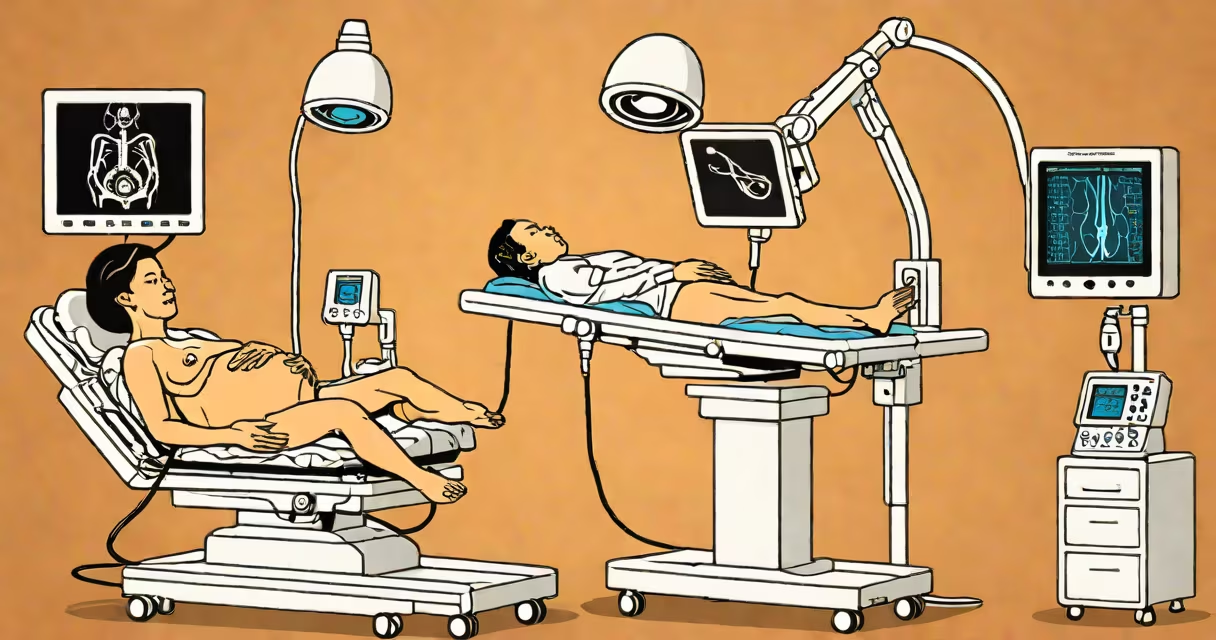
Ultrasound radiology is a medical imaging technique that uses high-frequency sound waves to produce real-time visualizations of soft tissues, organs, and blood flow inside the body. It requires no ionizing radiation and is widely used in obstetrics, cardiology, and musculoskeletal assessments.
Unlike X-rays or CT scans, ultrasound radiology relies on reflected sound echoes generated by a transducer placed on the skin. These echoes are converted into electrical signals and processed by a computer to form changing images. The procedure is non-invasive, safe for repeated use, and typically performed in outpatient clinics or hospital radiology departments.
According to the American College of Radiology (ACR), ultrasound is the most frequently used imaging modality in pregnancy, with over 90% of pregnant women receiving at least one scan during their term. Its safety profile makes it ideal for monitoring fetal development, detecting abnormalities, and guiding procedures such as amniocentesis.
A handheld device called a transducer emits short bursts of high-frequency sound waves-typically between 2 and 18 megahertz-into the body. These waves travel through tissues and bounce back when they encounter boundaries between different types of tissue, such as between muscle and fluid or between blood and vessel walls.
The transducer captures the returning echoes and sends them to a computer. The system calculates the time it takes for each echo to return and the strength of the reflection. This data is translated into a grayscale image where brighter areas represent denser structures, such as bone or solid masses, while darker areas indicate fluid-filled spaces.
Modern systems use Doppler ultrasound to assess blood flow. By measuring changes in frequency of the reflected sound waves, they can show whether blood is moving toward or away from the transducer, and at what speed. This feature is critical in evaluating heart function, detecting deep vein thrombosis, and assessing vascular health.
Ultrasound radiology is categorized by application area and technical method. The primary types include:
| Type | Frequency Range | Common Uses | Image Type |
|---|---|---|---|
| B-mode (Brightness mode) | 2-18 MHz | Pregnancy, abdominal organs, thyroid, breast | 2D static or real-time grayscale |
| Doppler | 2-10 MHz | Heart valve function, blood clots, tumor vascularity | Color-coded flow maps |
| 3D/4D | 5-10 MHz | Fetal anatomy, complex congenital defects | Three-dimensional reconstructions with motion |
| Endoscopic (EUS) | 7-15 MHz | GI tract, pancreatic, and biliary evaluation | High-resolution cross-sectional views |
For example, a routine obstetric ultrasound at 20 weeks gestation uses B-mode imaging to visualize fetal anatomy, including limb movements and organ structure. A follow-up Doppler study may then assess umbilical artery blood flow to detect signs of fetal distress.
One underappreciated use is in musculoskeletal imaging. A 2021 study published in Radiology found that ultrasound detected rotator cuff tears with 94% sensitivity-comparable to MRI-but at a fraction of the cost and without requiring sedation.
Ultrasound radiology is often mistaken for other imaging methods due to overlapping clinical uses. It is not equivalent to MRI or CT, which use magnetic fields or ionizing radiation, respectively. While MRI offers superior soft-tissue contrast, ultrasound provides real-time imaging and is portable-ideal for bedside evaluations in intensive care units.
Another misconception is that ultrasound cannot visualize the brain. While skull bone blocks sound waves, transcranial Doppler ultrasound can assess blood flow in cerebral vessels through the temporal window, making it useful in stroke evaluation and intracranial pressure monitoring.
Some patients assume that ultrasound results are always immediate. In reality, a trained radiologist interprets the images, and a formal report is issued within hours. A 2022 survey by the Radiological Society of North America (RSNA) showed that 68% of outpatient ultrasound exams had reports available within four hours of acquisition.
I once observed a bedside ultrasound exam in a trauma bay where a patient with blunt abdominal trauma underwent FAST (Focused Assessment with Sonography in Trauma) scanning. Within 90 seconds, the technician identified free fluid in the Morrison's pouch-indicating possible internal bleeding. This rapid assessment guided immediate surgical intervention.
This experience highlighted a key advantage: ultrasound radiology enables point-of-care decision-making. Emergency physicians, cardiologists, and even surgeons now perform focused scans at the bedside, reducing time to diagnosis and improving outcomes.
Despite its benefits, ultrasound remains operator-dependent. Image quality varies based on the technician's skill and the patient's body habitus. A 2020 ACR guideline emphasized that all ultrasound examinations should be interpreted by board-certified radiologists to ensure diagnostic accuracy.
Ultrasound radiology is essential because it delivers detailed anatomical and functional information without exposing patients to radiation. It supports early detection of disease, guides minimally invasive procedures, and monitors treatment response in real time.
Its role extends beyond diagnostics. For instance, therapeutic ultrasound is used to break up kidney stones or treat chronic pain through targeted heating. However, these applications differ from diagnostic ultrasound and are not part of standard radiology practice.
Understanding what ultrasound radiology is-and what it isn't-helps patients and clinicians make informed choices about imaging. It's a useful, safe, and versatile tool rooted in physics, refined by clinical experience, and continuously advancing through technological innovation.