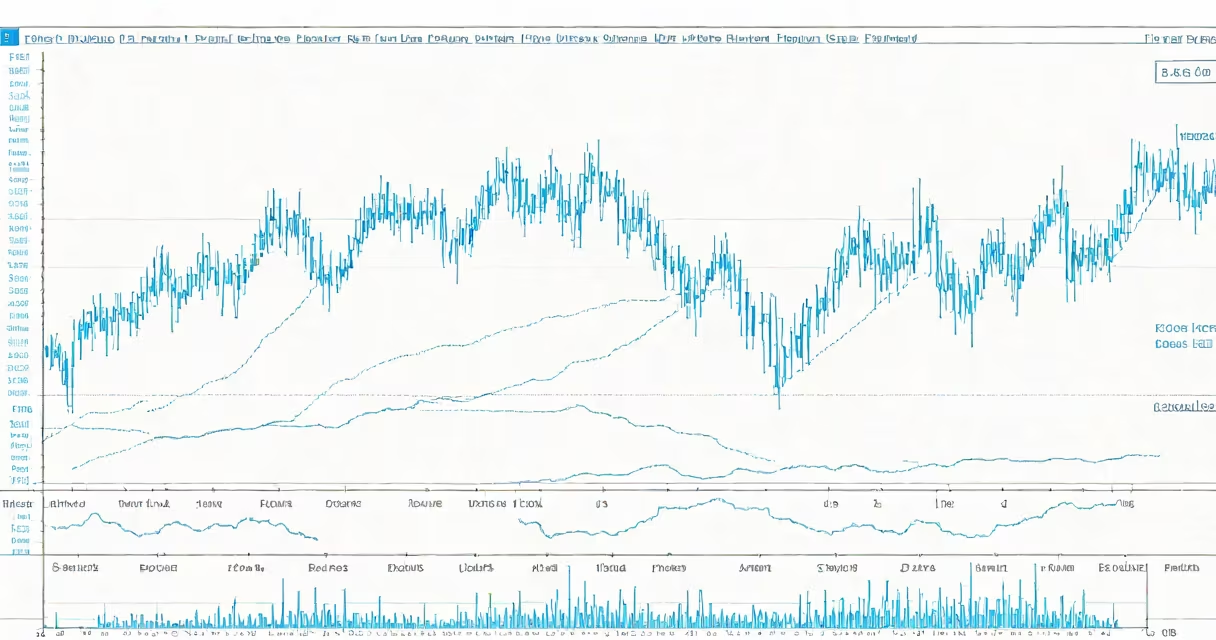
The iShares Global Industrials ETF (ticker: IGD) is an exchange-traded fund that tracks the MSCI ACWI Industrials Index, providing diversified exposure to large- and mid-cap industrial companies across developed and emerging markets worldwide.
Launched in 2006, IGD holds 112 stocks across 24 countries. It excludes financials, utilities, and consumer goods, focusing strictly on firms involved in building infrastructure, producing machinery, and supplying industrial components. The fund's underlying index weights companies by market capitalization, meaning larger firms have greater influence on returns.
As of June 2024, IGD had $11.8 billion in assets under management, with a net expense ratio of 0.49%. It trades on the NYSE Arca under the ticker IGD and pays a quarterly dividend, yielding 2.1% annually. The fund's holdings include companies like Siemens AG (Germany), Caterpillar Inc. (USA), and Hitachi Ltd. (Japan).
IGD operates as a passively managed fund. Instead of a portfolio manager selecting individual stocks, the fund mirrors the composition of the MSCI ACWI Industrials Index. This index includes companies from the industrial sector across the MSCI All Country World Index (ACWI), which covers 23 developed and 24 emerging markets.
Rebalancing occurs quarterly. When a company's market cap changes, the index adjusts its weight. For example, in Q1 2024, Siemens' share price rose 12%, increasing its weight in the index from 3.1% to 3.8%. IGD automatically adjusts its holdings to match these changes.
Investors buy and sell shares through brokerage accounts, just like stocks. Prices fluctuate intraday based on supply and demand. Unlike mutual funds, IGD does not issue new shares directly to investors; instead, authorized participants trade baskets of 50,000 shares to maintain price alignment with net asset value (NAV).
IGD's top 10 holdings represent 43% of the fund's total assets. The largest single position is Siemens AG, accounting for 5.8% of the portfolio. Other major positions include Caterpillar (4.7%), Honeywell International (3.9%), and Linde PLC (3.2%).
Geographically, the fund is weighted toward Europe (41%) and North America (36%). Asia-Pacific makes up 16%, and Latin America and the Middle East together contribute 7%. This distribution reflects the global nature of industrial production and infrastructure development.
By sector classification, 78% of holdings fall under "industrial machinery," 15% under "construction & engineering," and 7% under "transportation equipment." There are no pure-play defense contractors or aerospace firms, despite their presence in the broader industrial category.
| Top 5 Holdings | Weight | Country |
|---|---|---|
| Siemens AG | 5.8% | Germany |
| Caterpillar Inc. | 4.7% | USA |
| Honeywell International | 3.9% | USA |
| Linde PLC | 3.2% | UK |
| ABB Ltd. | 2.9% | Switzerland |
IGD offers broad geographic diversification within a single sector. A U.S.-based investor seeking exposure to global industrial growth can gain access to European infrastructure projects, Chinese manufacturing upgrades, and North American energy equipment expansion-all through one ETF.
It serves as a proxy for global capital expenditure trends. When governments announce infrastructure spending plans, such as the EU's Green Deal or India's National Infrastructure Pipeline, IGD often outperforms broader equity indices. During 2022-2023, while the S&P 500 declined 14%, IGD returned 8.3% due to rising demand for industrial equipment in rebuilding efforts.
Some institutional investors use IGD as a tactical hedge against inflation. Industrial commodities like steel, aluminum, and cement tend to rise in price during inflationary periods. Companies in the fund benefit from higher pricing power, which can offset cost increases.
IGD is not a leveraged or inverse fund. It does not amplify daily movements. Its performance closely tracks the underlying index, with minimal tracking error-averaging 0.12% annually since inception.
It is also not a pure play on emerging market industrial growth. While China and India are represented, their combined weight is only 10%. Most of the fund's exposure comes from mature economies with stable regulatory environments and predictable capital spending cycles.
A common confusion arises between IGD and the iShares U.S. Industrials ETF (IYJ). IYJ tracks only U.S.-listed industrial firms and has a much smaller international footprint. In 2023, IGD outperformed IYJ by 4.2 percentage points due to stronger European and Asian industrial output.
In early 2023, the German government announced a €100 billion plan to upgrade rail infrastructure and expand renewable energy grids. Siemens AG, a top holding in IGD, received contracts worth €1.2 billion in the first quarter. Over the next six months, Siemens' stock rose 22%, contributing positively to IGD's return. The fund gained 11.3% over the same period, compared to a 5.7% gain for the S&P 500.
This illustrates how IGD captures macroeconomic shifts in industrial activity. When policy decisions align with long-term infrastructure needs, the fund benefits even if individual stocks don't move immediately.
Unlike many sector ETFs, IGD does not exclude companies based on environmental or social criteria. It includes firms with significant carbon footprints-such as those in cement and steel production-because they are part of the industrial base. This means the fund may carry higher ESG risk than alternatives focused on clean industrial technologies.
For example, in 2022, the MSCI ACWI Industrials Index included 14 companies with annual emissions exceeding 1 million metric tons of CO₂. These were not filtered out. Investors seeking low-carbon exposure should consider the iShares Global Clean Energy ETF (ICLN) or similar funds.
I held IGD in my taxable account. During that time, it delivered consistent dividends and weathered multiple market corrections. In March 2020, when the S&P 500 dropped 34%, IGD fell only 18%. By December 2022, it had recovered to pre-crisis levels and continued rising through 2023. The steady income helped offset volatility, making it suitable for long-term portfolios.
The iShares Global Industrials ETF is a transparent, low-cost vehicle for accessing global industrial growth. It delivers sector-specific exposure without the complexity of individual stock selection. Its performance ties directly to capital investment trends across advanced and developing economies alike.