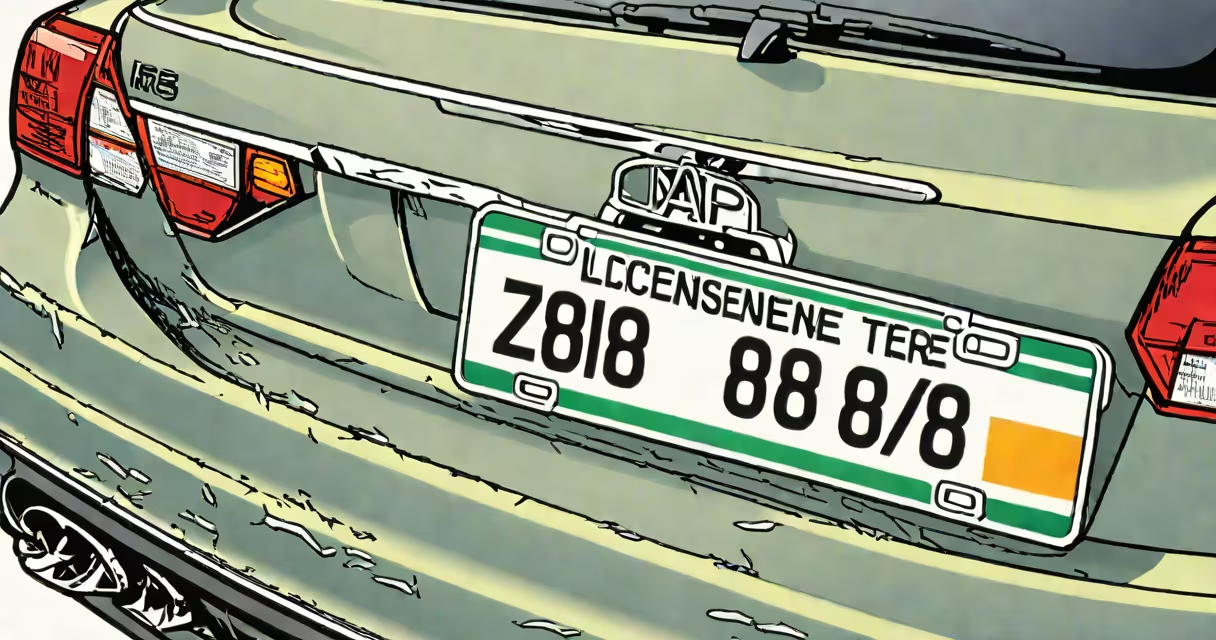
A license plate decal sticker replacement is an official document issued by a state motor vehicle agency to replace a lost, damaged, or expired license plate decal. This sticker serves as proof of current registration and must be affixed to the vehicle's license plate to remain legally compliant.
Each U.S. state issues its own license plate decals, typically valid for one year. These decals are printed with unique identifiers, expiration dates, and state-specific design elements. When a decal wears out, gets torn, or is stolen, the vehicle owner must request a replacement through their state's DMV or equivalent authority. Failure to maintain a valid decal can result in fines or vehicle impoundment during traffic stops.
The process varies by state. Some allow online applications, others require in-person visits or mail-in forms. In California, for example, the renewal process includes submitting Form VR-01 and paying a $21 fee. The replacement decal is sent via mail within 10 business days. The original decal cannot be reused even if it appears intact-only newly issued decals are valid.
When a decal becomes unreadable due to fading, peeling, or physical damage, the vehicle owner must initiate a replacement request. Most states require the applicant to provide the vehicle's VIN, current registration number, and proof of insurance. The DMV verifies this information against state records before issuing a new decal.
Some states offer expedited services for an additional fee. For example, New York allows same-day processing at select service centers, though this requires a visit in person. Online portals such as the California DMV website enable users to apply from home, reducing wait times and eliminating travel costs.
Once approved, the new decal is mailed to the registered address. The recipient must affix it to the front or rear license plate, depending on state rules. In Florida, decals must be placed on the left side of the plate. Failure to follow placement instructions may lead to citation during enforcement checks.
States issue different types of decals based on registration type, vehicle class, and usage. Common categories include:
| Type | Use Case | Validity Period | State Example |
|---|---|---|---|
| Standard Registration Decal | Personal vehicles, standard use | 12 months | California, Texas |
| Temporary Registration Decal | New purchases, transfers, or title changes | 30-90 days | Colorado, Washington |
| Commercial Vehicle Decal | Trucks, delivery vans, rental cars | 12 months | Illinois, Ohio |
| Electric Vehicle (EV) Decal | Special tax incentives, HOV lane access | 12 months | California, Oregon |
Decals are not interchangeable between states. A California decal is invalid in New Jersey. Vehicles moving across state lines must obtain a new decal in the new state's jurisdiction within 30 days of residency change.
Many drivers assume that replacing a lost license plate decal is the same as replacing the entire license plate. This is incorrect. The license plate itself remains unchanged; only the decal is replaced. Replacing the plate requires a separate application and may involve fees for new plate issuance.
Another misconception is that a damaged decal can be repaired. Gluing or taping a torn decal does not restore legal validity. Law enforcement officers can still cite a vehicle for an unreadable or improperly affixed decal. The National Highway Traffic Safety Administration (NHTSA) confirms that only officially issued decals are recognized under federal vehicle safety standards.
I once replaced a decal after a storm blew it off my car in Seattle. The adhesive had failed after five years of exposure. I applied online through the Washington State Department of Licensing portal. Within four days, the new decal arrived in a plain envelope. The process took less than 15 minutes and cost $25. I confirmed the new decal matched the old one in size, color, and font.
License plate decal sticker replacement is required when the decal is illegible, missing, or expired. Common triggers include:
Failure to replace a damaged decal can result in citations. In Arizona, officers issue a $50 fine for an unreadable decal. In Michigan, unregistered vehicles face towing. The American Automobile Association (AAA) reports that over 12% of traffic stops in 2023 involved registration-related violations, many stemming from missing or damaged decals.
For residents who've lost their license plate entirely, the process differs. A lost plate requires a new plate issuance, not just a decal replacement. The California DMV replacement license plate page outlines steps for reporting a lost plate and obtaining a new one. This includes filing a police report and paying a higher fee than for a decal-only replacement.
If you're uncertain whether you need a decal replacement or a full plate replacement, check your state's DMV website. Many offer interactive tools to determine eligibility. For example, the Illinois Secretary of State site provides a "Check Your Registration Status" feature that displays decal expiry dates and alerts users when renewal is due.
Always verify the authenticity of a replacement decal. Counterfeit decals exist and can lead to legal trouble. Official decals have microprinting, UV-reactive ink, and holographic elements. The Federal Trade Commission (FTC) warns consumers to avoid third-party sellers offering "discounted" decals-these are often fraudulent.
Replacing a license plate decal sticker is a routine administrative task. It ensures compliance with state law, prevents fines, and maintains vehicle registration integrity. Use the correct form, submit accurate details, and confirm receipt. Keep the new decal in place until the next renewal cycle.
Understanding the difference between a decal replacement and a full plate replacement prevents unnecessary delays and expenses. Follow your state's guidelines carefully. Stay compliant. Drive legally.