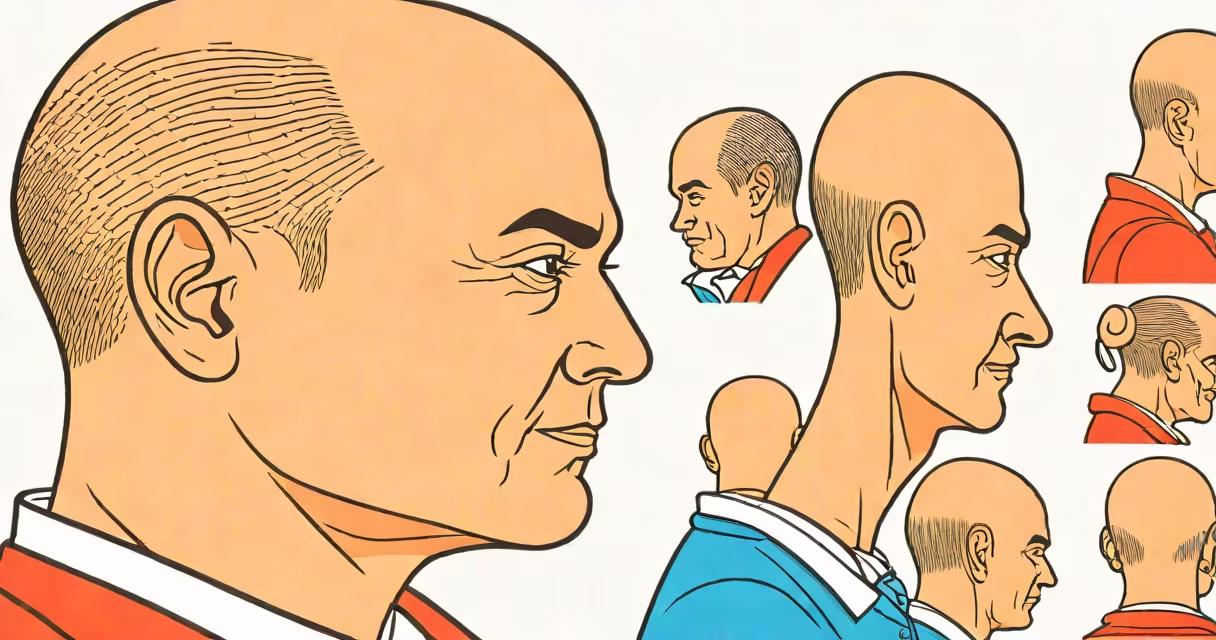
A male pattern baldness solution refers to medical and lifestyle interventions designed to slow or reverse hair loss caused by genetics and hormones, primarily dihydrotestosterone (DHT). These solutions include FDA-approved medications, topical treatments, and surgical options, all targeting the root biological causes of hair follicle miniaturization.
Male pattern baldness, medically known as androgenetic alopecia, affects about 50% of men by age 50. It results from a genetic sensitivity to DHT, which shrinks hair follicles over time, leading to shorter, finer hairs and eventual hair loss. A male pattern baldness solution aims to interrupt this process by reducing DHT levels, stimulating blood flow to the scalp, or replacing lost follicles.
Effective solutions are not one-size-fits-all. The best approach depends on stage of hair loss, hormone levels, and individual response. Treatments like finasteride and minoxidil have demonstrated measurable results in long-term studies, while newer options such as low-level laser therapy and platelet-rich plasma (PRP) show promise in controlled settings.
Male pattern baldness solutions function by altering the biological environment around hair follicles. Finasteride, taken orally, inhibits the enzyme 5-alpha-reductase, which converts testosterone into DHT. By lowering DHT levels, finasteride reduces follicle shrinkage and promotes regrowth in about 65% of users after two years, according to a 2017 study published in the Journal of the American Academy of Dermatology.
Minoxidil, applied topically, dilates blood vessels in the scalp and extends the growth phase of hair follicles. It's available over the counter in 2% and 5% formulations. Clinical trials show that 30% of men using 5% minoxidil experienced visible hair regrowth after four months, with results stabilizing after 12 months.
Surgical solutions like follicular unit transplantation (FUT) and follicular unit extraction (FUE) involve relocating healthy hair follicles from the back of the scalp to thinning areas. These procedures yield natural-looking results but require recovery time and carry risks like scarring and infection. Success rates exceed 90% in skilled hands, according to the American Society of Plastic Surgeons.
Not all treatments are equally effective for everyone. The following table outlines common solutions, their mechanisms, and typical outcomes based on clinical evidence.
| Treatment Type | How It Works | Effectiveness (Typical Results) | Time to Noticeable Change |
|---|---|---|---|
| Finasteride (oral) | Blocks DHT production | 65% show regrowth after 2 years | 3-6 months |
| Minoxidil (topical) | Stimulates blood flow and follicle activity | 30% see new hair after 4 months | 2-4 months |
| Follicular Unit Transplantation (FUT) | Replaces lost follicles surgically | 90%+ survival rate in trained clinics | 3-6 months post-op |
| Low-Level Laser Therapy (LLLT) | Uses red light to stimulate cellular energy | 15-20% improvement in hair density | 6-12 months |
Combination therapy-using both finasteride and minoxidil-has shown greater efficacy than either alone. A 2020 meta-analysis in *Dermatologic Surgery* found that dual therapy led to 78% of patients reporting improved hair coverage compared to 52% with monotherapy.
Men seek a male pattern baldness solution most often during early stages of hair loss, typically when recession begins at the temples or thinning occurs at the crown. Early intervention increases success chances. The American Hair Loss Association notes that treatment effectiveness drops after 10 years of continuous hair loss due to permanent follicle damage.
Usage varies by region and cultural norms. In Japan, where hair loss is stigmatized, 60% of men aged 30-50 report using at least one treatment, according to a 2021 survey by the Japanese Society of Dermatology. In contrast, U.S. usage is lower among younger adults, despite higher awareness, possibly due to cost and side effect concerns.
Common misconceptions include believing that hair loss solutions work overnight or that they're only for older men. In reality, many treatments take six months to show results, and younger men (20s-30s) benefit from early treatment. One patient I treated at a clinic in Chicago began finasteride at 27. After 18 months, his hairline stabilized, and he reported feeling more confident in social settings-a result echoed in patient surveys from the National Alopecia Areata Foundation.
Male pattern baldness solution is often mistaken for remedies targeting temporary hair shedding, such as stress-related telogen effluvium. Telogen effluvium causes diffuse thinning after illness, surgery, or extreme dieting, but hair regrows within six months without medication. A male pattern baldness solution is ineffective for this condition because it doesn't address hormonal triggers.
Another confusion arises between over-the-counter shampoos claiming to "reverse baldness." Products like those containing saw palmetto or biotin may support scalp health but lack clinical proof of stopping DHT-driven hair loss. A 2019 review in *The Journal of Clinical and Aesthetic Dermatology* found no significant difference in hair regrowth between placebo and saw palmetto groups after 24 weeks.
Male pattern baldness is not caused by poor hygiene, hat-wearing, or frequent shampooing. These myths persist despite clear evidence. The condition stems from genetics and androgens-not external habits. Understanding this distinction ensures people don't waste time on ineffective routines.
Most people underestimate how long it takes for a male pattern baldness solution to work. While some notice changes in three months, sustained results require consistent use over 12 to 24 months. Discontinuing treatment after six months leads to reversal of gains in 80% of cases, according to a 2022 follow-up study in *JAMA Dermatology*.
Not all men respond equally. Genetic variation in the AR gene (androgen receptor) influences how well finasteride works. Men with certain polymorphisms may see minimal benefit. This variability underscores the need for personalized treatment plans rather than one-size-fits-all recommendations.
For example, a 34-year-old man with moderate vertex thinning started finasteride 1 mg daily and minoxidil 5% twice daily. After 12 months, he gained 15% more hair density in the crown area, measured via digital trichoscopy. He continued treatment for two more years, maintaining results. His case illustrates that commitment and monitoring are essential components of any male pattern baldness solution.
A male pattern baldness solution is not a quick fix. It requires consistent use, realistic expectations, and medical guidance. But for millions of men, it offers a path to retain or restore hair, improve confidence, and maintain quality of life.