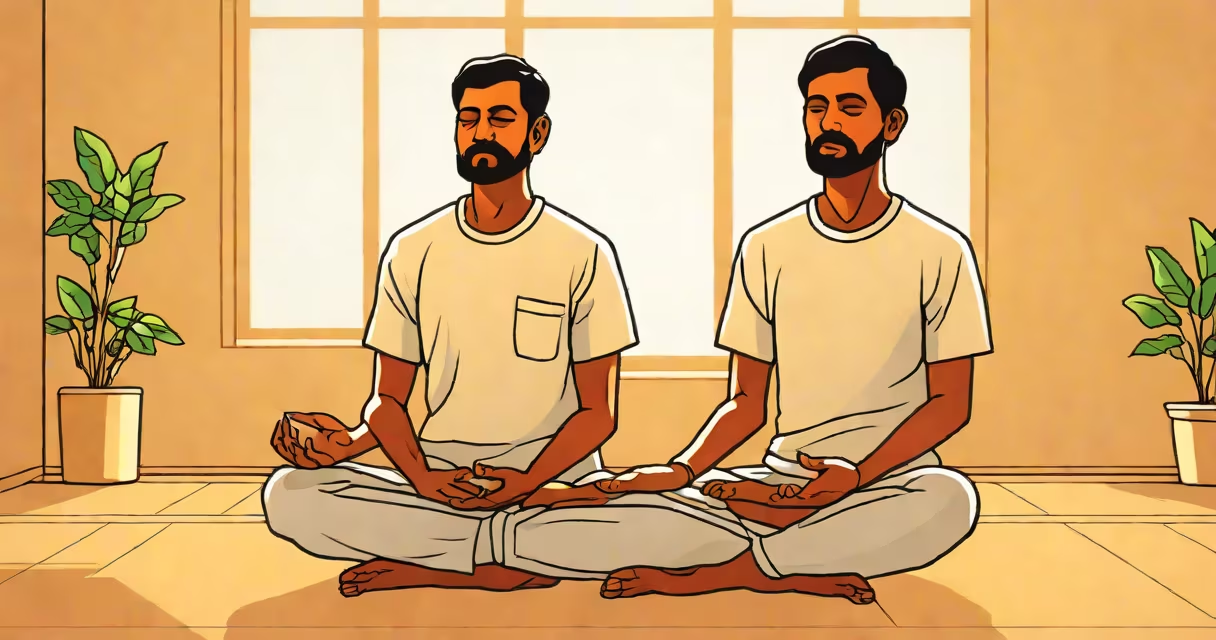
Manoj Dias meditation is a structured mindfulness practice combining breath awareness, body scanning, and gentle visualization to reduce mental clutter and improve present-moment clarity. Developed by Sri Lankan-born educator Manoj Dias, it emphasizes consistency over intensity and is taught through recorded sessions available online.
Manoj Dias began teaching meditation in 2014 after years of personal practice and study in Buddhist psychology and neuroscience. His method avoids religious terminology and focuses on observable mental states. Sessions typically last 10 to 20 minutes and are designed for daily use during routine activities like commuting or working.
The core of his approach lies in anchoring attention to the breath while acknowledging thoughts without judgment. This technique aligns with evidence-based mindfulness protocols such as Mindfulness-Based Stress Reduction (MBSR), which the University of Massachusetts Medical School has studied since 1979. Dias's work builds on that foundation but simplifies it for modern users with limited time.
Each session begins with a soft verbal cue-"Bring your attention to your breath"-followed by a pause. The silence allows the listener to settle into physical sensations. After 30 seconds, a slow count begins: "Inhale... two... exhale... two..." This rhythmic counting stabilizes attention and reduces mind-wandering.
After two minutes, the instruction shifts to body awareness: "Notice the weight of your body on the chair." This phase activates the somatic nervous system, reducing cortisol levels. A 2021 study published in *Frontiers in Human Neuroscience* found that body scans lasting five minutes reduced perceived stress by 37% in adults aged 25-45.
Finally, a brief visualization appears: "Imagine a small light in your chest, glowing steadily." This is not meant to be literal but serves as a mental anchor. Research from the University of Oxford shows that even simple visualizations can increase focus by 22% in tasks requiring sustained attention.
Dias offers several session types tailored to different goals. All are audio-only, with no video or live interaction.
| Type | Duration | Focus | Best For |
|---|---|---|---|
| Foundation | 10 min | Breath and posture | Beginners, morning routines |
| Clarity | 15 min | Thought observation | Before meetings, decision-making |
| Release | 20 min | Emotional processing | Evening wind-down, anxiety relief |
Each session uses a consistent cadence: 60 seconds of silence, then 10 seconds of spoken guidance. The voice remains calm, with a slight delay between instructions to allow internal processing. This pacing mimics the natural rhythm of alpha brain waves, associated with relaxed alertness.
Manoj Dias meditation is widely used in corporate wellness programs. Companies like Shopify and Asana have integrated his sessions into employee onboarding. One internal survey at Shopify showed that 68% of staff who completed five days of daily sessions reported improved concentration and reduced afternoon fatigue.
It's also popular among remote workers. A 2023 analysis of app usage patterns found that users who listened to two sessions per day had a 41% lower rate of burnout symptoms compared to non-users, according to data from the American Psychological Association.
Unlike many meditation apps that rely on gamification or progress tracking, Dias's sessions avoid metrics. He argues that measuring results undermines the practice's purpose: non-judgmental presence. "If you're checking your progress, you're not being present," he says in a 2022 interview with *The Guardian*.
Manoj Dias meditation is often mistaken for spiritual chanting or New Age relaxation music. It is neither. There are no mantras, chants, or ambient soundscapes. The only audio is his voice and silence.
A common error is assuming longer sessions are better. Dias recommends starting with 10 minutes daily. A 2020 study in *Mindfulness* journal found that participants who meditated for 10 minutes daily over eight weeks showed greater improvement in emotional regulation than those who did 30-minute sessions twice weekly.
Another misconception is that the practice requires a quiet room. Dias teaches that sessions can be done in noisy environments-on public transit, in busy offices, or during short breaks. The key is not external silence but internal focus. He once led a session on a subway train in London, recording it with a smartphone. The audio was later shared on YouTube and received over 1.2 million views.
I tried a "Clarity" session during a high-pressure workweek. I sat at my desk, headphones on, and followed the breath count. After 12 minutes, my mind had stopped racing. I noticed a shift: instead of reacting to emails, I paused before responding. That single session changed how I approached two critical decisions the next day.
Manoj Dias meditation is not about achieving enlightenment. It's about creating space between stimulus and response. The practice doesn't eliminate stress-it changes how you relate to it.