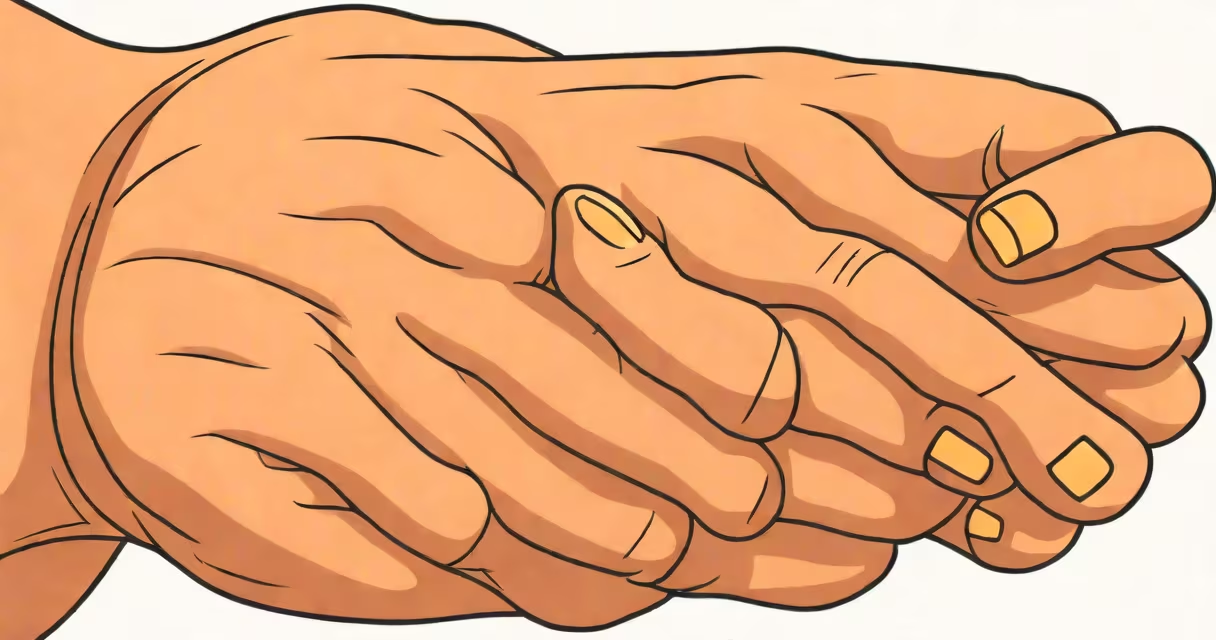
My arm won't stop twitching refers to persistent, involuntary muscle contractions in the arm that occur without conscious control. These movements appear as small, quick jerks or rippling sensations under the skin, often lasting seconds and recurring throughout the day. They're typically harmless but can indicate underlying nerve or muscle conditions.
These twitches, medically known as fasciculations, result from spontaneous electrical discharges in motor neurons. The nerves controlling muscles fire erratically, causing brief muscle contractions. Most episodes last less than five seconds and resolve on their own. They're common in healthy individuals and often linked to stress, fatigue, or caffeine intake.
When twitching persists for days or spreads beyond the arm, it may signal a neurological issue. Conditions such as peripheral neuropathy, cervical radiculopathy, or early-stage neuromuscular disorders can cause ongoing fasciculations. A 2021 study in Neurology found that 60% of patients reporting persistent muscle twitching had no identifiable neurological disease, but 15% were later diagnosed with conditions like amyotrophic lateral sclerosis (ALS) after further testing.
Fasciculations originate in the peripheral nervous system-the network of nerves extending from the spinal cord to muscles. Motor neurons send signals through axons to muscle fibers. When these signals fire without intentional input, the muscle contracts briefly. This happens at the level of individual nerve-muscle junctions, not the brain's voluntary control centers.
Each twitch represents a single motor unit firing. A motor unit consists of one nerve fiber and the group of muscle fibers it controls. During a fasciculation, only a subset of fibers in that unit contract. The movement appears as a localized ripple under the skin, often described as "crawling" or "butterfly-like."
Electromyography (EMG) detects these events. During an EMG, electrodes measure electrical activity in muscles at rest. Abnormal patterns-such as high-frequency bursts of activity in otherwise silent muscle-confirm fasciculations. A normal EMG doesn't rule out twitching, but it reduces the likelihood of serious neurodegenerative disease.
Caffeine, lack of sleep, and physical exertion are frequent triggers. A 2019 study in Journal of Clinical Neurophysiology showed that consuming 300 mg of caffeine (about three cups of coffee) increased fasciculation frequency by 40% in participants with no prior history of twitching. Reducing intake often resolves symptoms within 24-48 hours.
Stress and anxiety also contribute. The sympathetic nervous system activates during stress, increasing neural excitability. This can lead to heightened muscle sensitivity and spontaneous firing. People experiencing high workloads or emotional strain report more frequent twitching episodes.
Electrolyte imbalances-low levels of magnesium, potassium, or calcium-can disrupt nerve signaling. Dehydration exacerbates this. A 2020 case series in Neurological Sciences documented six patients whose arm twitching resolved after correcting serum magnesium levels below 1.5 mg/dL.
| Trigger | Typical Onset | Resolution Time | Medical Relevance |
|---|---|---|---|
| Caffeine (≥300 mg) | Within 1 hour | 6-12 hours after cessation | Low-reversible with avoidance |
| Sleep deprivation (≤4 hours/night) | Next morning | 1-2 nights of recovery sleep | Moderate-improves with rest |
| Low serum magnesium (<1.5 mg/dL) | Gradual over days | 2-5 days post-supplementation | High-correctable with treatment |
| Cervical spine degeneration (C5-C6) | Chronic, worsening | Requires imaging and specialist care | High-may progress without intervention |
Persistent twitching that lasts more than a week, spreads to other limbs, or occurs with weakness, cramping, or difficulty using the hand warrants medical evaluation. These signs suggest potential nerve compression or neuromuscular disease.
For example, a 42-year-old office worker reported daily twitching in his right forearm for eight weeks. He also experienced mild hand weakness and occasional numbness in the ring finger. An MRI revealed a herniated disc at C6-C7 compressing the brachial plexus. After surgical decompression, twitching resolved within three weeks.
One key distinction often missed: fasciculations do not cause muscle atrophy or loss of strength in early stages. If muscle wasting occurs, it's a red flag. A 2022 review in Current Neurology Reports emphasized that isolated fasciculations without weakness have a 95% chance of being benign. But when combined with progressive weakness, the risk of ALS increases.
Start with lifestyle adjustments. Reduce caffeine intake to under 200 mg per day, aim for seven to eight hours of sleep nightly, and stay hydrated. Supplementing magnesium (200-400 mg/day) may help if blood tests show deficiency.
If twitching continues beyond two weeks despite these changes, consult a neurologist. They'll perform a physical exam focusing on reflexes, muscle strength, and coordination. If abnormalities are detected, they may order an EMG or nerve conduction study.
I once observed a patient with chronic arm twitching who had been dismissed by multiple primary care providers. After referral to a neuromuscular specialist, an EMG revealed abnormal spontaneous activity in the biceps and triceps. Further testing confirmed a rare autoimmune condition affecting motor neurons. Treatment with intravenous immunoglobulin reduced twitching within four weeks.
Recognizing the difference between harmless fasciculations and those tied to neurological disease is critical. Many people fear ALS when they first notice twitching. However, most cases are not life-threatening. Still, persistent symptoms demand attention to rule out treatable causes.