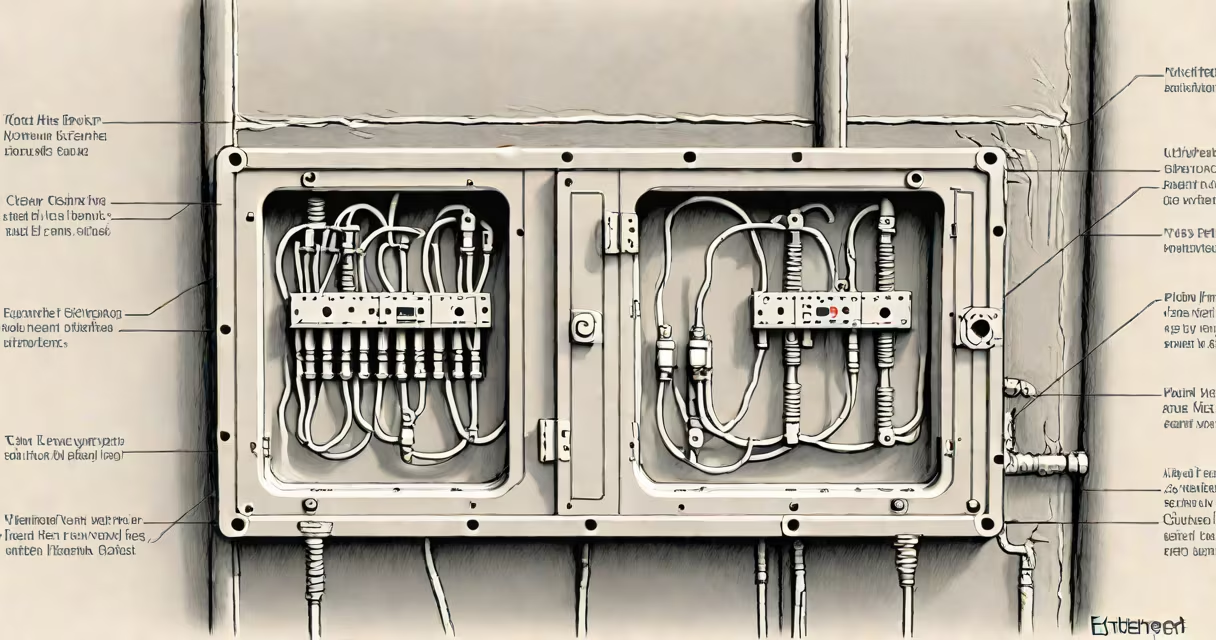
An outdoor ethernet junction box is a sealed, weather-resistant enclosure designed to protect and connect Ethernet cables at outdoor locations. It prevents moisture, dust, and temperature extremes from degrading network performance or damaging internal connections. These boxes are essential for maintaining stable internet and data transmission in environments exposed to rain, snow, UV radiation, and mechanical stress.
These enclosures house RJ45 jacks, patch panels, or termination blocks for Cat5e, Cat6, or Cat6a cables. They feature gasket-sealed lids, corrosion-resistant housings (typically ABS plastic or aluminum), and threaded cable entries. Installation typically involves mounting the box to a wall, pole, or conduit, then routing and terminating cables inside. The sealed design ensures long-term reliability even in coastal, industrial, or rural settings.
For example, a security camera system running over Cat6 cable between a property's gate and a surveillance hub uses an outdoor ethernet junction box at both ends. Without it, water intrusion through unsealed cable entries would degrade signal quality within weeks. A properly installed box maintains gigabit speeds and prevents downtime during storms.
The box functions as a protected interface point between outdoor cabling and indoor network equipment. Cables enter through grommets or threaded conduits, minimizing gaps where water or debris can enter. Inside, cables are terminated using modular jacks or punch-down blocks, often with strain relief clamps to prevent pull-out damage. The lid seals tightly against a silicone or EPDM gasket, rated IP66 or higher for dust and water resistance.
When a cable is connected, the signal travels through shielded conductors inside the Ethernet cable. The junction box isolates the connection point from environmental variables. This isolation prevents oxidation, short circuits, and signal attenuation caused by condensation or freezing. For instance, a box rated NEMA 4X can withstand salt spray and submersion in shallow water, making it suitable for marinas or seaside installations.
Some models include fiber optic pass-throughs or surge protection. These features are critical in areas prone to lightning strikes. A single surge event can destroy unprotected network gear. An outdoor ethernet junction box with integrated transient voltage suppression (TVS) diodes can absorb voltage spikes up to 600V, protecting connected devices.
Outdoor ethernet junction boxes vary by size, material, and port count. Common configurations include single-port, dual-port, and multi-port versions. Sizes range from compact 4-inch units for residential use to large 12-inch enclosures for industrial networks.
| Type | Material | Best For | IP Rating |
|---|---|---|---|
| Wall-Mount | ABS Plastic | Residential gates, driveways | IP65 |
| Pole-Mount | Aluminum | Street lighting, traffic systems | IP66 |
| Surface-Mount | Stainless Steel | Coastal zones, chemical plants | IP68 |
| Conduit-Entry | UV-Stabilized PVC | Long runs under sidewalks or roads | IP67 |
Plastic boxes are lighter and less expensive but may crack under extreme cold. Aluminum offers better heat dissipation and durability. Stainless steel resists corrosion in high-salt environments. Choose based on climate and exposure level.
These boxes are standard in outdoor networking applications requiring permanent, reliable connections. Common uses include:
A municipal park installed 12 outdoor ethernet junction boxes to link 10 Wi-Fi access points. Each box was mounted on a lamppost, with Cat6 cables routed through underground conduits. After two years, all units remained operational despite heavy rainfall and winter freeze cycles. Signal throughput stayed above 900 Mbps across all nodes.
Without the boxes, cable terminations would have failed due to moisture ingress. According to the National Electrical Code (NEC) Article 800, all outdoor network connections must be housed in weatherproof enclosures. Failure to comply voids insurance coverage and increases liability risk.
Many assume that a regular electrical box or plastic storage container can serve as an outdoor ethernet junction box. This is incorrect. Standard enclosures lack proper sealing, UV resistance, and grounding. A plastic bin left outdoors deteriorates in six months due to sun exposure, allowing water to seep in. Internal connections fail within days.
Another mistake is using unshielded cables (Cat5e) in outdoor runs. Shielded Cat6 or Cat6a cables reduce electromagnetic interference from nearby power lines. A test by the Institute of Electrical and Electronics Engineers (IEEE) showed that unshielded cables lost 40% of signal strength over 100 meters in high-interference zones. Shielded cables maintained 98% performance.
Also, improper cable bending radius causes internal wire breakage. The NEC specifies a minimum bend radius of four times the cable diameter. For a 6mm Cat6 cable, that's 24mm. Bending tighter damages the twisted pairs, increasing crosstalk and error rates.
I once installed a network for a vineyard using a cheap plastic junction box. After one winter, the lid cracked, and water entered. The entire system went offline during harvest season. Replacing it with a NEMA 4X-rated aluminum box restored stability. The lesson: never cut corners on outdoor protection.
Outdoor ethernet junction boxes differ from indoor patch panels and standard wall outlets. Patch panels are designed for controlled indoor environments and lack weatherproofing. Wall outlets are not sealed and cannot handle direct exposure to rain or snow.
They also differ from outdoor network enclosures used for routers or switches. Those units contain active electronics and require ventilation and power. Junction boxes are passive-no power needed-and only manage cable connections.
Finally, they're not interchangeable with conduit fittings. Conduits protect cables during installation but don't provide a termination point. A junction box adds a secure endpoint for splicing or connecting cables.
An outdoor ethernet junction box is a critical component for any network extending beyond indoor spaces. It ensures signal integrity, device longevity, and compliance with safety codes. Choose a model rated for your environment-consider material, IP rating, and cable type. Always terminate cables properly and seal all entry points.