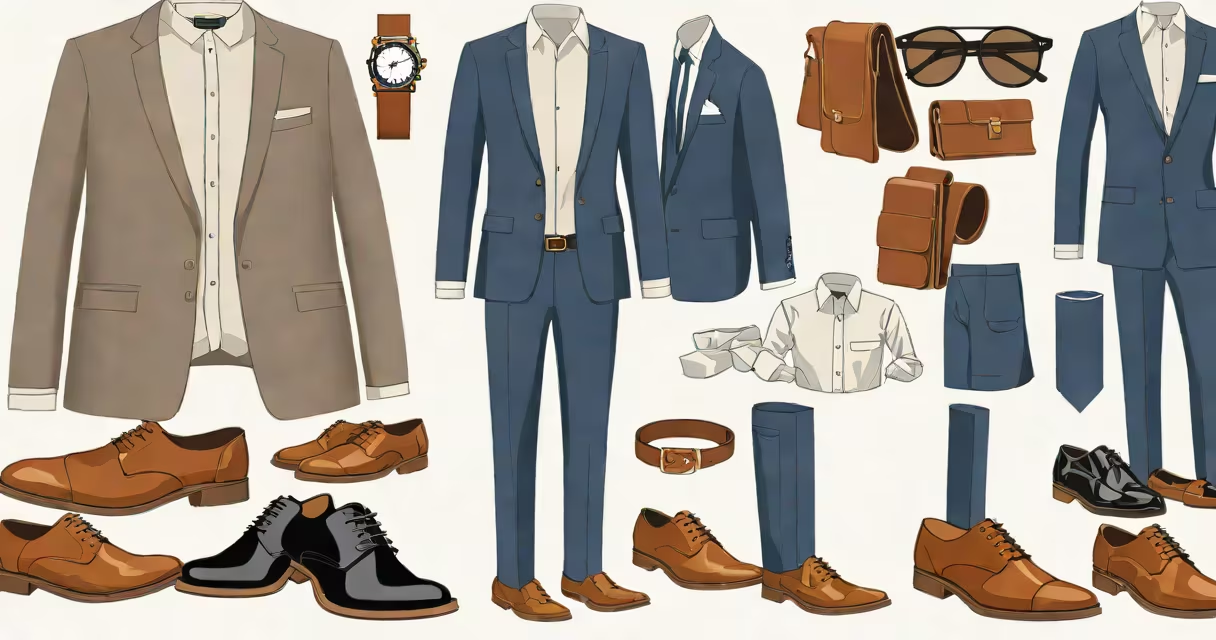
An outfit for men is a coordinated set of clothing items worn together to create a unified, intentional look suited to a specific setting, body type, and personal taste. It includes foundational layers like shirts, pants, shoes, and outerwear, chosen for proportion, color harmony, and context-appropriate formality.
Men's outfits function as visual shorthand. A well-constructed ensemble signals professionalism, confidence, or leisure depending on context. The components must work together-not just in color and texture, but in silhouette and scale. A mismatched outfit disrupts this signal, often drawing unintended attention.
For example, wearing a tailored navy suit with white dress shoes and a crisp oxford shirt creates a classic business look. Wearing the same suit with sneakers and a graphic tee shifts the tone entirely to casual. The same base garments produce different social meanings based on pairing choices.
Every effective outfit follows a hierarchy of structure. The foundation is fit-clothing must align with the wearer's body dimensions. A jacket that pulls at the shoulders or pants that pool at the ankle undermines even the most carefully selected colors.
Next comes layering. Tops, bottoms, and outerwear interact through scale and proportion. A bulky sweater over slim-fit trousers can appear unbalanced. Conversely, a fitted shirt under a wide-cut coat may look intentional and modern. The goal is visual equilibrium.
Color coordination prevents clashing. Neutral palettes-black, gray, navy, beige-offer flexibility. Complementary combinations, like burgundy and olive green, require careful calibration. Avoid high-contrast pairings unless intentionally styled, such as a red tie with a black suit.
Outfits vary by event. Formal settings demand precision; casual ones allow creative freedom. Below are common categories:
| Occasion | Typical Components | Example |
|---|---|---|
| Business Formal | Suit, dress shirt, tie, dress shoes | Navy suit, white button-down, burgundy tie, black oxfords |
| Casual | Jeans, t-shirt, sneakers, jacket | Dark wash jeans, heather gray crew neck, white leather sneakers, denim jacket |
| Weekend/Leisure | Chinos, polo shirt, loafers, watch | Beige chinos, short-sleeve navy polo, brown loafers, silver watch |
| Evening/Smart Casual | Blazer, dark jeans, dress shoes, patterned shirt | Black blazer, charcoal jeans, tan brogues, striped cotton shirt |
Each category assumes a baseline level of grooming and footwear consistency. A man wearing a tailored suit with scuffed loafers sends a conflicting message-formality undermined by neglect.
Many men assume that "dressing well" means buying expensive clothes. But cost doesn't guarantee cohesion. A $500 jacket paired with mismatched socks and ill-fitting pants still appears disheveled.
Another error is over-accessorizing. Adding multiple rings, chains, or bold watches can clutter a clean outfit. Minimalism often wins: one statement piece-like a vintage leather belt or a single gold ring-can improve a look without overwhelming it.
A lesser-known rule: avoid repeating patterns across multiple items. Wearing a striped shirt with a checkered jacket creates visual noise. Even subtle textures-ribbed knits, fine weaves-should not compete for attention.
Consider a man preparing for a weekend trip. He wants a look that transitions. His goal: comfort, polish, and adaptability.
He chooses:
This combination works because:
At brunch, he wears the outfit as-is. For dinner, he swaps the shirt for a black turtleneck and adds a scarf. The core remains stable; only minor elements shift.
"Outfit for men" is not synonymous with "men's fashion." Fashion changes seasonally. An outfit is functional and enduring. A man wearing a seasonal trend-say, cargo pants with a crop top-may be following fashion, but not creating a cohesive outfit.
Also, an outfit is not a single garment. A man wearing only a shirt and pants is not "dressed" in an outfit sense unless those pieces are intentionally matched. A full outfit implies intentionality across multiple items.
One key distinction: outfits are context-aware. A man in a hoodie and joggers may be comfortable, but that ensemble lacks the layered intent required for a true outfit. It's casual wear, not an outfit.
I once wore a navy suit with a bright yellow tie to a job interview. The tie stood out-intentionally. I'd researched the company's culture: creative, forward-thinking. The bold choice signaled confidence and creativity. I got the job.
That moment taught me: an outfit isn't just about matching clothes. It's about communication. The right outfit for men says something-about identity, mood, purpose.
Outfit for men is not about perfection. It's about coherence. Choose pieces that share a tone-whether minimalist, rugged, or refined. Prioritize fit, color harmony, and context. When these align, the result is a look that feels authentic and intentional.