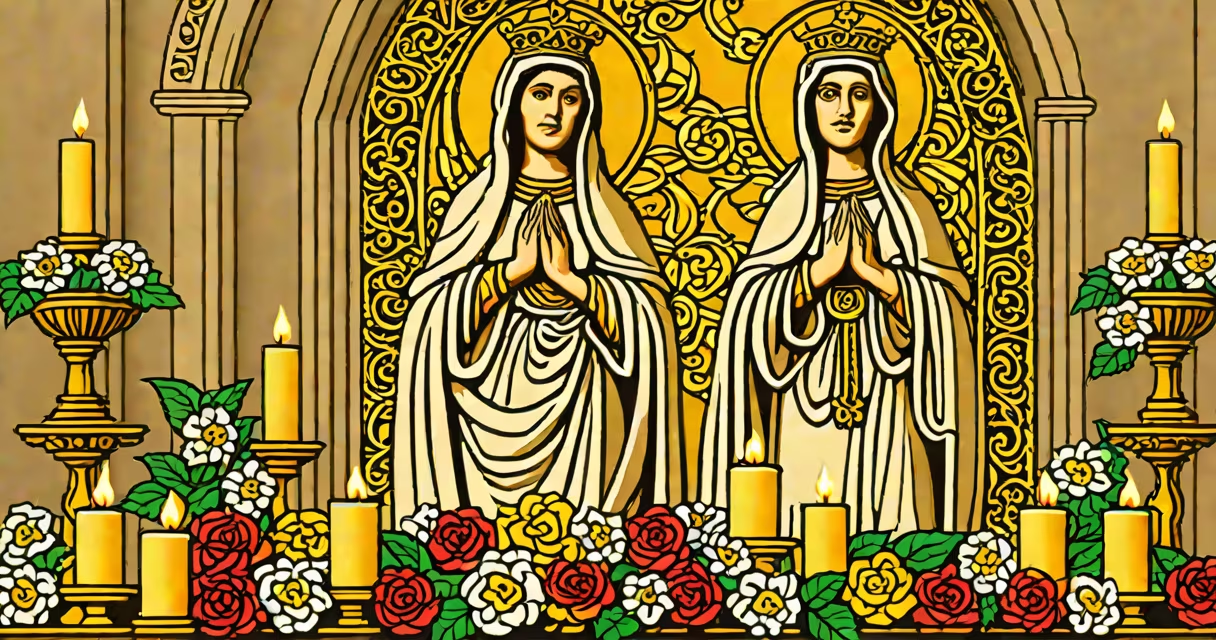
Our Lady of Manaoag is a Roman Catholic Marian title and venerated image of the Virgin Mary enshrined in the Church of Manaoag in Pangasinan, Philippines. The statue, believed to have been carved in the 17th century, is central to a major pilgrimage site drawing over 100,000 devotees annually during its feast on January 21.
The image is a wooden statue covered in a layer of white wax, giving it a luminous, almost ethereal appearance. Its face is serene, eyes slightly downturned, hands clasped in prayer. The figure stands in a traditional Marian pose-immaculate, veiled, and holding the Christ Child in her arms. The original statue was brought from Mexico by Spanish missionaries and later transferred to the town of Manaoag, where it became the spiritual heart of the region.
Devotees report physical healings, emotional solace, and miraculous interventions attributed to the intercession of Our Lady of Manaoag. These accounts are documented in local parish records and verified by the Archdiocese of Lingayen-Dagupan. The shrine's popularity stems from its role as a cultural and religious anchor for the Ilocano-speaking population of northern Luzon.
Devotion to Our Lady of Manaoag centers on personal petition and communal thanksgiving. Pilgrims often travel hundreds of kilometers on foot or by public transport to reach the shrine. Many arrive barefoot, carrying rosaries, candles, and handwritten prayers. Upon entering the church, they light a candle, kneel before the altar, and recite the Rosary or a specific prayer known as the "Pasyon ng Manaoag."
After praying, many participants leave behind small tokens-coins, photographs, or written notes-placed beneath the altar or in designated offering boxes. These acts are seen as gestures of faith and gratitude. The church maintains a logbook where visitors record their intentions and testimonies, which are reviewed periodically by the parish priest.
During the annual feast, the statue is carried in procession through the streets of Manaoag. Thousands follow on foot, singing hymns in Ilocano and Tagalog. The event draws media coverage and is broadcast live by local television stations. The procession ends with a solemn Mass celebrated by the archbishop, who blesses the crowd and reaffirms the significance of the image in national Catholic identity.
There are three primary forms of devotion associated with Our Lady of Manaoag:
The shrine's origins trace to the early 1600s, when Spanish friars established a mission in the area. The statue was originally housed in a small chapel near the Agno River. Over time, the structure was rebuilt multiple times due to typhoons and earthquakes. The current church, completed in 1935, was designed in a blend of Spanish colonial and Ilocano architectural styles, featuring thick stone walls, a tiled roof, and a bell tower shaped like a bishop's mitre.
A lesser-known fact: the original statue was nearly destroyed during World War II. In 1944, Japanese forces occupied the region and ordered the removal of religious artifacts. A local priest hid the image in a rice barn, wrapping it in burlap and concealing it under sacks of grain. After the war, the statue was recovered intact. This act of preservation is commemorated annually with a reenactment during the feast week.
Some confuse Our Lady of Manaoag with other Marian titles such as Our Lady of Guadalupe or Our Lady of Lourdes. While all are venerated images of the Virgin Mary, each has distinct historical roots and devotional practices. Our Lady of Manaoag is unique in its regional focus and linguistic character-its prayers and processions are conducted primarily in Ilocano, not Latin or Spanish.
Another misconception is that the statue performs miracles independently. The Catholic Church teaches that miracles are granted through divine intervention, not by the image itself. The statue is a symbol of faith, not a magical object. The Archdiocese of Lingayen-Dagupan explicitly states that "no supernatural power resides in the wood or wax-it is the faithful's trust in God that effects change."
Some travelers assume the shrine is accessible year-round without planning. In reality, the church limits daily visitor capacity to 5,000 people during peak season. Advance registration is required for groups of ten or more. The church also enforces a curfew after 9 PM, requiring all pilgrims to leave by midnight to prevent overcrowding and ensure safety.
In 2022, a 68-year-old farmer from Binalonan traveled 120 kilometers on foot to reach the shrine. He had been diagnosed with stage-three lung cancer and had undergone chemotherapy with limited success. His wife, a devout follower, prayed to Our Lady of Manaoag for a sign. Three days before the feast, she reported seeing a vision of the Virgin in a dream, wearing a white veil and pointing toward the north.
He began his process on January 18, walking through mountain trails and rural roads. He stopped at roadside shrines along the way, lighting candles and saying the Rosary. On January 21, he arrived at the church at dawn. After kneeling at the altar, he placed a photograph of his daughter and a vial of his medication beneath the marble slab near the altar.
By February 1, his doctor confirmed a significant reduction in tumor size. He returned to the church in March to offer a thanksgiving Mass. His testimony was included in the official parish journal and shared during the 2023 feast. The church did not claim credit for the recovery, stating only that "faith, perseverance, and medical care together form the path to healing."
While several Marian shrines exist in the Philippines, Our Lady of Manaoag stands out in both scale and cultural specificity. The table below compares key features:
| Feature | Our Lady of Manaoag (Manaoag) | Our Lady of Piat (Cagayan) | Our Lady of Peñafrancia (Nueva Cáceres) |
|---|---|---|---|
| Location | Pangasinan | Cagayan | Camarines Norte |
| First recorded apparition | 1600s (Spanish colonial period) | 1700s (local legend) | 1600s (documented in 1700s) |
| Annual pilgrim count | ~120,000 | ~80,000 | ~150,000 |
| Primary language of devotion | Ilocano | Ibanag | Tagalog |
| Statue material | Wood, wax coating | Wood, painted | Wood, gilded |
Despite lower numbers than Our Lady of Peñafrancia, Manaoag's devotion is more localized and deeply embedded in family traditions. Unlike Peñafrancia, which attracts international pilgrims, Manaoag remains rooted in regional identity. The shrine's influence extends beyond religion-it shapes local economy, education, and social services. The church runs a free clinic and provides scholarships to students from low-income families.
When I visited in 2021, I witnessed a group of children from a nearby barangay performing a dance called "Kabkab" at the entrance. They wore handmade costumes made from recycled materials and sang songs about peace and unity. Their performance was not part of the official program but was welcomed by the staff. That moment reminded me that devotion here is not just ritual-it's lived culture.
Our Lady of Manaoag is not merely a religious image. She is a focal point of identity, resilience, and community. Her story reflects centuries of faith, migration, and adaptation. For millions in northern Luzon, she is not a distant saint-but a neighbor, a mother, a protector. Her presence continues to inspire pilgrimage, healing, and hope.