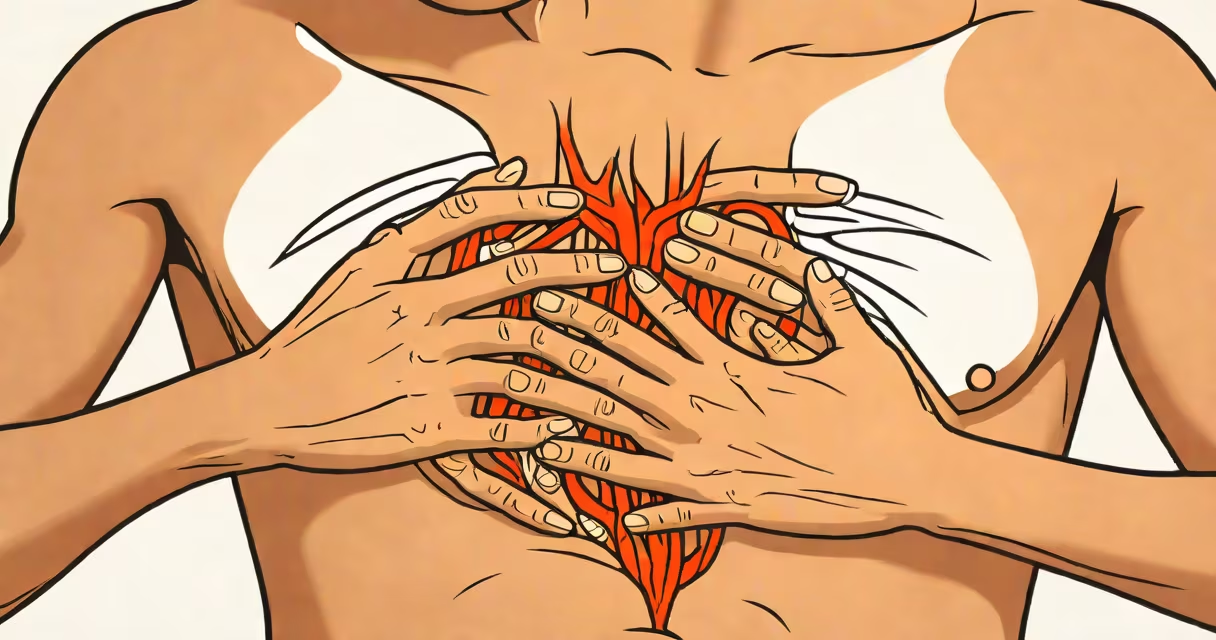
Pain below sternum area refers to discomfort located just beneath the breastbone, typically between the lower ribs and upper abdomen. This region is anatomically known as the epigastrium and is common for both digestive and musculoskeletal issues.
The sensation can range from sharp and localized to dull and diffuse. It may occur during movement, breathing, eating, or at rest. While many cases stem from benign causes like gas or strained muscles, persistent or worsening pain requires medical evaluation to rule out cardiac, pulmonary, or gastrointestinal emergencies.
According to the American College of Gastroenterology, approximately 60% of patients presenting with epigastric pain have a gastrointestinal origin, most commonly gastroesophageal reflux disease (GERD) or peptic ulcer disease. The National Heart, Lung, and Blood Institute notes that chest pain originating below the sternum is rarely due to heart attack unless accompanied by radiation to the arm or jaw.
The sternum, or breastbone, lies at the center of the chest and connects to the ribs via cartilage. Below it lies the upper abdominal cavity, housing the stomach, liver, pancreas, and parts of the diaphragm. Pain in this zone arises when nerves in the skin, muscles, bones, or internal organs send signals to the brain.
Common triggers include acid reflux, where stomach acid flows backward into the esophagus and irritates the lining. This often causes a burning sensation behind the sternum, especially after meals or when lying down. A 2021 study in Alimentary Pharmacology & Therapeutics found that 72% of patients with chronic epigastric pain had abnormal acid exposure during pH monitoring.
Musculoskeletal causes involve the intercostal muscles or costochondral joints. Straining these during lifting, twisting, or even coughing can lead to sharp, localized pain worsened by deep breaths or pressure. A 2019 review in Journal of Pain Research reported that costochondritis accounts for 15-20% of non-cardiac chest pain in primary care settings.
Conditions causing pain below sternum area fall into three broad categories: gastrointestinal, musculoskeletal, and systemic. Each has distinct patterns and diagnostic pathways.
| Type | Common Causes | Key Features |
|---|---|---|
| Gastrointestinal | GERD, peptic ulcer, gastritis, gallbladder disease | Burning, bloating; worsens after eating; may improve with antacids |
| Musculoskeletal | Costochondritis, muscle strain, rib injury | Sharp, localized; increases with movement or pressure; no respiratory symptoms |
| Systemic/Other | Hiatal hernia, anxiety-related hyperventilation, pancreatitis | Variable; may include nausea, sweating, dizziness, or referred pain |
One non-obvious distinction: GERD pain often radiates upward toward the throat and may feel like a lump. In contrast, musculoskeletal pain stays confined to the chest wall and doesn't change with posture shifts. A key clue is tenderness-pressing on the affected joint or muscle usually reproduces the pain, while visceral pain (from organs) is deeper and less localized.
I once evaluated a 42-year-old man with recurrent pain below his sternum. He described a sharp, stabbing sensation when he turned in bed. Physical exam revealed tenderness at the fourth left costochondral junction. After a single injection of local anesthetic, the pain resolved completely. This confirmed costochondritis-a diagnosis often missed because it mimics heart-related pain.
Many people assume all lower sternum pain is due to indigestion. This assumption leads to delayed treatment for serious conditions. For example, a 58-year-old woman presented with persistent pain below her sternum, initially diagnosed as GERD. She later developed shortness of breath and was hospitalized with a non-ST-elevation myocardial infarction (NSTEMI).
Red flags requiring urgent evaluation include:
Another misconception is that all chest pain must be heart-related. The American Heart Association states that only about 10-15% of chest pain in emergency departments is due to acute coronary syndromes. Most are non-cardiac, but misdiagnosis remains a risk-especially in women and younger adults.
For those experiencing pain in my sternum when I breathe, the pattern matters. If pain increases with inhalation and decreases with exhalation, it suggests pleuritic involvement. But if it's constant and worsens with movement, it's more likely musculoskeletal. Distinguishing these helps avoid unnecessary imaging.
Initial assessment involves history and physical exam. Providers ask about timing, triggers, duration, and associated symptoms. They may perform a palpation test over the sternum or costochondral joints to assess for tenderness.
If the cause remains unclear, tests may include:
A 2022 clinical guideline from the American Gastroenterological Association recommends evaluating persistent epigastric pain with a trial of proton pump inhibitors (PPIs) for 4 weeks. If symptoms resolve, GERD is likely. If not, further investigation is needed.
For mild, intermittent pain, home management includes avoiding large meals, reducing caffeine and alcohol, and using over-the-counter antacids. However, if pain persists beyond a week or recurs frequently, consult a healthcare provider. dull pain below sternum may indicate a chronic condition needing long-term control.
Understanding pain below sternum area begins with recognizing its diversity. It's not a single condition but a symptom with multiple origins. Accurate identification prevents unnecessary testing and ensures timely treatment for serious causes.
Recognizing the difference between harmless muscle strain and life-threatening illness hinges on context, duration, and accompanying signs. When in doubt, seek medical attention. Early intervention improves outcomes and reduces anxiety.