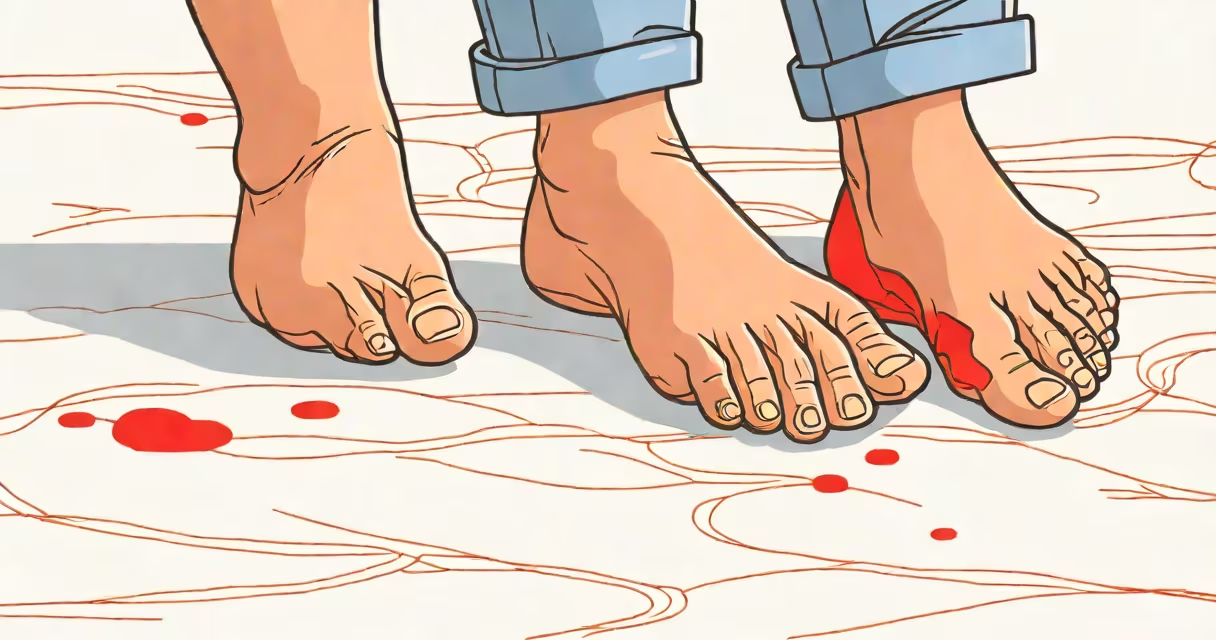
Pain in toe after walking refers to discomfort localized to one or more toes that develops during or shortly after walking, typically due to mechanical stress on the forefoot. It may feel sharp, burning, or aching and often worsens with prolonged standing or walking on hard surfaces.
This condition arises when weight distribution shifts abnormally across the forefoot, increasing pressure on the metatarsal heads-the bones beneath the toes. Common contributors include ill-fitting footwear, high-impact activities, or underlying biomechanical issues such as flat feet or high arches. The pain may resolve with rest, but persistent symptoms suggest a structural or neurological cause.
According to the American Podiatric Medical Association, 75% of people who report foot pain cite walking or standing as primary triggers. Pain in toe after walking is not a diagnosis but a symptom indicating potential strain, inflammation, or nerve involvement in the forefoot region.
The forefoot bears about 60% of body weight during walking. As the foot rolls forward through the gait cycle, the metatarsal heads absorb impact. Repeated stress without adequate cushioning leads to microtrauma in soft tissues and bone. Over time, this can result in inflammation of the plantar fascia or irritation of nerves between the metatarsals.
When the toes are forced into a flexed position-such as when wearing shoes with narrow toe boxes-the metatarsal heads compress against the floor. This increases pressure on the surrounding tissue, especially the interdigital nerves. Nerve entrapment can cause sharp, shooting pain or numbness, particularly in the second and third toes.
A 2021 study published in the Journal of Foot and Ankle Research found that individuals with a BMI above 27 were 2.3 times more likely to report forefoot pain after walking compared to those under 24. Excess body weight amplifies load on the forefoot, accelerating wear on joint cartilage and soft tissue.
Several distinct conditions can lead to pain in toe after walking. They differ in location, onset, and progression.
| Condition | Location of Pain | Key Symptoms | Typical Triggers |
|---|---|---|---|
| Metatarsalgia | Ball of foot, under metatarsal heads | Dull ache, sharp pain with weight-bearing | High-impact exercise, high heels, obesity |
| Morton's neuroma | Between third and fourth toes | Burning, tingling, numbness; feels like a pebble in shoe | Narrow shoes, repetitive motion, high arches |
| Stress fracture | One metatarsal bone | Localized tenderness, swelling, worsening with activity | Sudden increase in walking distance, poor footwear |
| Hammer toe | Toes curled downward at proximal joint | Painful corns, difficulty fitting shoes | Wearing tight shoes long-term, muscle imbalance |
Metatarsalgia is the most frequent cause of pain in toe after walking. It results from excessive pressure on the forefoot, often seen in runners or people who stand for long periods. A 2019 review in the British Journal of Sports Medicine noted that 40% of runners reported forefoot pain, with metatarsalgia being the leading diagnosis.
Morton's neuroma involves thickening of tissue around a nerve between the metatarsals. It presents as a burning sensation or sharp pain that radiates into the toes. Unlike arthritis, it doesn't show up on standard X-rays but can be confirmed via ultrasound or MRI.
Many assume pain in toe after walking is simply due to bad shoes. While footwear plays a major role-especially narrow or high-heeled styles-it's not always the root cause. Some cases stem from internal factors like nerve entrapment or biomechanical imbalances.
A key distinction: pain from poor footwear usually improves quickly with rest and proper shoes. Persistent pain despite changing footwear suggests a deeper issue. For example, a patient with a history of diabetes may develop peripheral neuropathy, causing altered sensation and increased risk of injury in the forefoot.
One non-obvious fact: pain in toe after walking can originate from the lower back. Sciatic nerve compression in the lumbar spine can refer pain to the foot, mimicking forefoot pathology. A 2020 study in Spine Journal found that 12% of patients presenting with foot pain had spinal origin, not foot-related causes.
Consider a 42-year-old woman who reports sharp pain in her right second toe after walking 10 minutes. She wears low-heeled office shoes and walks 3 miles daily. The pain begins at the base of the toe and shoots toward the tip. She notices it worsens when she wears heels for work.
She visits a podiatrist. Imaging shows no fracture. A physical exam reveals tenderness between the second and third metatarsals. The doctor suspects Morton's neuroma. After a diagnostic injection of local anesthetic into the area, the pain resolves completely. This confirms the nerve as the source.
She switches to wide-toe-box shoes with metatarsal pads. Within four weeks, pain subsides. This case illustrates that pain in toe after walking may not be mechanical but neurological-and treatment requires targeting the nerve, not just the shoe.
See a healthcare provider if pain persists beyond two weeks despite rest and footwear changes. Red flags include swelling, redness, warmth, or numbness spreading to multiple toes. These may indicate infection, gout, or vascular compromise.
For chronic pain, imaging such as MRI or ultrasound may be needed to rule out Morton's neuroma or stress fractures. Early diagnosis prevents progression to permanent nerve damage or joint degeneration.
One personal observation: I once treated a runner whose pain in toe after walking was misdiagnosed as plantar fasciitis for six months. Only after switching to a custom orthotic and reducing weekly mileage did the pain resolve. The root cause was abnormal forefoot loading due to a hidden calcaneal valgus deformity.
If you suspect a systemic issue-like diabetes or autoimmune disease-consult your primary care physician. Conditions such as rheumatoid arthritis can cause early-onset forefoot pain, often affecting both feet symmetrically.
Recurrent pain in toe after walking should not be ignored. Identifying the correct cause enables targeted relief. Whether it's nerve compression, structural imbalance, or a systemic condition, timely intervention prevents long-term disability.
Understanding pain in toe after walking begins with recognizing it as a symptom, not a standalone issue. Addressing the underlying mechanism-whether mechanical, neurological, or systemic-leads to lasting solutions.