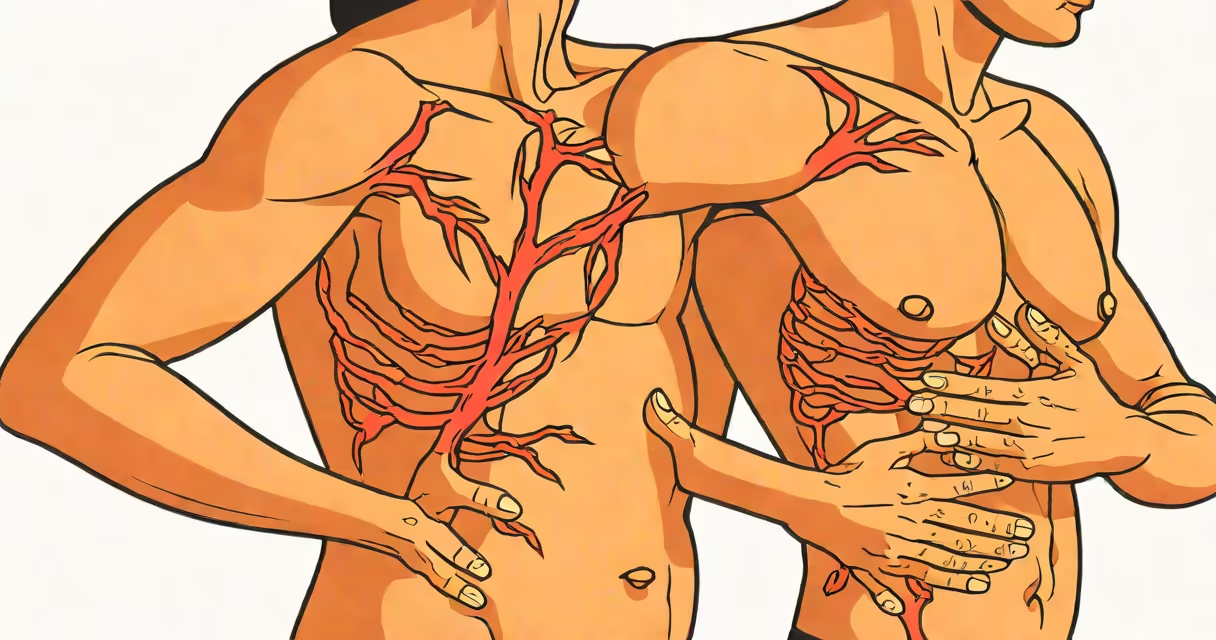
Pain under right breast and side refers to discomfort localized between the lower ribs and the right abdominal wall, often described as sharp, dull, or pressure-like. It may originate from muscles, nerves, organs, or bones in the thoracic or upper abdominal region. This area includes the right lower rib cage, intercostal muscles, diaphragm, and underlying structures such as the liver, gallbladder, and right lung.
Common triggers include muscle strain from repetitive motion, inflammation of the cartilage connecting ribs to the sternum (costochondritis), irritation of the lining around the lungs (pleurisy), or gallbladder disease. The pain may worsen with breathing, movement, or pressure. Accurate diagnosis requires distinguishing between benign and serious conditions.
According to the American College of Gastroenterology, gallbladder-related pain affects approximately 10% of adults over 40, with right upper quadrant pain being a sign symptom. The National Institute of Diabetes and Digestive and Kidney Diseases notes that gallstones cause obstruction in bile ducts, leading to intense, cramping pain under the right rib cage that may radiate to the back or shoulder.
The right side of the rib cage houses the right lobe of the liver, the gallbladder, part of the right lung, and the right portion of the diaphragm. Nerves from the intercostal muscles and phrenic nerve supply sensation to this region. Pain signals travel through these pathways to the spinal cord and brain.
When tissue is inflamed or compressed, nociceptors fire, sending pain signals. For example, during a gallbladder attack, bile duct obstruction causes the gallbladder to contract forcefully, triggering sharp pain. Similarly, costochondritis involves swelling of the cartilage at the junction of the ribs and sternum, causing tenderness when pressed.
A 2021 study published in Journal of Pain Research found that 68% of patients reporting right-sided chest pain had musculoskeletal origins, while 19% had visceral causes like gallbladder or lung issues. This highlights the importance of physical exam and imaging in differentiating causes.
Conditions causing pain under right breast and side fall into three categories: musculoskeletal, visceral (organ-related), and neurological. Each has distinct characteristics.
| Type | Common Causes | Key Features |
|---|---|---|
| Musculoskeletal | Costochondritis, rib fracture, muscle strain | Sharp pain with movement or deep breath; tenderness to touch; localized to specific rib area |
| Visceral | Gallstones, hepatitis, pneumonia, pleurisy | Pain worsens with inhalation; may radiate to back or shoulder; associated with fever, nausea, or cough |
| Neurological | Shingles (herpes zoster), intercostal neuralgia | Burning or tingling pain along a rib line; may appear in a band pattern; skin rash may develop later |
Costochondritis is one of the most frequently misdiagnosed causes. It presents as a sharp, localized pain at the front of the rib cage, especially near the sternum. Pressing on the affected joint reproduces the pain. The condition often follows minor trauma or viral illness, though it can occur spontaneously.
Pleurisy, inflammation of the pleura-the thin membrane lining the lungs and chest cavity-causes stabbing pain with each breath. A 2020 review in Chest reported that pleuritic pain occurs in 40% of pneumonia cases and is often accompanied by fever and productive cough.
This pain typically arises in individuals aged 30-60, particularly those with sedentary lifestyles, frequent lifting, or recent respiratory infections. Risk factors include obesity, prior surgery, and history of gastrointestinal reflux.
For example, a 45-year-old woman with a history of acid reflux developed persistent pain under her right breast after lifting groceries. She reported the pain intensified when lying on her right side. Physical exam revealed tenderness at the sixth rib cartilage junction. Ultrasound ruled out gallstones. Diagnosis: costochondritis. Treatment included NSAIDs and rest. Pain resolved in 10 days.
Another case involved a 52-year-old man who experienced sudden, severe pain under his right rib cage after eating a high-fat meal. The pain radiated to his right shoulder and was accompanied by nausea. Blood tests showed elevated bilirubin and alkaline phosphatase. Ultrasound confirmed gallstones blocking the common bile duct. He underwent laparoscopic cholecystectomy and recovered fully within two weeks.
Many mistake pain under right breast and side for heart-related issues. However, cardiac pain usually radiates to the left arm or jaw and is often pressure-like or crushing. Right-sided pain is rarely due to heart attacks unless there's an atypical presentation.
Another misconception is that all right-sided pain stems from the gallbladder. While gallstones are a frequent cause, they account for only about 30% of right upper quadrant pain cases according to the Mayo Clinic Proceedings. Over 50% of people with gallstones remain asymptomatic.
Pain from shingles often begins as burning or numbness before a rash appears. Delayed treatment increases risk of post-herpetic neuralgia-a chronic pain lasting months or years. Antiviral therapy within 72 hours of rash onset reduces complications by 50%, per CDC guidelines.
Seek immediate care if pain is sudden, severe, or accompanied by fever, jaundice (yellowing of skin or eyes), vomiting blood, or difficulty breathing. These signs may indicate life-threatening conditions like ruptured gallbladder, pneumonia, or pulmonary embolism.
Chronic or recurring pain warrants evaluation even without red flags. Persistent discomfort may signal early-stage liver disease, autoimmune conditions, or nerve entrapment. A primary care provider can initiate testing including blood work, ultrasound, or CT scan.
Recognizing the source of pain under right breast and side prevents unnecessary anxiety and ensures timely treatment. Not all right-sided pain is serious-but knowing when to act protects long-term health.