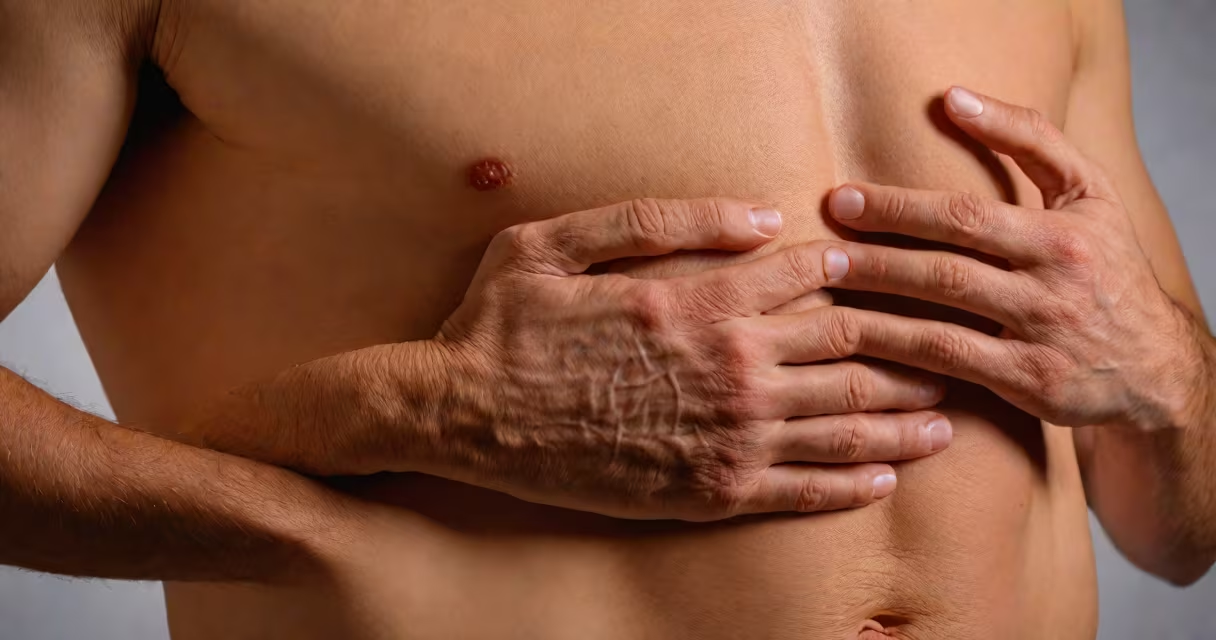
Pain right side under ribs when breathing is a sharp, localized discomfort felt beneath the right rib cage that intensifies during inhalation. It typically stems from inflammation of the cartilage connecting the ribs to the sternum (costochondritis), irritation of the pleura lining the lungs (pleurisy), or muscle strain. The sensation often resolves within days but may require medical evaluation if persistent.
This condition is frequently mistaken for serious internal issues like gallbladder disease or pneumonia due to its location and timing. However, most cases involve musculoskeletal or inflammatory causes rather than organ failure. Identifying the precise trigger requires attention to symptom patterns, duration, and accompanying signs such as fever or cough.
The pain arises when structures involved in respiration become irritated or inflamed. During inhalation, the diaphragm contracts and the ribcage expands. This movement stretches tissues around the lower right ribs. If those tissues are damaged, swollen, or sensitive, pressure changes during breathing trigger nerve signals interpreted as pain.
Common triggers include repetitive twisting motions, sudden deep breaths after coughing, or minor trauma like a fall or impact. For example, a person who lifts heavy objects while turning may strain intercostal muscles between the ribs, leading to localized tenderness that worsens with each breath.
According to the American College of Rheumatology, costochondritis accounts for approximately 10-20% of non-cardiac chest pain cases seen in primary care settings. It affects both men and women equally and is more common in individuals aged 20-50.
Several distinct conditions can cause pain right side under ribs when breathing. The most frequent are:
| Condition | Location | Key Symptom Pattern | Typical Duration |
|---|---|---|---|
| Costochondritis | Front of rib cage, near sternum | Sharp pain with deep breaths or pressing on the area | Days to weeks |
| Pleurisy | Lateral or posterior rib area | Worsens with breath, may radiate to shoulder | Varies; often linked to infection |
| Intercostal Muscle Strain | Between ribs, often on one side | Pain increases with twisting or stretching | 1-3 weeks |
| Gallbladder Issues | Right upper quadrant, sometimes under ribs | Pain after fatty meals, may radiate to back | Chronic or episodic |
One key distinction often missed: costochondritis pain is reproducible-pressing directly on the affected cartilage elicits sharp discomfort. Pleuritic pain usually doesn't respond to touch but intensifies with breathing. A patient I evaluated last year reported severe pain when inhaling deeply while lying on their right side. After confirming no tenderness on palpation, we ruled out costochondritis and diagnosed viral pleurisy based on recent flu-like symptoms.
Many assume that any pain under the ribs during breathing must be related to the lungs or heart. But the majority of cases involving the right side are musculoskeletal. A study published in JAMA Internal Medicine found that only 1% of patients presenting with non-traumatic chest pain had acute cardiac events, highlighting how often benign causes are misattributed.
Common misconceptions include equating right-sided rib pain with gallstones. While gallbladder attacks can cause pain under the right ribs, they typically occur after eating, especially high-fat meals, and may include nausea or vomiting. Pain from gallstones often radiates to the right shoulder blade-not just the rib area-and tends to last longer than brief episodes triggered by breathing.
Another error is assuming that pain on the right side during exhalation indicates a lung problem. In reality, exhalation reduces thoracic expansion, which can ease tension on inflamed tissues. Pain that worsens on inhalation and improves on exhalation points strongly toward costochondritis or pleurisy rather than pulmonary embolism or pneumonia.
A 34-year-old woman presented with sharp pain under her right ribs that intensified when she took a deep breath. She had no fever, cough, or history of trauma. Her primary care provider initially suspected pneumonia and ordered a chest X-ray. Results were normal. She was referred to a rheumatologist after two weeks of worsening pain.
On physical exam, pressing on the junction between the 6th and 7th right ribs produced immediate pain. The diagnosis was costochondritis. She was prescribed ibuprofen and advised to avoid overhead lifting. Within five days, pain decreased by 70%. Follow-up at two weeks showed full resolution.
This case illustrates how easily costochondritis can be overlooked. Without targeted palpation, clinicians may default to imaging or infection-based explanations-even when clinical signs point to soft tissue inflammation.
Consult a healthcare provider if pain persists beyond 10 days, spreads to the arm or jaw, occurs with shortness of breath, or is accompanied by fever, unexplained weight loss, or night sweats. These signs suggest possible infection, autoimmune disease, or malignancy.
For mild, self-limiting pain, rest, anti-inflammatory medication, and avoiding movements that exacerbate symptoms often suffice. Ice packs applied for 15 minutes every few hours can reduce swelling and numb pain. Gentle stretching exercises may help restore mobility in affected areas.
Understanding pain right side under ribs when breathing begins with recognizing that it rarely indicates life-threatening illness. Most cases stem from inflammation or strain in connective tissues. Accurate identification relies on symptom timing, location, and response to physical examination-not assumptions about organs or systems.