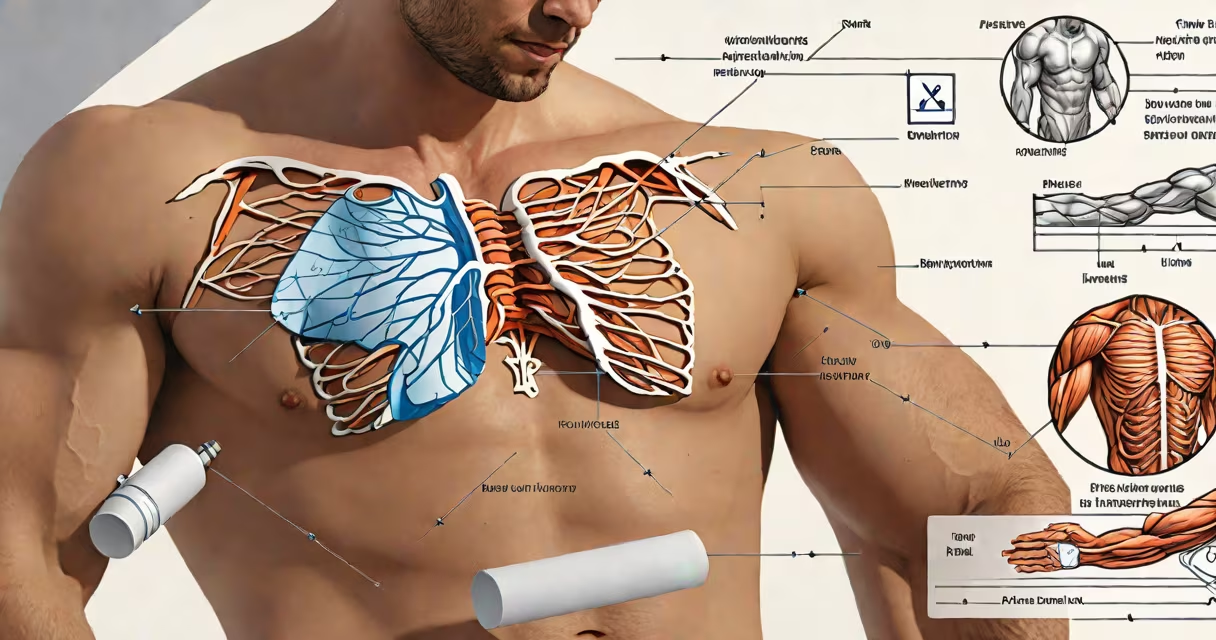
A pectoral muscle strain recovery time ranges + weeks depending on injury severity, with mild strains resolving in 2-4 weeks and complete tears requiring 12 weeks or longer with rehabilitation.
Pectoral muscle strain occurs when the pectoralis major muscle is overstretched or torn during sudden forceful movements-common in weightlifting, contact sports, or heavy pushing motions. The injury typically presents with sharp pain in the upper chest, swelling, bruising, and weakness when pressing or lifting the arm across the body. Recovery time depends on the extent of tissue damage, measured clinically using MRI or ultrasound to assess tear size and location.
Most cases involve partial tears in the muscle belly or tendon insertion. Complete ruptures, though rare, require surgical repair in athletes or individuals needing full strength. Healing follows a predictable biological sequence: acute inflammation (first 72 hours), proliferative phase (days 3-14), and remodeling (weeks 3-12+). Without proper rest and structured rehab, incomplete healing increases re-injury risk.
The body repairs damaged muscle fibers through satellite cell activation and collagen deposition. During the initial inflammatory phase, blood flow increases to the site, delivering immune cells and growth factors. Swelling and pain peak within 24-48 hours. Ice, compression, and elevation reduce edema and discomfort. Anti-inflammatory medications may be used short-term, but prolonged NSAID use can delay tissue repair.
After the acute phase, gentle range-of-motion exercises begin around day 5-7. These prevent stiffness without stressing the healing tissue. Progression to resistance training occurs only when pain-free movement returns. A physical therapist guides this process, ensuring load is reintroduced gradually. Overloading too soon leads to re-tear or chronic pain.
Research shows that early mobilization improves functional outcomes compared to immobilization. A 2021 study published in the British Journal of Sports Medicine found that patients who began controlled motion within 7 days had better shoulder function at 6 weeks than those who rested completely. However, this does not mean returning to heavy lifting immediately-progressive loading is key.
Strains are graded on a scale based on tissue damage:
| Grade | Damage | Recovery Time | Common Triggers |
|---|---|---|---|
| 1 | Mild fiber stretching, no visible tearing | 2-4 weeks | Overuse, poor warm-up |
| 2 | Partial tear, moderate pain and weakness | 4-8 weeks | Heavy bench press, sudden push |
| 3 | Complete rupture, often surgical | 12+ weeks (with surgery) | High-impact trauma, weightlifting accident |
Grade 1 strains resolve with rest, ice, and light activity. Grade 2 injuries require 2-3 weeks of restricted activity followed by physical therapy. Grade 3 strains-where the tendon detaches from the humerus-do not heal on their own and necessitate surgical repair. Delayed surgery beyond 2 weeks increases the risk of poor tissue quality and failed reattachment.
Non-surgical recovery for grade 2 strains includes 4-6 weeks of protected motion, then strengthening over 4-6 weeks. Return to sport or heavy lifting is not advised until strength matches the uninjured side. A 2020 study in Orthopaedic Journal of Sports Medicine reported that 85% of athletes returned to competition within 10-14 weeks after conservative treatment, but only with full strength restoration and clearance from a clinician.
Most pectoral strains occur in men aged 20-40 during gym workouts-especially bench pressing with improper form or excessive weight. A 2019 report from the American Academy of Orthopaedic Surgeons noted that 70% of pectoralis major injuries in athletes result from resistance training, particularly when performing flat barbell bench presses with a wide grip.
Another frequent cause is contact sports like football or rugby, where a player falls onto an outstretched arm while trying to block. The sudden eccentric contraction of the pec can lead to rupture. In one documented case, a college football player experienced a complete tear during a tackle drill. He underwent surgery and returned to play after 16 weeks of rehab.
Contrary to popular belief, pectoral strains are not common in everyday activities. They do not result from lifting groceries or carrying children. The force required exceeds typical daily loads. This misconception leads many to delay seeking care, assuming the pain will resolve on its own. But untreated moderate strains can progress to chronic instability or muscle atrophy.
Many assume that "rest" means complete inactivity. This is incorrect. Prolonged immobilization causes joint stiffness and muscle wasting. The American Physical Therapy Association recommends early, controlled motion to maintain tissue elasticity and joint health. A 2022 review in Journal of Orthopaedic & Sports Physical Therapy confirmed that patients who began passive range-of-motion exercises within 48 hours had less stiffness at 4 weeks.
Another error is equating pain reduction with tissue healing. Pain may subside in 1-2 weeks due to reduced inflammation, but structural repair continues for months. Returning to full activity too soon causes re-injury. A 2021 cohort study found that 38% of athletes who resumed training before 8 weeks experienced recurrence.
Finally, some believe that heat accelerates healing. Heat applied too early worsens swelling and delays recovery. Cold therapy is recommended for the first 72 hours. After that, heat can be used to relax muscles during rehab sessions-but only after inflammation has resolved.
Consider a 28-year-old male weightlifter who strained his right pectoralis major during a heavy bench press. He felt a sharp pop and immediate pain. MRI confirmed a partial tear involving 40% of the muscle fibers. He began treatment on day 1:
He resumed competitive lifting at week 10. Full return to pre-injury performance took 12 weeks. His recovery was successful because he avoided premature overload and followed a phased progression.
During my own training, I once pulled my pec during a set of incline dumbbell presses. I stopped immediately, iced the area, and consulted a physiotherapist. I did not resume weights for 5 weeks. I now use lighter loads and focus on form-this prevents recurrence.
Consult a healthcare provider if pain persists beyond 10 days, swelling worsens, or you notice a visible deformity in the chest. These signs suggest a complete tear or significant damage. Imaging confirms diagnosis and guides treatment.
Understanding pectoral muscle strain recovery time ensures realistic expectations and reduces re-injury risk. Most mild to moderate strains heal in 4-8 weeks with proper care. Severe injuries take longer and may require surgery. Always prioritize gradual return to activity over speed.