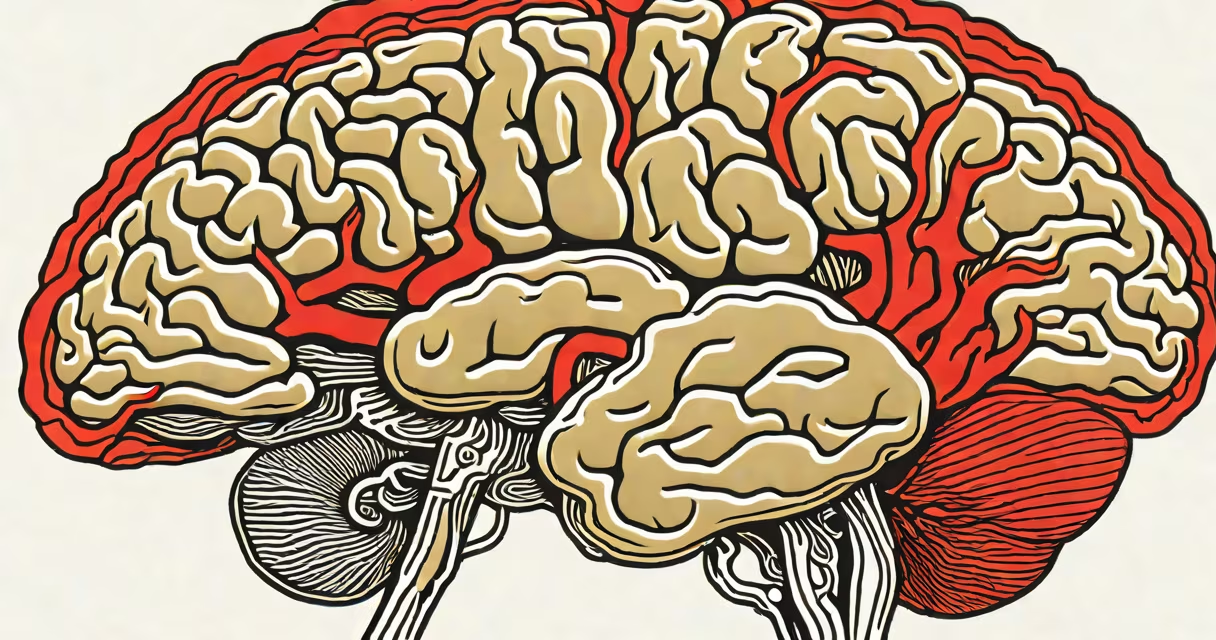
prefrontal cortex development refers to the maturation of the brain's frontal lobe region responsible for higher-order thinking, impulse control, planning, and emotional regulation. This process begins in early childhood and continues through adolescence into early adulthood, shaping how individuals make decisions, manage stress, and interact socially.
The prefrontal cortex is the last major brain region to fully develop. While basic sensory and motor functions emerge in infancy, executive functions-such as prioritizing tasks, resisting impulses, and understanding consequences-depend on this area's structural and functional refinement. By age 18, the prefrontal cortex reaches about 80% of adult size, but synaptic pruning and myelination continue until around age 25.
Neuroimaging studies show that during adolescence, blood flow and metabolic activity in the prefrontal cortex increase as neural connections strengthen and inefficient ones are eliminated. This phase correlates with improved attention span, better risk assessment, and greater emotional stability. The development is influenced by genetics, environment, sleep quality, nutrition, and social interaction.
Development occurs through two primary biological processes: synaptic pruning and myelination. Synaptic pruning removes weak or unused neural connections, increasing efficiency. Myelination coats nerve fibers with fatty sheaths, speeding up electrical signals between neurons. Both processes reduce brain volume slightly while enhancing processing speed and integration across brain regions.
For example, a 14-year-old may struggle to delay gratification because the prefrontal cortex hasn't yet formed strong inhibitory pathways to override reward centers like the nucleus accumbens. By age 22, those same pathways are more solid, allowing better long-term planning and reduced impulsivity. fMRI scans confirm that adolescents show less activation in the dorsolateral prefrontal cortex during working memory tasks compared to adults, indicating underdeveloped control systems.
Environmental factors modulate this timeline. Chronic stress, lack of sleep, and substance use can delay maturation. Conversely, consistent routines, physical exercise, and structured learning environments support healthy development. A 2021 study published in Nature Neuroscience found that adolescents who slept fewer than seven hours per night showed delayed prefrontal cortex thinning-a sign of ongoing pruning-compared to peers getting eight hours.
Development proceeds in phases tied to behavioral milestones:
| Age Range | Brain Changes | Behavioral Impact |
|---|---|---|
| 3-6 years | Initial growth of gray matter; early formation of executive circuits | Improved rule-following, basic planning, emotional expression |
| 7-12 years | Increased synaptic density; early pruning begins | Better focus, task persistence, peer negotiation |
| 13-18 years | Peak synaptic pruning; rapid myelination | Heightened risk-taking, mood swings, emerging identity |
| 19-25 years | Completion of pruning; final myelination | Stable decision-making, improved self-regulation, goal setting |
These stages are not rigid. Individual variation exists due to genetic differences and life experiences. For instance, children raised in enriched environments-where they engage in complex problem-solving and receive responsive caregiving-show earlier and more efficient prefrontal cortex development than peers in high-stress or low-stimulation settings.
Many assume that brain development ends at puberty. That's incorrect. The prefrontal cortex remains plastic well into the mid-20s. This means behaviors learned during late adolescence-like coping strategies, habit formation, and social judgment-are deeply shaped by ongoing neural remodeling.
Another misconception is that IQ determines prefrontal cortex development. While intelligence correlates with some structural features, such as cortical thickness, it doesn't predict functional maturity. A teenager with a high IQ may still act impulsively because their prefrontal circuits haven't fully integrated with limbic systems. The integration of emotion and cognition-not raw processing power-is key.
A non-obvious fact: the prefrontal cortex develops asymmetrically. The left side tends to mature faster and supports logical reasoning, while the right side handles emotional regulation and social context. This imbalance contributes to the emotional volatility seen in teens-especially during conflict or social evaluation.
Understanding prefrontal cortex development informs education, parenting, and mental health care. Schools that incorporate mindfulness training report improved student focus and reduced disciplinary incidents. A 2019 randomized trial in JAMA Pediatrics found that middle school students who practiced daily mindfulness for 10 minutes showed measurable increases in prefrontal cortex activity and decreased anxiety symptoms over six months.
In clinical practice, delayed prefrontal cortex development is linked to ADHD, depression, and borderline personality disorder. Early intervention-such as cognitive-behavioral therapy focused on impulse control-can rewire underactive circuits. One patient, a 17-year-old diagnosed with ADHD, completed a 12-week program using biofeedback to train prefrontal activation. After treatment, his fMRI scans showed increased activity in the medial prefrontal cortex during attention tasks, and he reported better academic performance and fewer conflicts with peers.
Even digital habits affect development. Excessive screen time, especially before bed, disrupts sleep cycles and reduces slow-wave sleep-critical for synaptic pruning. A 2022 study in Child Development found that teens averaging more than four hours of recreational screen time daily had thinner prefrontal cortex regions associated with inhibition and planning, even after adjusting for socioeconomic status.
When considering prefrontal cortex development, remember: it's not a switch that turns on at 18. It's a gradual process shaped by biology, behavior, and environment. Recognizing this helps avoid blaming adolescents for actions driven by incomplete neural wiring.
Recognizing the role of prefrontal cortex development allows for more accurate expectations in education, legal systems, and family dynamics. It explains why teenagers often struggle with long-term planning, why punishment alone fails to correct impulsive behavior, and why supportive structures-consistent sleep, nutritious meals, emotional safety-directly impact cognitive growth.
prefrontal cortex development is central to human behavioral evolution. It enables complex societies, ethical reasoning, and sustained effort toward goals. Without it, survival would rely solely on instinct. With it, we build art, science, and culture. The process is not just social-it is neurological.
See how digital platforms can support developmental needs in educational tools