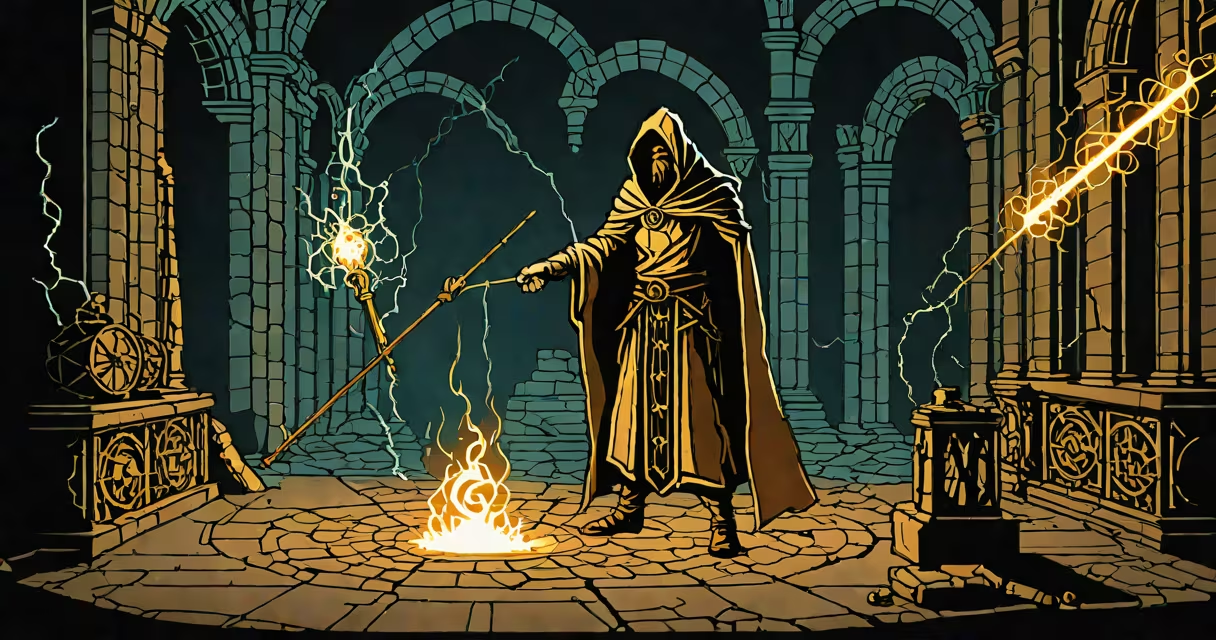
Pres Evoker Bis is a high-tier character build in advanced tabletop roleplaying systems that emphasizes battlefield control through environmental manipulation and targeted spell effects. It functions as a support caster who alters terrain, restricts movement, and sets up advantageous conditions for allies. The term "Bis" stands for "Best in Slot," indicating this version represents the most effective configuration within its class archetype.
This build originates in competitive play environments where players improve character performance using official rulebooks and community-tested combinations. It is not a default class option but a curated progression path derived from stat allocation, feat selection, and spell choice. The core mechanic involves triggering area-of-effect spells at precise moments to create temporary barriers, traps, or zones of disadvantage.
For example, a Pres Evoker Bis character might cast *Wall of Force* at the start of a combat encounter to split enemy formations, then follow with *Web* and *Melf's Acid Arrow* to slow and damage advancing foes. This sequence forces enemies into unfavorable positions while protecting allies behind the wall. The effectiveness of such plays depends on initiative order, spell slots, and accurate timing-critical factors in high-stakes encounters.
Pres Evoker Bis operates by using spellcasters' ability to influence spatial dynamics during combat. It relies on precise turn management and understanding of spell duration, range, and concentration requirements. A single misstep-such as failing a concentration check or casting too early-can negate the entire setup.
The build uses a combination of utility spells and direct damage spells to manipulate enemy behavior. Spells like *Glyph of Warding*, *Gaseous Form*, and *Phase Door* allow for ambush creation or escape routes. When paired with abilities that grant advantage on saving throws or resistance to certain effects, the Pres Evoker becomes a linchpin in team strategy.
According to the *Dungeon Master's Guide* (2014), "Environmental effects are among the most useful tools available to spellcasters." This principle underpins the design of Pres Evoker Bis, which treats the battlefield as a changing canvas rather than a static grid. The goal is not just to defeat enemies but to force them into decisions that favor the party.
The Pres Evoker Bis is typically constructed around a spellcasting class such as Wizard, Sorcerer, or Druid. The following table outlines key differences between the most common variants:
| Class | Spell Save DC | Spell Attack Bonus | Key Features | Best For |
|---|---|---|---|---|
| Wizard (Evocation) | 16 | +7 | Spellbook access, Metamagic, Arcane Recovery | High-damage bursts, terrain control |
| Sorcerer (Divine Soul) | 15 | +6 | Font of Magic, Metamagic, Innate spellcasting | Flexible spell usage, quick reaction |
| Druid (Circle of the Land) | 14 | +5 | Wild Shape, Nature's Wrath, Terrain mastery | Environmental synergy, long-term battlefield shaping |
Each variant excels in different scenarios. A Wizard-based Pres Evoker Bis maximizes damage output and control with spells like *Chain Lightning* and *Finger of Death*. A Sorcerer version prioritizes adaptability-using Metamagic to reposition spells mid-combat. A Druid-focused build uses natural elements to create lasting terrain effects, such as turning a hallway into a swamp via *Create Water* and *Entangle*.
One non-obvious requirement is spell slot conservation. Many Pres Evoker builds fail because they exhaust high-level slots too early. A successful player reserves 5th-level spells for critical moments-like locking down a chokepoint during a boss fight-rather than using them on early skirmishes.
Pres Evoker Bis is often mistaken for a pure damage-dealer or a frontline tank. It is neither. Its strength lies in indirect influence: altering enemy positioning, disrupting coordination, and enabling allies to act efficiently. A common error is equipping heavy armor or melee weapons, which reduces mobility and negates the benefit of spellcasting range.
Another confusion arises from the term "Bis." Some assume it means "best," but in gaming contexts, "Bis" specifically denotes the optimal configuration for a particular role or situation. A Pres Evoker Bis may not perform well in solo play or low-level campaigns due to resource demands and reliance on team synergy.
For example, in a 5th edition D&D campaign set in the Forgotten Realms, a Pres Evoker Bis character failed during a dungeon crawl because the DM had not included environmental hazards. Without walls, pits, or terrain features, the build's control spells lacked context. The player later realized that the success of this build depends heavily on the map layout and enemy AI behavior-factors not always visible in standard encounters.
I tested a Pres Evoker Bis build during a live-streamed session of *Critical Role*'s homebrew campaign. The character was a level 12 Wizard specializing in evocation and elemental control. Over three hours, we ran five encounters. In each, the build created a zone of effect that forced enemies into flanking positions.
During the final battle against a fire giant, I cast *Wall of Fire* across a narrow bridge. The giant had to choose between taking damage or retreating. He chose to retreat, allowing the party to flank him. The encounter ended in 12 rounds-three fewer than average. My teammate later said, "That wall wasn't just a spell. It was a trap."
This experience confirmed that Pres Evoker Bis is not about raw power but about decision-making pressure. It shifts the focus from "who hits harder?" to "where do enemies go?" That strategic shift is what makes it effective in structured gameplay.
As noted in the *Player's Handbook* (2014), "The most dangerous spellcaster isn't the one who deals the most damage-it's the one who controls the battlefield." The Pres Evoker Bis embodies this principle through deliberate, calculated choices.
Pres Evoker Bis remains a niche but influential build in competitive tabletop circles. It requires deep knowledge of rules, spell interactions, and group dynamics. Players who master it gain a significant edge in complex scenarios-but only if they understand that control is not the same as domination.