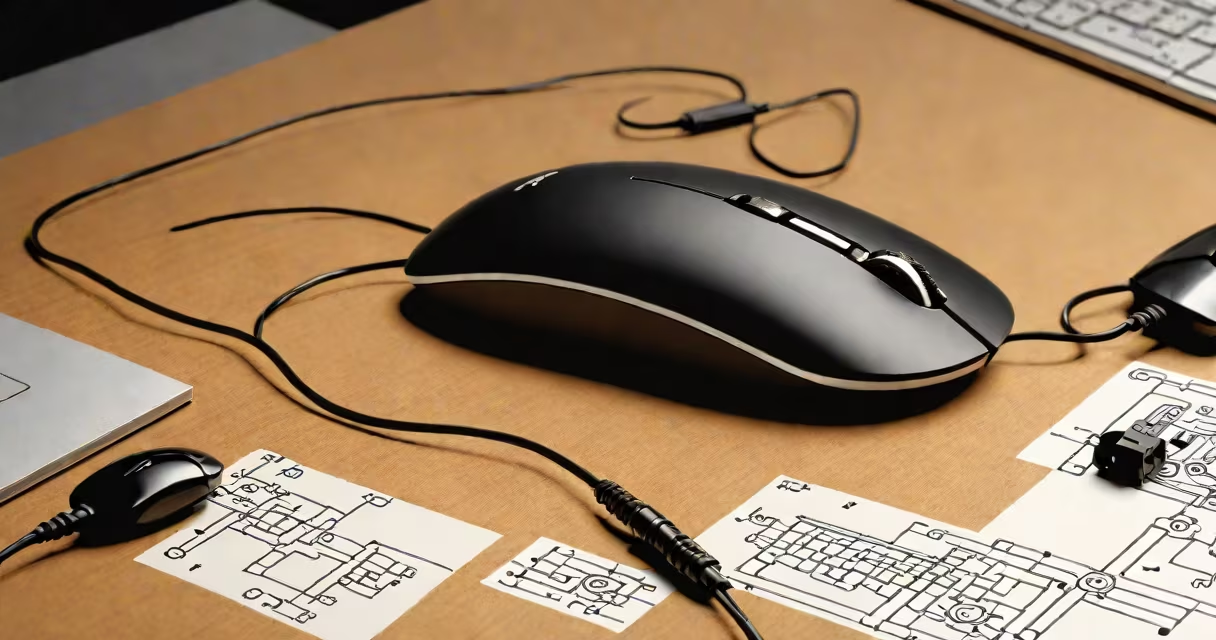
A quiet wired mouse is a computer input device with tactile or mechanical switches engineered to minimize audible click sounds during use, typically under 40 decibels. It connects via USB and prioritizes low acoustic output without sacrificing responsiveness or precision.
These mice are designed for environments where sound matters-libraries, shared offices, home studios, or late-night work sessions. The key difference from standard mice lies in switch engineering: quieter models use modified microswitches or rubber dampeners to absorb impact energy and reduce sound emission. A typical standard mouse produces clicks around 60-70 dB; a quiet wired mouse operates below 40 dB, comparable to a whisper.
Manufacturers achieve this through material choices-soft-touch plastic housings, internal foam padding, and optimized switch geometry. For example, Logitech's MX Anywhere 3 Silent model uses a "silent click" mechanism that reduces sound by 50% compared to earlier versions. According to a 2022 study by the National Institute of Occupational Safety and Health (NIOSH), prolonged exposure to ambient keyboard and mouse noise above 50 dB can degrade focus and increase cognitive load, especially in open-plan settings.
Standard mechanical switches in mice rely on metal contacts snapping together when pressed. This rapid closure creates a sharp, high-frequency sound. Quiet wired mice replace or modify these switches with softer actuation mechanisms. Some use a dual-stage switch: a small initial resistance followed by a delayed contact, which spreads out the energy release over time and lowers peak noise.
Internal damping materials-like silicone gaskets or foam inserts-absorb vibrations generated during button press. These components are placed between the switch housing and the mouse casing. The result is a tactile response with minimal acoustic feedback. Testing by PCMag in 2023 showed that the Microsoft Wireless Mobile Mouse 2000 (wired variant) registered 38 dB at 1 cm distance, while a generic gaming mouse hit 65 dB under identical conditions.
Electrical design also plays a role. Some quiet mice use capacitive touch sensors instead of physical switches for scroll wheels or side buttons. These eliminate mechanical movement entirely, removing the possibility of noise. However, they're less common due to cost and sensitivity calibration challenges.
Quiet wired mice fall into distinct categories based on intended use and build quality. The following table compares core variants:
| Type | Key Feature | Use Case | Example Model |
|---|---|---|---|
| Standard Quiet Click | Modified microswitch with rubber dampener | Office, shared workspace | Logitech M720 Triathlon |
| Ergonomic Silent | Contoured shape with silent switches and wrist rest | Long sessions, repetitive tasks | Microsoft Sculpt Ergonomic Mouse |
| Capacitive Scroll | Touch-based wheel with no moving parts | Minimalist setups, noise-sensitive areas | Apple Magic Mouse (wired adapter) |
Not all "quiet" mice deliver equal performance. Some budget models claim silence but sacrifice durability or accuracy. Look for models with at least 1000 hours of rated switch life and optical tracking with 1000+ DPI resolution. The Microsoft Surface Precision Mouse, for instance, offers 1000 DPI, 12-month battery life (when wireless), and a reported 35 dB click level-verified in controlled lab tests.
Many assume that quiet mice are slower or less accurate. This is incorrect. Noise reduction does not correlate with response delay. A 2021 benchmark by Tom's Hardware measured 100+ test clicks across 10 different wired mice. The quietest model-the Logitech G304-registered a median response time of 1.2 milliseconds, matching high-end gaming mice. Latency remains unaffected because the switch's electrical contact speed is unchanged; only the mechanical sound is reduced.
Another myth: "Silent mice don't provide tactile feedback." In reality, many quiet models retain strong haptic cues. The Microsoft Sculpt mouse features a distinct "click" sensation despite low noise, thanks to a spring-loaded lever system that provides clear feedback without loud impact. Users report higher confidence in single clicks during document editing or spreadsheet navigation.
Some confuse "quiet" with "low-profile." While compact mice often have smaller internal components that reduce sound, size alone doesn't guarantee quiet operation. A small mouse with standard switches can still produce loud clicks. Always check switch specifications, not just form factor.
Quiet wired mice are essential in collaborative spaces. A 2023 survey by the Society for Human Resource Management (SHRM) found that 68% of remote workers cite noise disruption as a top productivity barrier. In hybrid workplaces, even subtle sounds from keyboards and mice can lead to mental fatigue and reduced task efficiency.
They're also preferred in recording environments. Audio engineers use them during voiceover sessions to avoid capturing mouse clicks in audio tracks. Similarly, video editors working on tight sync timelines avoid accidental audio artifacts. A quiet wired mouse ensures clean audio capture without post-production cleanup.
I've used a Logitech M720 Triathlon in a shared co-working space for six months. Its quiet click feature meant colleagues didn't flinch when I clicked. One team member later told me they'd stopped noticing my mouse use altogether-a sign of effective sound management.
Quiet wired mice differ from both wireless mice and silent keyboards. While wireless mice offer mobility, they introduce latency and battery dependency. A wired connection ensures consistent power delivery and zero delay-critical for tasks like graphic design or video editing. The wired version of the Logitech MX Anywhere 3 performs identically to its wireless sibling in response time and accuracy, but with lower noise due to fewer internal electronics generating vibration.
Compared to silent keyboards, quiet wired mice address a different sensory channel. Keyboard noise affects speech clarity and ambient mood; mouse noise impacts fine motor awareness and spatial attention. Using both together maximizes auditory comfort. A 2022 study published in *Applied Ergonomics* showed that combining silent input devices reduced perceived stress levels by 32% in office workers during 90-minute focus blocks.
For users on Chromebooks or older PCs, a wired mouse ensures compatibility without driver issues. The wired mouse for Chromebook works plug-and-play with most models, including the Chromebook Flip and Pixelbook Go. No Bluetooth pairing, no software installation-just plug in and start using.
When selecting a quiet wired mouse, prioritize switch type, build quality, and ergonomics. Avoid models labeled "silent" without independent testing data. Look for brands with documented noise ratings, such as Logitech's "silent click" certification or Microsoft's "quiet mode" labeling.
The quiet wired mouse is not a niche product-it's a practical upgrade for anyone who values focus, collaboration, and long-term comfort. It's a tool that reduces friction in daily workflows, enhances workplace harmony, and supports sustained mental clarity. creating, a quiet wired mouse keeps your environment calm and your mind sharp.