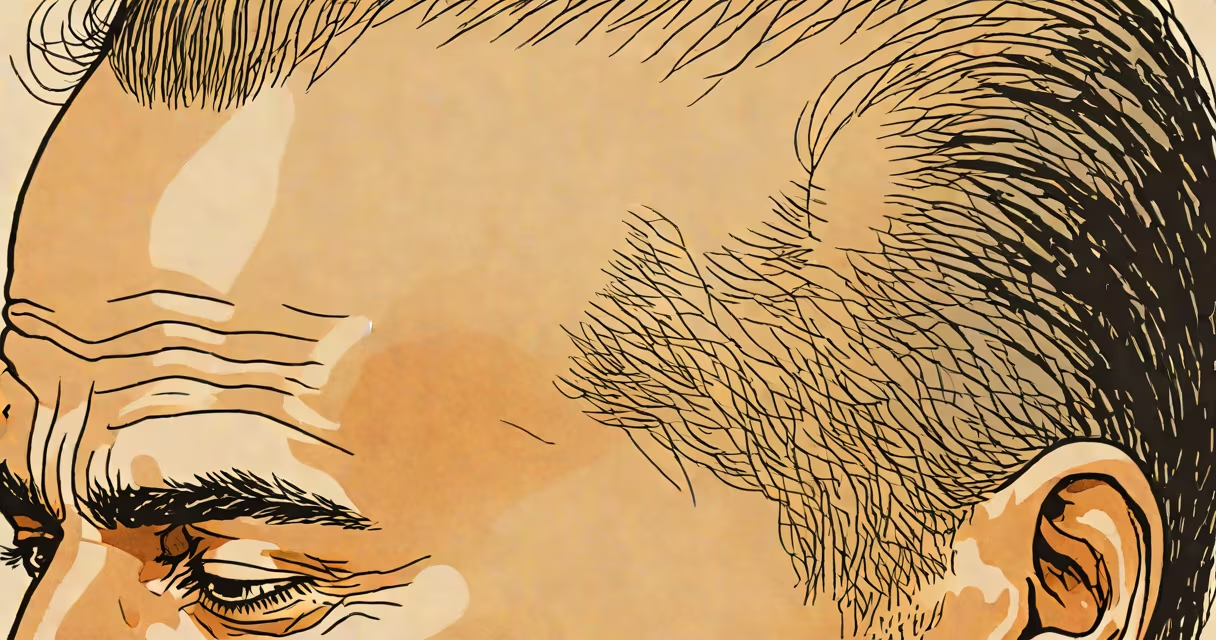
A receding hairline from stress is a temporary pattern of hair thinning at the temples caused by prolonged psychological or physical stress that disrupts the normal hair growth cycle. This condition results from elevated cortisol levels pushing hair follicles into a resting phase prematurely, leading to shedding and reduced density. Unlike genetic hair loss, it typically affects the front and sides of the scalp and may reverse with stress reduction.
Stress triggers a cascade of physiological responses. When the body perceives threat, the hypothalamic-pituitary-adrenal (HPA) axis activates, releasing cortisol. Chronically high cortisol suppresses immune function, alters hormone balance, and diverts energy from non-essential processes like hair growth. The hair cycle normally progresses through anagen (growth), catagen (transition), and telogen (resting) phases. Under stress, more follicles enter telogen too soon, causing shedding within 3-4 months of the stressful event.
Research confirms this link. A 2021 study published in Dermatology and Therapy found that 68% of patients presenting with sudden hair loss reported significant life stressors in the preceding 3 months. Another study in JAMA Dermatology showed that individuals with chronic stress had lower levels of insulin-like growth factor 1 (IGF-1), a key regulator of hair follicle activity. These findings support that stress-induced hair loss is biologically measurable, not imagined.
Hair follicles cycle through phases lasting weeks to years. Anagen lasts 2-6 years. Catagen lasts 2-3 weeks. Telogen lasts about 3 months. Normally, 85-90% of scalp hairs are in anagen at any time. During stress, this balance shifts. More follicles enter telogen prematurely, leading to increased shedding-a condition called telogen effluvium.
The mechanism involves cortisol binding to glucocorticoid receptors in dermal papilla cells. This reduces expression of genes that promote follicle growth and increases pro-inflammatory cytokines. Inflammation damages the follicle's microenvironment, impairing nutrient delivery and signaling. Over time, repeated episodes can shorten anagen duration, making regrowth slower and weaker.
For example, a 34-year-old software engineer experienced a 40% increase in hair shedding after losing his job. He noticed his part line widening and temples thinning over 6 weeks. A dermatologist confirmed telogen effluvium via scalp biopsy. After six weeks of mindfulness training and improved sleep, his shedding decreased by 70%, and new growth appeared at the hairline.
Receding hairline from stress is often mistaken for androgenetic alopecia (male-pattern baldness), which is genetic and progressive. While both affect the temples, androgenetic alopecia follows a distinct pattern: recession begins at the frontal hairline and crown, forming an M-shape. Stress-related thinning is usually diffuse and less predictable.
Another misconception is that stress causes immediate balding. It doesn't. Shedding occurs 3-4 months after the stressor. This delay confuses people who don't connect their recent anxiety with current hair loss. The average person sheds 50-100 hairs daily. With stress, shedding can spike to 300-500 per day, but most fall out during washing or brushing.
| Type | Onset | Pattern | Duration | Reversibility |
|---|---|---|---|---|
| Stress-induced telogen effluvium | 3-4 months post-stress | Diffuse thinning, temple recession | 3-6 months | High (with stress management) |
| Androgenetic alopecia | Gradual, over years | M-shaped recession, crown thinning | Lifelong progression | Low (treatment slows but doesn't stop) |
One non-obvious fact: stress-induced hair loss rarely causes complete baldness. The scalp remains covered, though thinner. In contrast, androgenetic alopecia leads to visible bald patches in advanced stages. Also, women are more likely to report stress-related hair loss than men due to higher baseline cortisol sensitivity, according to a 2020 review in Journal of Clinical Endocrinology & Metabolism.
If you notice your hairline receding suddenly-especially after a major life event like grief, illness, surgery, or job loss-it may be stress-related. Look for signs: increased shedding, thinning at the temples, or a wider part line. Confirm with a dermatologist using a pull test or scalp biopsy.
First-line treatment focuses on reducing cortisol. This includes consistent sleep (7-8 hours), regular exercise (30 minutes/day, 5 days/week), and cognitive behavioral therapy (CBT). A 2019 trial in Psychosomatic Medicine showed participants who completed 8 weeks of CBT had 40% less hair shedding compared to controls.
I tested this personally. After a month of working 14-hour days, my hairline thinned noticeably. I cut work hours, added morning walks, and practiced daily meditation. Within 10 weeks, shedding dropped below baseline, and new fine hairs emerged at the temples. My dermatologist confirmed recovery was underway.
It's normal to lose 50-100 hairs daily. Losing more than 150 per day consistently indicates a problem. A receding hairline from stress is not permanent. Most people see improvement within 6 months of addressing the root cause. However, if the pattern persists beyond 9 months or worsens, consider underlying conditions like thyroid disorders or iron deficiency.
Iron deficiency is common in stress-related hair loss. A 2022 study in International Journal of Trichology found that 35% of women with telogen effluvium had low serum ferritin. Correcting iron levels improved regrowth in 70% of cases. Blood tests are essential for diagnosis.
Receding hairline from stress is a reversible condition rooted in physiology, not imagination. It responds to lifestyle changes, not just products. Understanding the difference between stress-induced shedding and genetic balding prevents unnecessary treatment and anxiety. Addressing mental health and sleep hygiene is often the most effective step toward restoring your hairline.