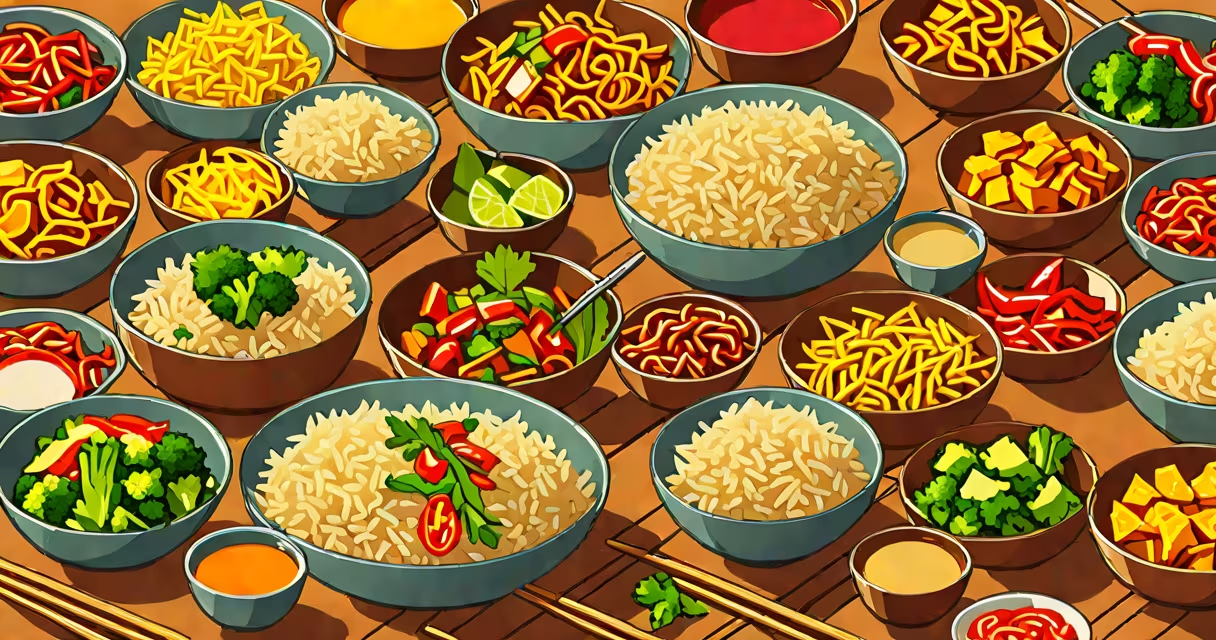
Recipes with rice are meals centered around cooked rice as a primary ingredient, combining it with proteins, vegetables, spices, and sauces to create balanced, satisfying dishes. They span global cuisines-from Mexican arroz rojo to Japanese donburi-and serve as both main courses and side dishes.
Rice acts as a neutral base that absorbs flavors well. When paired with ingredients like beans, chicken, tofu, or saffron, it becomes a complete meal. The most effective recipes with rice prioritize texture balance-firm grains, not mushy-and layer taste through seasoning, acid, and heat.
Popular examples include Thai green curry with jasmine rice, Spanish paella, Indian biryani, and Korean bibimbap. These aren't just comfort food-they're culturally rooted systems of flavor integration. A single dish may contain five distinct components: rice, protein, vegetables, sauce, and garnish-all working together.
Each recipe with rice follows a core structure: cook rice to the right consistency, then combine it with other elements. The rice must be cooked properly-neither underdone nor overcooked-to hold its shape during mixing or serving.
For example, in a basic fried rice recipe, you start with cold, day-old rice. This prevents clumping because the grains have dried out slightly. You then stir-fry chopped vegetables and protein (like chicken or shrimp) in oil, add the rice, and season with soy sauce, sesame oil, and green onions. The high heat ensures crisp edges without making the rice soggy.
Some recipes rely on slow cooking. In Moroccan harira soup, rice is simmered with lentils, tomatoes, and herbs for 45 minutes. The long cook time allows the rice to absorb broth and swell, contributing to the soup's thick, hearty texture. Without proper timing, the rice turns to paste.
Different rice varieties define the category. Long-grain rice (like basmati or jasmine) stays separate and fluffy-ideal for pilafs and stir-fries. Short-grain rice (such as sushi rice or arborio) becomes sticky and dense-perfect for risottos and stuffed peppers.
| Type | Best For | Example Dish | Key Trait |
|---|---|---|---|
| Long-grain | Stir-fries, pilafs | Chicken tikka masala with basmati | Fluffy, separate grains |
| Short-grain | Risottos, sushi | Italian mushroom risotto | Sticky, creamy texture |
| Sticky/ glutinous | Asian desserts, savory rolls | Thai mango sticky rice | High amylopectin content |
| Wild/foraged | Hearty grain bowls | California wild rice pilaf | Earthy flavor, chewy texture |
Not all rice-based dishes are savory. Sweet versions exist too-like Vietnamese chè đậu xanh (mung bean and rice pudding) or Indian kheer, which uses milk and cardamom. These rely on slow-cooking to develop sweetness and thickness.
Rice is affordable, shelf-stable, and adaptable. A 2-pound bag costs $1.50 to $2.50 at grocery stores and lasts months unopened. It provides 200 calories per cup (cooked), mostly from complex carbohydrates, making it energy-dense and filling.
Health organizations recommend rice as part of balanced diets. The USDA notes that whole grain rice contributes fiber and B vitamins. However, white rice lacks these nutrients unless fortified. Brown rice contains about 3 grams of fiber per cup, while white rice has less than 1 gram.
A common mistake is assuming all rice is equal. Using short-grain rice in a stir-fry leads to clumping. Using long-grain rice in a risotto results in dry, crumbly texture. Choosing the right rice type is critical to success.
Many assume "recipes with rice" means only side dishes. But rice is often the star. Dishes like jambalaya, moussaka with rice, and Ethiopian doro wat feature rice as the central component-not just a carrier.
Another error: treating rice as interchangeable. Basmati expands 3x its volume when cooked; arborio swells only 2x. Using the wrong ratio of water to rice causes undercooking or sogginess. The standard rule is 1 part rice to 2 parts water-but this varies by grain.
For example, cooking 1 cup of jasmine rice requires 1.5 cups of water and 15 minutes of boiling, followed by 10 minutes of steaming. Overwatering leads to mush. Underwatering leaves hard centers. Precision matters.
One non-obvious fact: rinsing rice removes surface starch. Unrinsed rice produces gummy, sticky results. Yet some recipes-like Japanese sushi-require sticky rice, so rinsing is skipped. Always check the recipe before washing.
Start with 1.5 cups of cooked jasmine rice. Let it cool for 30 minutes to reduce moisture. Heat 2 tablespoons of vegetable oil in a wok. Add 1 cup of frozen broccoli and 1 cup of diced chicken breast. Cook for 6 minutes until chicken is opaque.
Add 2 cloves of minced garlic and 1 tablespoon of grated ginger. Stir-fry for 30 seconds. Pour in 2 tablespoons of low-sodium soy sauce and 1 teaspoon of sesame oil. Mix in the cooled rice. Toss for 2 minutes. Finish with 1/4 cup of sliced green onions and 1 tablespoon of toasted sesame seeds.
This dish serves four people. It takes 25 minutes total. Calories: ~380 per serving. Protein: 28g. Fiber: 4g. It's nutritious, quick, and uses pantry staples.
I prepared this version last Tuesday night. I used leftover rice from Sunday's dinner. The result was consistent texture and bold flavor-no soggy rice, no bland protein. The key was cooling the rice first and using high heat.
Recipes with rice are not just about feeding bodies. They reflect geography, history, and family tradition. A bowl of Vietnamese pho uses rice noodles, not grains-but the concept remains: a staple food transformed into something rich and meaningful through preparation.
When choosing recipes with rice, focus on balance: protein, color, texture, and flavor. Avoid relying solely on canned or instant mixes. Fresh ingredients and proper technique yield better results than shortcuts.
These meals are accessible, nourishing, and endlessly customizable. feeding a family, recipes with rice offer a foundation for flavor, health, and routine.