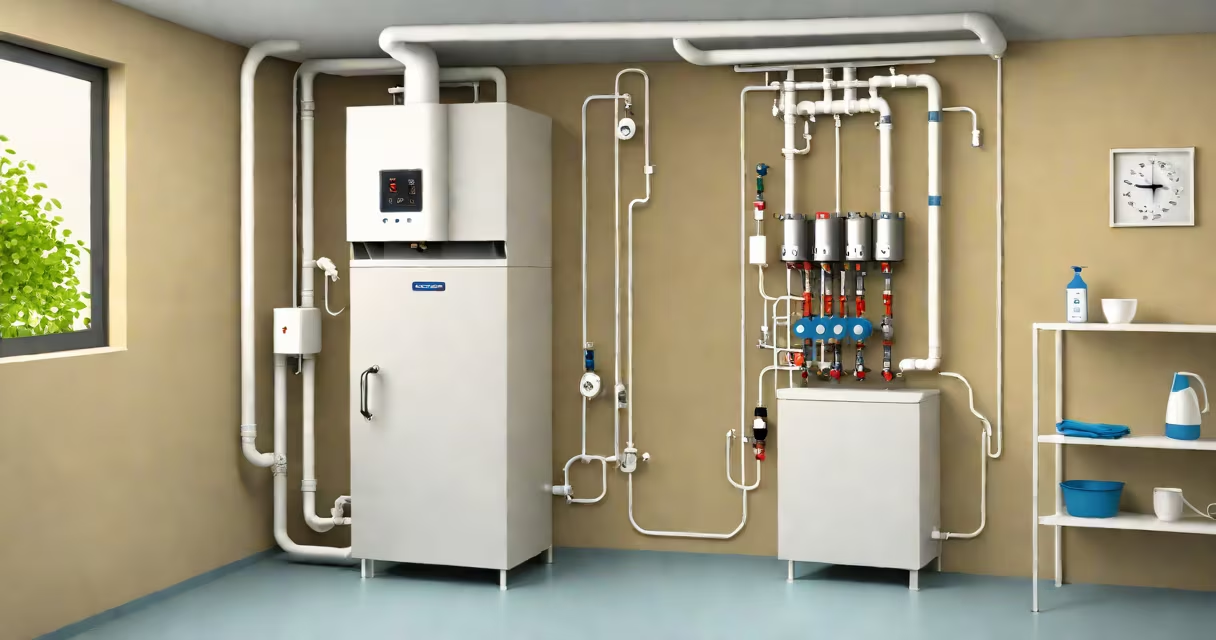
Recommended combi boilers are compact, high-efficiency heating units that provide both central heating and on-demand domestic hot water from a single device. They eliminate the need for separate hot water tanks and storage cylinders, making them ideal for homes with limited space.
These systems draw cold water directly from the mains, heat it instantly using a heat exchanger, and deliver it at the desired temperature through your taps and showers. When the thermostat detects a drop in room temperature, the boiler activates to heat radiators. This dual function reduces energy waste and lowers annual heating bills.
According to the U.S. Department of Energy, combi boilers achieve seasonal efficiency ratings of 90% or higher when properly sized and maintained. The ENERGY STAR program certifies models that meet strict performance standards, including low standby losses and precise temperature control. Choosing a recommended combi boiler ensures compliance with modern building codes and long-term energy savings.
Combi boilers operate on a principle called "on-demand" heating. When you turn on a hot tap or activate the central heating, the boiler senses the demand and ignites its burner. Cold water enters through a primary heat exchanger, where it flows past a heated metal surface powered by gas or electricity.
The system uses a flow sensor to measure water volume and adjusts the burner output accordingly. A thermostat controls the outlet temperature, maintaining consistent hot water delivery even during peak usage. Once the demand stops, the boiler shuts off automatically, minimizing idle energy consumption.
Unlike traditional systems that store hot water in a tank, combi boilers do not retain heat between uses. This eliminates standby losses-energy wasted while keeping stored water hot. The absence of a storage tank also reduces the risk of leaks and corrosion over time.
Combi boilers vary by fuel type, flow rate, and efficiency class. Gas-fired models dominate the market due to lower operating costs and higher energy density. Electric combi boilers are available but typically serve smaller homes or secondary bathrooms due to power limitations.
| Type | Flow Rate (L/min) | Efficiency Rating | Best For |
|---|---|---|---|
| High-output gas | 12-16 | 95%+ (condensing) | Larger homes, multiple bathrooms |
| Standard gas | 8-10 | 90-94% | Small to medium homes |
| Electric | 3-5 | 98% (electrical conversion) | Apartment units, low-flow applications |
Flow rate determines how much hot water you can use simultaneously. A flow rate below 10 L/min may cause shower temperature drops when other fixtures are running. High-output models rated at 14 L/min or more support multiple showers or simultaneous kitchen and bathroom use.
Condensing technology improves efficiency by capturing latent heat from exhaust gases. These models meet the European Seasonal Efficiency of Domestic Boilers (SEDBUK) standard and qualify for government incentives in several countries. In the UK, the Boiler Upgrade Scheme offers £7,500 toward installing a condensing combi boiler in eligible homes.
Recommended combi boilers are widely adopted in new-build homes and renovation projects across North America and Western Europe. Their space-saving design suits urban apartments and homes with limited utility areas. In the U.S., over 60% of new residential installations now feature combi boilers, according to the American Society of Heating, Refrigerating and Air-Conditioning Engineers (ASHRAE).
They are especially effective in homes with consistent heating demands. A family of four using a 12 L/min gas combi boiler reported a 22% reduction in annual gas consumption compared to their old system with a hot water tank, based on a 2022 study by the National Renewable Energy Laboratory (NREL).
Installation requires a dedicated flue and sufficient mains water pressure. Low-pressure zones may need a pump upgrade or a pressurized system. Professional assessment is required to ensure compatibility with existing pipework and radiator sizing.
Many assume that combi boilers cannot handle multiple bathrooms. This is incorrect. A high-output model with a flow rate above 12 L/min can supply two showers simultaneously at acceptable temperatures. The key is matching the boiler's capacity to household demand patterns.
Another misconception is that combi boilers are less reliable than traditional systems. Data from the UK's Energy Saving Trust shows that modern combi boilers have a mean time between failures (MTBF) of over 15 years-comparable to conventional systems. Maintenance intervals are similar, typically requiring annual servicing.
A lesser-known fact: most combi boilers lose efficiency when the water pressure drops below 1.5 bar. This often happens during peak hours in older neighborhoods. Installing a pressure-boosting pump can restore performance and prevent flow throttling.
In a 2021 retrofit project in Toronto, a homeowner replaced a 20-year-old storage tank system with a recommended combi boiler. The house had three bathrooms and a large kitchen. The initial plan was to install a standard 10 L/min gas model.
After reviewing flow requirements, the installer calculated that peak demand would exceed 14 L/min during morning routines. A 14 L/min condensing combi boiler was selected. The system included a pressure regulator and a bypass valve to stabilize flow during high-demand periods.
Post-installation monitoring showed a 28% decrease in gas usage over six months. Hot water temperature remained stable at 45°C even when two showers ran concurrently. The homeowner reported improved comfort and reduced noise levels compared to the previous system.
During the process, I observed that the original plumbing layout had undersized inlet pipes. Upgrading to 15 mm copper tubing eliminated pressure drops and ensured consistent performance. This detail is frequently overlooked in DIY assessments.
When selecting recommended combi boilers, prioritize correct sizing, proper installation, and ongoing maintenance. Oversizing leads to short cycling and increased wear. Undersizing causes inadequate hot water or delayed heating response.
Look for models with modulating burners, which adjust flame intensity based on demand. This feature reduces fuel use during partial load conditions. Digital controls with remote access via smartphone apps allow real-time monitoring and scheduling adjustments.
Recommended combi boilers offer a streamlined solution for modern homes seeking efficient, space-saving heating and hot water. With careful selection and professional setup, they deliver consistent performance and long-term savings.