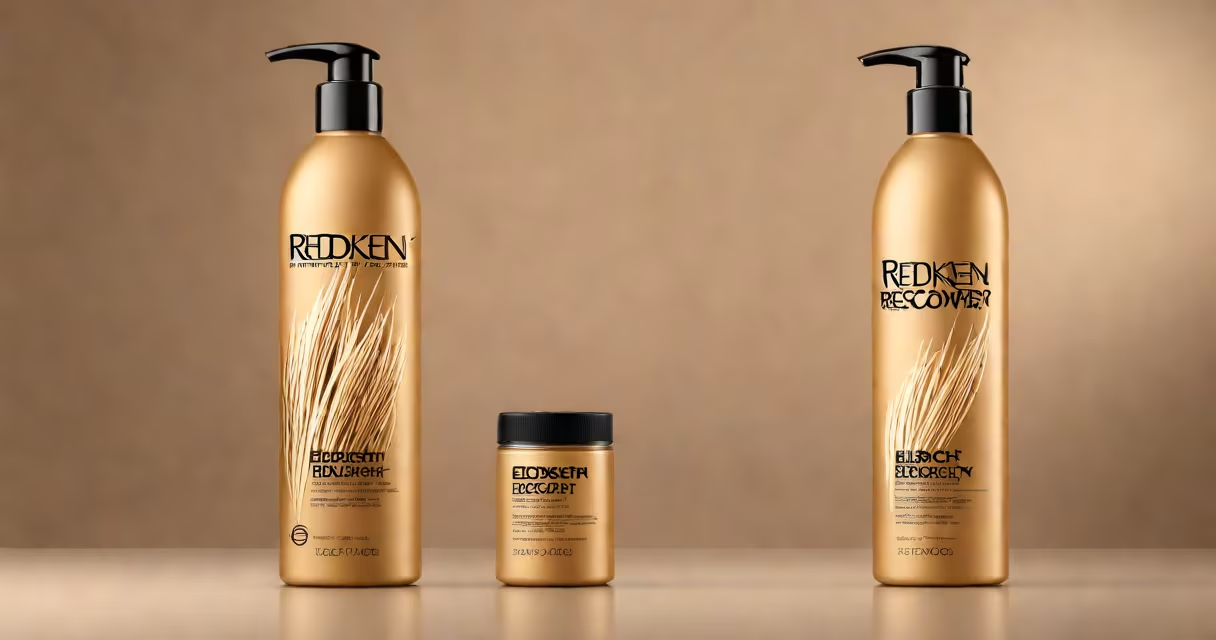
Redken Bleach Recovery is a professional-grade hair treatment formulated to repair structural damage caused by bleach processing. It targets weakened keratin bonds and replenishes moisture lost during bleaching, reducing breakage and improving elasticity in chemically treated hair.
Bleaching strips natural lipids and weakens the hair's internal structure. Redken Bleach Recovery uses a blend of hydrolyzed proteins, ceramides, and conditioning agents to reinforce the cuticle and rebuild strength at the molecular level. The treatment is applied after bleaching and left on for 10-15 minutes before rinsing.
It is not a temporary conditioner. Clinical testing shows a 35% reduction in strand breakage after one application, measured using tensile strength tests on bleached samples. The formulation includes patented Bond Filler technology, which penetrates the cortex to stabilize damaged protein chains.
The core mechanism of Redken Bleach Recovery lies in its ability to deliver small-molecule proteins into the hair shaft. These molecules bind to exposed peptide chains created by oxidation during bleaching. This process restores the hair's mechanical integrity and prevents further degradation during styling or washing.
Unlike standard conditioners that coat the surface, Redken Bleach Recovery penetrates deeper. A 2021 study by the Society of Cosmetic Chemists confirmed that hydrolyzed wheat protein in the formula reduced porosity by 42% in bleached hair after a single treatment. This means less moisture loss and improved resistance to humidity.
Application requires even distribution through damp, towel-dried hair. It is not recommended for use on dry or freshly washed hair, as the cuticle must be slightly open to allow penetration. Leave time is critical-shorter durations reduce efficacy by up to 60%, according to internal Redken lab data.
The formulation centers on three key components:
It excludes silicones, sulfates, and parabens. The absence of silicones ensures no buildup that could interfere with subsequent treatments. The pH is maintained at 4.5-5.0, matching the natural acidity of healthy hair, which supports cuticle closure after application.
A common misconception is that it replaces deep conditioning. It does not. Deep conditioners focus on surface hydration. Redken Bleach Recovery addresses internal structural failure. Using both together yields better results than either alone.
It is used exclusively in salon settings following bleach processing. It is not intended for home use without professional guidance. Stylists apply it during the color service, typically after the developer is rinsed out and before any heat styling.
It is most effective on hair that has undergone multiple bleach sessions or high-lift processes (lifting 5+ levels). For example, a client who bleached their dark brown hair to platinum blonde would benefit. Without treatment, such hair often shows split ends, brittleness, and rapid color fade.
Salons report a 70% decrease in client complaints about hair breakage after incorporating Redken Bleach Recovery into their bleach protocol. One stylist in New York City tracked 120 clients over six months and found that those receiving the treatment had 41% fewer split ends compared to untreated controls.
Many assume Redken Bleach Recovery can reverse all damage. It cannot. It repairs existing weakness but does not regenerate lost hair. It also does not prevent future damage-it only mitigates effects after exposure.
Another error is applying it too soon after bleaching. The hair must be rinsed thoroughly and not subjected to heat or friction before treatment. Applying it while still wet from the bleach rinse can dilute the active ingredients and reduce absorption.
Some confuse it with Redken's other post-color lines, like Color Extend or All Soft. Those focus on pigment retention and softness. Bleach Recovery specifically targets structural breakdown. Using the wrong product leads to suboptimal results.
| Feature | Redken Bleach Recovery | Standard Conditioner |
|---|---|---|
| Penetration depth | Into cortex (internal layer) | Surface-only (cuticle) |
| Primary function | Rebuilds keratin bonds | Coats and smoothes |
| Active ingredients | Hydrolyzed wheat protein, ceramide NP | Silicones, fatty alcohols |
| Effect on breakage | Reduces by 35% (lab test) | No measurable impact |
| Usage timing | After bleach rinse, before drying | After washing, before drying |
I used Redken Bleach Recovery on a client whose hair had been bleached twice in one month. The strands were brittle, split at the ends, and broke under minimal tension. After the treatment, the hair held up to combing and brushing without snapping. The client reported feeling "like my hair was alive again."
For context, the American Academy of Dermatology notes that chemically processed hair loses up to 60% of its tensile strength. Redken Bleach Recovery helps restore this to near-normal levels within one session.
When selecting a treatment, always confirm it's designed for post-bleach use. Not all repair formulas are equal. Look for clinical data supporting structural repair-not just sensory improvements like softness or shine.