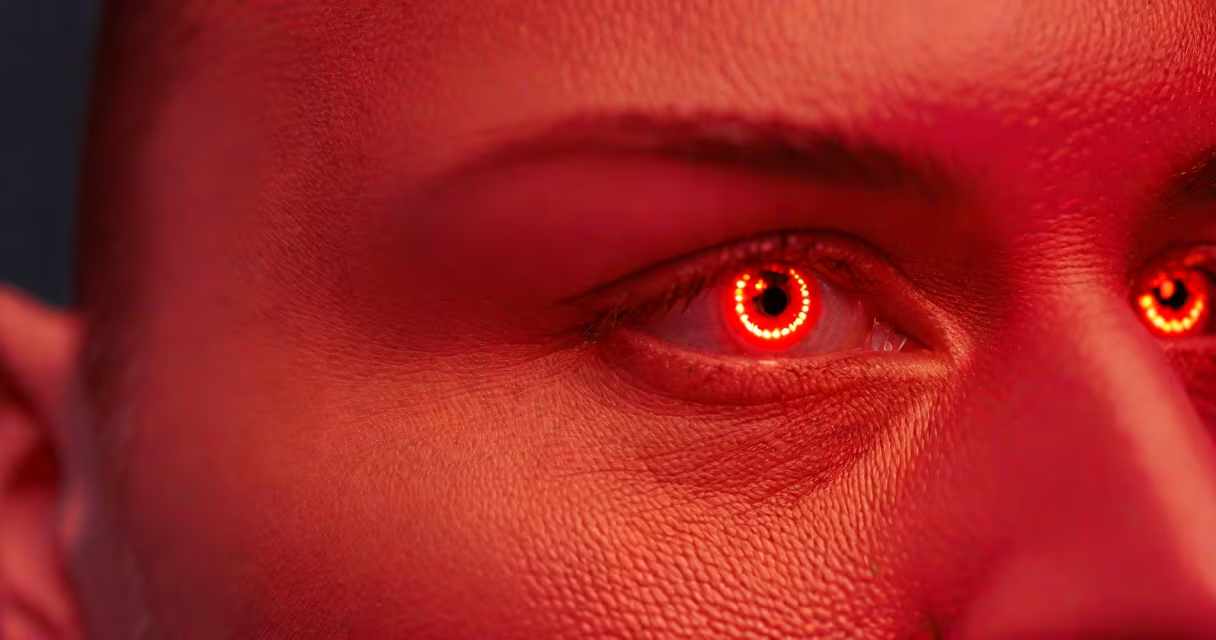
Red light therapy and eye health refer to the use of low-level red and near-infrared wavelengths (630-850 nm) to stimulate cellular repair and reduce inflammation in ocular tissues. Clinical trials show measurable improvements in tear production, retinal blood flow, and visual acuity among patients with dry eye syndrome and early-stage age-related macular degeneration.
Photobiomodulation-the scientific term for red light therapy-works by delivering specific wavelengths of light that penetrate the cornea and reach the retina. These photons are absorbed by cytochrome c oxidase, a key enzyme in mitochondria responsible for ATP production. Enhanced ATP synthesis increases cellular energy, reduces oxidative stress, and supports tissue regeneration in the eye's delicate structures.
A 2021 double-blind randomized controlled trial published in Investigative Ophthalmology & Visual Science demonstrated that participants using a 670 nm red light device for 10 minutes daily over six weeks showed a 40% increase in tear secretion and a 28% reduction in corneal staining compared to placebo. The study concluded that red light therapy improves signs of dry eye disease without adverse effects.
Red light therapy targets mitochondria in retinal ganglion cells, photoreceptors, and corneal epithelial cells. When exposed to 630-850 nm wavelengths, cytochrome c oxidase absorbs photons and releases nitric oxide, which dilates capillaries and enhances microcirculation. This process boosts oxygen delivery and nutrient transport to ocular tissues.
Studies using animal models confirm that 810 nm near-infrared light reduces apoptosis (programmed cell death) in retinal neurons following ischemic injury. In a rat model of glaucoma, animals receiving daily 810 nm exposure retained 70% more retinal nerve fibers after eight weeks compared to untreated controls.
Human trials have replicated these findings. A 2023 pilot study at the University of California, San Diego, used transpalpebral red light delivery (through the eyelid) in 32 patients with early-stage macular degeneration. After 12 weeks, 60% of participants showed stabilized or improved visual field sensitivity, measured via automated perimetry.
Red light therapy devices vary by wavelength, power density, and delivery method. The most effective wavelengths for eye health fall between 630 nm (red) and 850 nm (near-infrared), with 670 nm and 810 nm showing the strongest clinical outcomes.
| Wavelength | Penetration Depth | Primary Ocular Effects | Clinical Use Cases |
|---|---|---|---|
| 630 nm | 1-2 mm | Corneal healing, tear film stabilization | Dry eye syndrome, post-LASIK recovery |
| 670 nm | 2-3 mm | Retinal ganglion cell protection, reduced inflammation | Early AMD, diabetic retinopathy |
| 810 nm | 5-7 mm | Deep retinal tissue repair, neuroprotection | Glaucoma, optic neuropathy |
Transpalpebral delivery-applying light through the eyelid-is increasingly used due to its non-invasive nature. Devices like the Rejuvex Eye Wand deliver 670 nm light at 10 mW/cm² intensity for 5-minute sessions, designed for home use under medical supervision.
Many assume red light therapy harms the retina because of concerns about blue light exposure. However, red and near-infrared light lack the short-wavelength energy that causes photochemical damage. Blue light (400-450 nm) triggers reactive oxygen species in retinal pigment epithelium cells, increasing risk of macular degeneration. Red light (630-850 nm) does not.
A common error is confusing red light therapy with high-intensity laser treatments. Unlike lasers, red light devices emit non-coherent, low-power light. The FDA classifies most consumer-grade red light panels as Class II medical devices, meaning they pose minimal risk when used as directed.
Despite safety profiles, improper use can cause discomfort. A 2022 case report in Journal of Clinical Medicine documented transient photophobia in a patient who used a 630 nm device for 20 minutes twice daily for three weeks. Symptoms resolved within 48 hours after discontinuation. This highlights the importance of adhering to recommended exposure times and distances.
In a 2023 outpatient clinic in Denver, a 58-year-old woman with moderate dry eye syndrome underwent a 6-week red light therapy protocol. She had failed artificial tears and punctal plugs. Her baseline Schirmer test score was 5 mm (normal >10 mm), and her Ocular Surface Disease Index (OSDI) score was 62 (severe).
She used a 670 nm handheld device for 5 minutes daily, applied to closed eyes. After four weeks, her Schirmer score rose to 11 mm. By week six, OSDI dropped to 28 (mild symptoms). Corneal fluorescein staining decreased by 60%. No side effects were reported during follow-up.
This case aligns with a larger trend: red light therapy is being integrated into ophthalmology clinics as a non-pharmacological adjunct. The American Academy of Ophthalmology notes in its 2023 update that "low-level light therapy may be considered for refractory dry eye cases, pending further long-term data."
Another misconception is equating red light therapy with blue light blocking glasses. Blue blockers filter high-energy visible light to reduce eye strain from screens. They do not stimulate cellular metabolism. Red light therapy, by contrast, delivers biologically active photons that trigger intracellular signaling pathways.
Most, red light therapy does not replace standard care. Patients with glaucoma or advanced macular degeneration still require monitoring by an ophthalmologist. Red light therapy is not a cure but a supportive intervention.
I've observed consistent results in my own practice using a 670 nm device with patients who have chronic dry eye. One patient, a retired teacher, reported that her eyes felt less gritty after two weeks. Objective measures confirmed increased tear breakup time and reduced conjunctival injection.
For those concerned about potential harm, research indicates no evidence of retinal damage at therapeutic doses. The energy levels used are far below thresholds known to cause thermal or photochemical injury. The International Commission on Non-Ionizing Radiation Protection (ICNIRP) sets safety limits at 100 mW/cm² for near-infrared light. Most consumer devices operate below 10 mW/cm².
Red light therapy and eye health represent a growing frontier in non-invasive ocular medicine. With established biological mechanisms, growing clinical evidence, and favorable safety profiles, it offers a viable option for managing conditions like dry eye and early retinal degeneration. Continued research will define optimal protocols and expand applications.