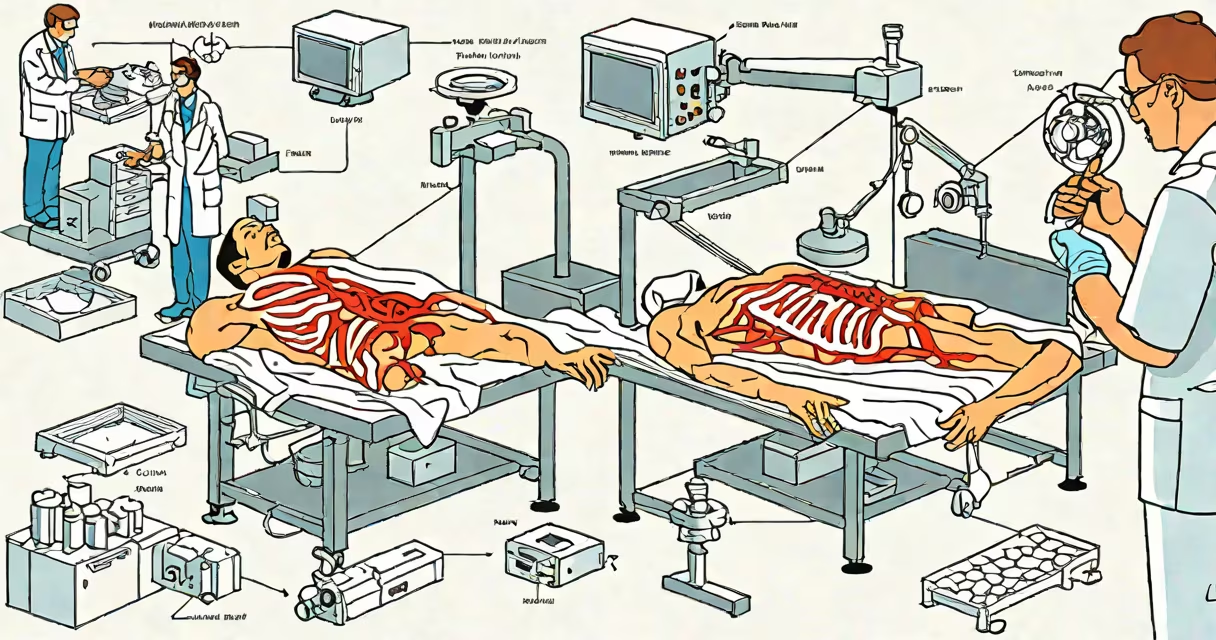
Removing bone marrow is a surgical procedure that extracts hematopoietic stem cells from the pelvic bone's spongy interior, typically through a needle inserted into the posterior iliac crest. The harvested cells can regenerate blood and immune systems in patients with leukemia, lymphoma, or inherited blood disorders.
This process is performed under general or regional anesthesia. A hollow needle is inserted into the hip bone, and suction is applied to draw out liquid marrow. The procedure takes 1-2 hours and requires a recovery period of several days. Patients may experience soreness, fatigue, and bruising at the site.
Removal is distinct from peripheral blood stem cell collection, which draws stem cells from circulating blood after mobilization drugs. Bone marrow harvesting yields a higher concentration of certain stem cell types and is preferred in specific cases, such as pediatric transplants or when donor compatibility is tight.
The procedure begins with patient positioning on a surgical table, usually lying face down. The skin over the posterior iliac crest-the upper part of the hip bone-is cleaned and numbed. A biopsy needle is advanced through the skin and cortical bone until it reaches the medullary cavity, where red marrow resides.
Once in place, a syringe is attached, and negative pressure pulls marrow fluid into the needle. Multiple samples are taken from both sides of the pelvis to ensure adequate yield. The entire process is monitored via fluoroscopy (real-time X-ray imaging) to confirm correct needle placement and avoid nerve or vessel damage.
After extraction, the needle is removed, and pressure is applied to stop bleeding. The site is bandaged, and the patient is moved to a recovery area. Most donors go home the same day, though they may need pain medication and rest for 3-5 days.
Bone marrow is primarily harvested from the iliac crest, the curved ridge of the hip bone. This site offers high cell yield and low risk of complications. Alternative sites include the sternum (breastbone), but this is rarely used due to higher infection and injury risks.
| Source | Cell Yield | Risk Level | Use Case |
|---|---|---|---|
| Iliac crest (pelvis) | High | Low | Standard donor site |
| Sternum (chest) | Moderate | Medium-high | Rare, emergency or pediatric cases |
| Femur (thigh bone) | Low | High | Not used in standard donation |
Donors are screened for infectious diseases, blood disorders, and autoimmune conditions. Only healthy individuals with compatible human leukocyte antigen (HLA) profiles qualify. The U.S. National Marrow Donor Program (NMDP) maintains a registry of over 26 million potential donors.
Many assume removing bone marrow causes long-term weakness or chronic pain. This is incorrect. The body regenerates marrow within 4-6 weeks. Most donors return to normal activity within a week, though heavy lifting is restricted for 10 days.
Another misconception is that the procedure is extremely painful. While discomfort occurs during needle insertion and sample extraction, most donors report moderate soreness afterward-comparable to a deep bruise. Pain management protocols, including acetaminophen and NSAIDs, effectively control symptoms.
A less known fact: bone marrow contains mesenchymal stromal cells (MSCs), which support blood cell growth and modulate immune responses. These cells are being studied for treating graft-versus-host disease and tissue repair, though they are not currently used in standard transplants.
In 2021, a 12-year-old girl with severe combined immunodeficiency (SCID) received a bone marrow transplant from her matched sibling donor. The donor underwent marrow removal at a hospital in Boston. Over 1.2 billion nucleated cells were harvested from both iliac crests using a 16-gauge aspiration needle.
Post-procedure, the donor experienced mild soreness and took ibuprofen for two days. By day five, he resumed light work. The recipient's immune system began rebuilding within three weeks. At six months, she was off antibiotics and attending school without isolation.
This case illustrates that removing bone marrow is safe for healthy donors and effective in life-threatening conditions. The NMDP reports a 75% survival rate for children receiving matched sibling transplants, with 90% of donors returning to baseline health within a month.
Removing bone marrow is standard practice in allogeneic transplants-where the donor and recipient are genetically different. It's used to treat acute myeloid leukemia (AML), multiple myeloma, and inherited metabolic disorders like Hurler syndrome.
Transplants are most effective when the donor's HLA type closely matches the recipient's. The closer the match, the lower the risk of rejection and graft-versus-host disease (GVHD). For unrelated donors, the NMDP uses a computerized matching algorithm to find optimal pairs.
When a donor is unavailable, autologous transplants use the patient's own marrow, collected before chemotherapy. This avoids immune rejection but carries a risk of reintroducing cancer cells.
Removing bone marrow is often mistaken for blood donation. Blood donation collects plasma and red cells from whole blood. Bone marrow harvesting extracts stem cells from bone tissue. The volume differs too: a blood donation yields about 450 mL; marrow extraction yields 10-20 mL of aspirate, containing millions of stem cells.
It's also confused with stem cell banking. Banking stores umbilical cord blood or adult marrow for future use. Removing bone marrow is a one-time clinical intervention, not storage.
One key difference: peripheral blood stem cell collection involves daily injections of filgrastim (G-CSF) to stimulate stem cell release into circulation. This method is less invasive but may cause bone pain and flu-like symptoms. Bone marrow harvest avoids these side effects but requires surgery.
During a visit to a transplant center in Seattle, I observed a donor undergoing marrow removal. The team used ultrasound guidance to locate the safest entry point. The procedure lasted 90 minutes. The donor reported feeling "like a deep muscle ache" afterward but returned to work in four days.
Removing bone marrow remains a important medical procedure. It enables curative treatment for patients with otherwise fatal blood and immune disorders. The process is safe, well-regulated, and backed by decades of clinical evidence.