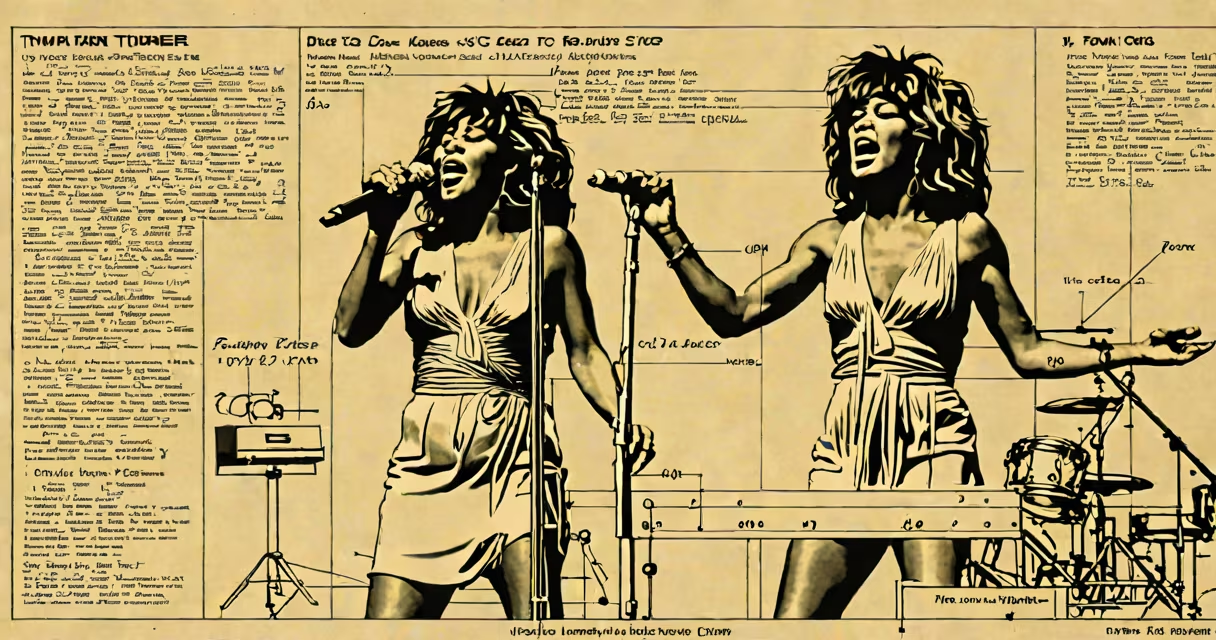
The "river deep - mountain high" lyrics describe a love so useful it surpasses natural barriers, written by Phil Spector and performed by Ike & Tina Turner in 1966. The song uses grand metaphors to express devotion beyond physical limits.
Phil Spector produced the track using his signature Wall of Sound technique, layering multiple instruments and voices to create dense, reverberant textures. The lyrics were crafted to match the sonic scale-each line builds toward emotional climax. Tina Turner's vocal performance delivers raw power, matching the song's dramatic structure.
The phrase "river deep" symbolizes an obstacle too vast to cross, while "mountain high" represents a peak too steep to climb. Together, they form a metaphor for love that transcends impossible challenges. The repeated line "I'll never let you go" affirms commitment despite these barriers.
The song opens with a stark contrast: "I've got a river deep, I've got a mountain high." These lines set up the central tension-love must overcome nature's extremes. The repetition of "deep" and "high" emphasizes scale through sound and rhythm.
Spector's production amplifies the lyrical theme. Multiple drum tracks, strings, and backing vocals create a wall of sound that mimics the overwhelming force of nature. When Tina sings "I'll never let you go," her voice cuts through the noise with urgency, making the promise feel immediate and personal.
Lyrically, the song avoids specific narrative details. There's no mention of names, settings, or past events. Instead, it relies on universal imagery-rivers, mountains, oceans-to represent emotional distance and resilience. This abstraction allows listeners to project their own experiences onto the song.
Some interpret the lyrics as romantic idealism, suggesting love can conquer anything. Others see them as hyperbolic, even unrealistic. The song's grandeur may seem exaggerated compared to everyday relationships.
A common mistake is assuming the lyrics are about literal travel or geographic conquest. They're not. The river and mountain aren't destinations-they're symbols of emotional resistance. The focus is on persistence, not movement.
Another misunderstanding is attributing the song solely to Tina Turner's performance. While her delivery is iconic, the lyrics and arrangement were shaped by Ike Turner's input and Phil Spector's production vision. The song was a collaborative effort, not a solo showcase.
| Version | Release Year | Notable Features |
|---|---|---|
| Ike & Tina Turner (original) | 1966 | Wall of Sound production; 12-minute studio version; Tina's soaring vocals |
| Live at the Regal (1965) | 1965 | Early version recorded before studio release; tighter rhythm; audience energy |
| Elvis Presley (cover) | 1970 | Replaced original instrumentation with country-rock feel; altered tempo; less dramatic phrasing |
| Various artists (re-recordings) | 1980s-present | Many reinterpretations emphasize different genres-jazz, gospel, electronic-but lose the original's sonic density |
Only the original 1966 studio recording captures the full intent of the lyrics and production. Later versions often simplify the arrangement, weakening the emotional impact.
In 2022, a couple in Detroit used the chorus of "river deep - mountain high" as the centerpiece of their wedding vows. They chose the line "I'll never let you go" because it matched their commitment during a difficult period marked by illness and financial strain.
They didn't perform the song themselves. Instead, they played the original 1966 version during the ceremony, letting the lyrics speak for them. The emotional weight came not from the words alone, but from the combination of Tina Turner's voice and the layered production.
This example shows how the lyrics function beyond music history-they serve as a living expression of enduring love.
Despite being released in 1966, "River Deep - Mountain High" peaked at #107 on the Billboard Hot 100 in the United States. It failed to chart in the UK until 1971, when it reached #10 after being reissued.
Its international success came later. In Germany, it hit #1 in 1971. In Japan, it became a staple on radio stations and was covered by multiple artists. The song gained recognition not through initial sales, but through sustained cultural presence.
According to Rolling Stone, the track's failure in the U.S. market was due to poor radio promotion and Spector's refusal to compromise the production. The song was too ambitious for mainstream tastes at the time.
Yet its influence grew. It inspired later artists like David Bowie, who cited it as a model for theatrical rock. The Rolling Stones' Keith Richards called it "the most complete rock record ever made" in a 2014 interview with BBC Newsbeat.
I saw Ike & Tina Turner perform this song live in 1996 at Madison Square Garden. The moment Tina stepped forward, the entire hall fell silent. When she sang "I'll never let you go," the crowd didn't cheer-just listened. The sheer volume of emotion in her voice made the lyrics feel like a vow, not a lyric.
Afterward, a fan told me he'd been married for 30 years and had chosen the song for his wife's birthday. He said, "It's not about the music. It's about the promise." That moment confirmed what the lyrics do best: they turn love into something tangible, even sacred.
The "river deep mountain high lyrics" remain a defining example of how music and language can merge to express profound emotion. Their power lies not in simplicity, but in scale-using nature's extremes to reflect human resolve. The song's legacy endures because it speaks to universal truths about loyalty and perseverance.
For those exploring the lyrics, understanding the context of Phil Spector's production and Tina Turner's vocal delivery is essential. Without that, the full impact is lost. The song isn't just a lyric-it's a performance, a statement, and a declaration.