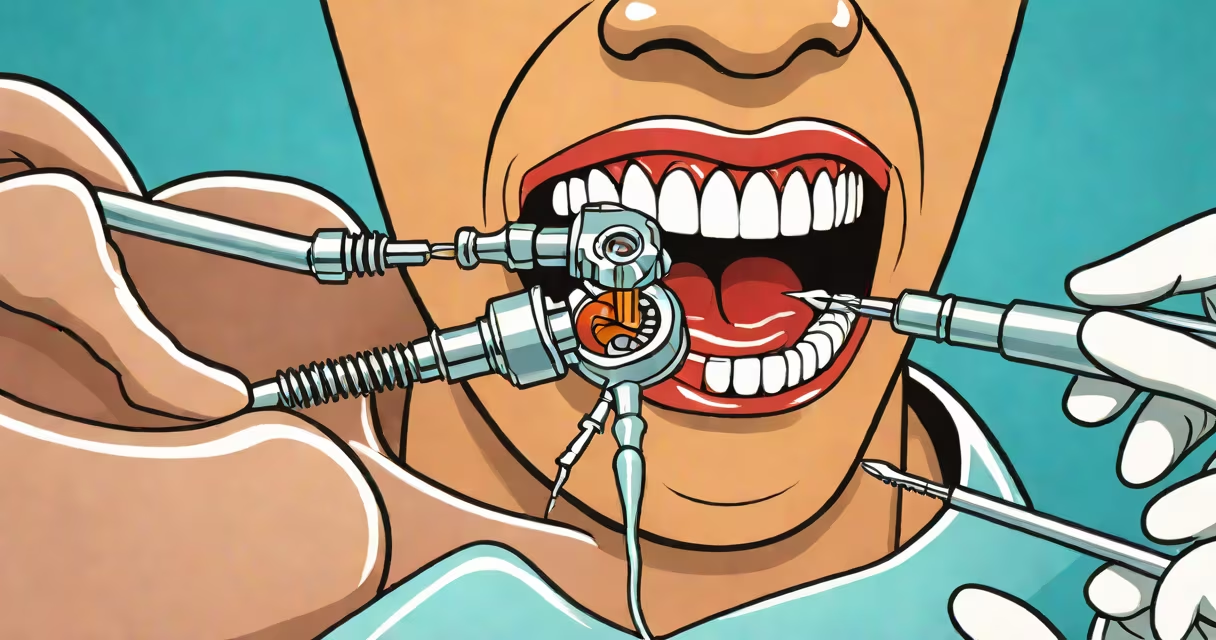
The root canal process is a dental procedure that removes infected or damaged pulp from inside a tooth's root canals to eliminate pain and prevent tooth loss. It saves the natural tooth structure rather than requiring extraction.
Inside each tooth lies a soft tissue called pulp, containing nerves and blood vessels. When decay, trauma, or cracks expose this pulp to bacteria, infection spreads. The root canal process cleans out the infected pulp, disinfects the canals, and seals them to stop reinfection.
According to the American Association of Endodontists, about 15 million root canals are performed annually in the U.S., with a success rate exceeding 95% when properly done. Most patients report immediate pain reduction after the procedure.
Dentists begin by numbing the area around the affected tooth with local anesthesia. A rubber dam isolates the tooth to keep it dry and free from saliva contamination during the procedure.
The dentist drills a small access hole into the crown of the tooth. Using fine files, they remove the pulp tissue from the root canals. These files are shaped to match the natural curvature of each canal, which can vary widely between teeth.
After removing the pulp, the dentist flushes the canals with antiseptic solutions like sodium hypochlorite to kill remaining bacteria. They then measure the length of each canal using electronic apex locators, which provide accurate readings within 0.1 mm.
Once cleaned and dried, the canals are filled with a biocompatible material called gutta-percha. This rubber-like substance seals the space and prevents bacterial re-entry. Finally, the access hole is sealed with a temporary filling, followed by a permanent restoration such as a crown.
Root canals fall into two categories based on complexity: standard and advanced. Standard cases involve teeth with one or two roots and straightforward canal anatomy. Advanced cases include molars with three or four roots, curved canals, or teeth with previous failed treatments.
Some patients assume root canals are extremely painful. In reality, most feel little to no discomfort during the procedure due to effective local anesthesia. Pain typically stems from the infection itself, not the treatment. The procedure relieves that pain.
A common misunderstanding is that root canals cause systemic illness. There is no scientific evidence linking root canals to diseases like cancer or heart conditions. The myth originated in the early 20th century from discredited research by Dr. Weston Price, whose work has since been thoroughly debunked by modern dentistry.
| Type | Number of Roots | Typical Duration | Complexity Level |
|---|---|---|---|
| Incisors | 1 | 60-90 minutes | Low |
| Canines | 1 | 60-90 minutes | Low |
| Bicuspids | 1 | 75-105 minutes | Medium |
| Molars | 2-4 | 90-150 minutes | High |
The root canal process is used when a tooth's pulp becomes inflamed or infected, usually due to deep decay, repeated dental procedures, or trauma. Symptoms include persistent toothache, sensitivity to hot or cold, swelling, and discoloration of the tooth.
Endodontists-dentists who specialize in treating the inner parts of teeth-perform most root canals. General dentists may also do them, especially in simpler cases. The procedure is typically completed in one or two visits, depending on the severity of the infection.
In my experience, a patient came in with a severe ache in a molar that had been worsening for five days. X-rays showed a large abscess at the root tip. After a single visit involving cleaning, shaping, and sealing the canals, the pain disappeared within 24 hours. The tooth was restored with a crown six weeks later and remains functional.
The root canal process is not the same as tooth extraction. Extraction removes the entire tooth, while a root canal preserves the natural structure. Extracted teeth require replacement options like implants or bridges, which cost more and involve longer recovery times.
It's also different from a deep filling. Fillings treat surface decay but cannot reach the pulp deep inside the tooth. Once infection reaches the pulp, a filling won't resolve the issue. The root canal process is required to eliminate the source of infection.
A key distinction: root canals treat internal damage. Crowns, however, protect the outer structure after damage has occurred. A crown may follow a root canal to restore strength, but it doesn't replace the need for pulp removal.
One non-obvious fact: the root canal process doesn't always require multiple appointments. Many clinics now use single-visit protocols with advanced tools like rotary instruments and 3D imaging. A study published in the Journal of Endodontics found that 87% of single-visit root canals achieved successful healing at 12 months, matching multi-visit outcomes.
Pain typically subsides within 24 to 48 hours after the procedure. Mild soreness may persist for a few days, managed with over-the-counter pain relievers like ibuprofen.
Patients should avoid chewing on the treated side until the permanent restoration is placed. The tooth may feel slightly different initially but adapts over time. With proper care, a tooth treated with a root canal can last a lifetime.
Follow-up care includes regular dental checkups and good oral hygiene. Failure rates are low-around 3%-and usually result from undetected canals, poor seal integrity, or new decay.