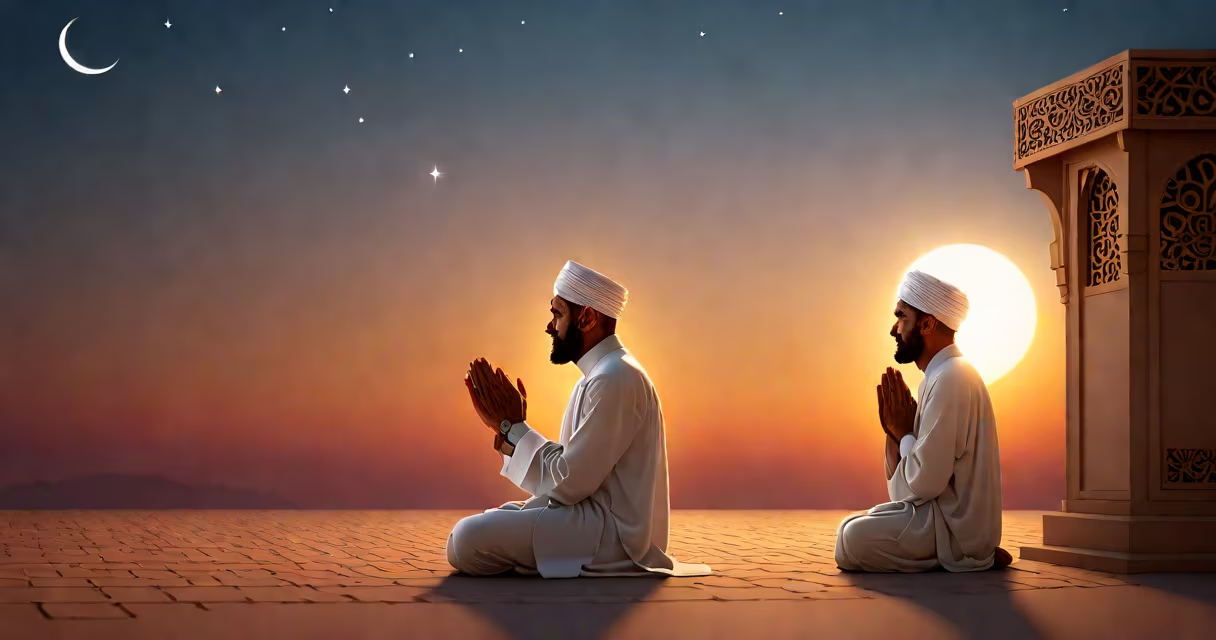
Sawm meaning in Islam is the act of intentional fasting during designated times, primarily during the month of Ramadan. It involves refraining from food, drink, sexual activity, and other prohibited acts from dawn until sunset. Sawm is one of the Five Pillars of Islam and requires both physical abstinence and spiritual discipline.
Fasting in Islam is not merely about going without food. It is a structured form of worship that includes mental and emotional restraint. The Quran explicitly states: "O you who have believed, decreed upon you is fasting as it was decreed upon those before you that you may become righteous" (Surah Al-Baqarah, 2:183). This verse establishes sawm as a practice meant to cultivate piety, self-control, and mindfulness of God.
Sawm begins at Fajr, the pre-dawn prayer, and ends at Maghrib, the sunset prayer. Muslims must refrain from eating, drinking, smoking, and engaging in sexual relations during daylight hours. Intention (niyyah) is required before dawn each day-the internal commitment to fast for the sake of Allah.
Breaking the fast is permitted at sunset. The evening meal, known as iftar, often begins with dates and water, following the tradition of Prophet Muhammad (PBUH). After iftar, many Muslims attend special night prayers called Taraweeh, which are performed in congregation and last longer than regular nightly prayers.
A person who unintentionally eats or drinks while fasting-such as forgetting they are fasting-does not break their fast. They must continue fasting for the remainder of the day. However, intentional breaking invalidates the fast and requires making up the day later.
There are multiple forms of sawm, each with distinct purposes and rules:
| Type | Description | Duration | Examples |
|---|---|---|---|
| Wajib (Obligatory) | Required fasting during Ramadan | 30 days | Every able Muslim must fast for the entire month. |
| Nafil (Voluntary) | Optional fasting for extra reward | Varies | Fasting on Mondays and Thursdays, or the Day of Arafah. |
| Qada (Make-up) | Compensatory fasts for missed days | One day per missed day | Someone who missed Ramadan due to illness makes up the days later. |
| Kaffarah (Expiation) | Fasting as penance for serious sins | 60 consecutive days | Breaking a fast intentionally requires 60 days of continuous fasting. |
Voluntary fasting on the Day of Arafah-when pilgrims stand in prayer at Mount Arafat-is highly rewarded. According to a hadith narrated by Ibn Abbas, "The fast of Arafah expiates the sins of the previous year and the coming year" (Sahih Muslim).
Many people assume sawm is solely about hunger. In reality, the focus is on inner purification. The Prophet Muhammad (PBUH) said: "Whoever does not give up false speech and acting upon it, Allah has no need for him to give up his food and drink" (Sahih Bukhari).
This hadith clarifies that sawm is not just physical abstinence-it demands ethical behavior. A person who fasts but lies, curses, or spreads gossip is not fulfilling the full purpose of sawm. The act of fasting is incomplete without moral restraint.
Another misconception is that fasting is only for Muslims. While sawm is central to Islamic practice, similar observances exist in Christianity (Lent), Judaism (Yom Kippur), and Hinduism (Navratri). But the theological structure and daily structure differ. For example, Christian Lent focuses on repentance and sacrifice, while Ramadan emphasizes community, charity, and spiritual reflection.
In 2023, during Ramadan in Dubai, a 35-year-old teacher named Amal began her fast at 5:18 AM. She did not eat or drink until 6:45 PM. Throughout the day, she avoided arguments, checked her phone less frequently, and attended a local mosque for the Maghrib prayer.
At sunset, she broke her fast with dates and water-following the Sunnah. Her family gathered for iftar, sharing meals and reading Qur'an together. Later, she joined a group of neighbors for Taraweeh prayers, which lasted nearly two hours. The next day, she repeated the cycle.
Amal reported feeling more patient and focused. She noted that her emotional reactions slowed down, and she became more aware of others' needs. "I didn't realize how much my mind wandered until I stopped feeding it distractions," she said during a community survey conducted by the Emirates Islamic Affairs Council.
Sawm fosters empathy. By experiencing hunger and thirst, Muslims gain insight into the struggles of the poor. This is reflected in the mandatory zakat (charity) requirement during Ramadan, which complements sawm by ensuring material support for the needy.
Studies show that fasting improves mental clarity and reduces impulsivity. A 2021 study published in the journal Neuroscience & Biobehavioral Reviews found that intermittent fasting-similar in pattern to sawm-enhances cognitive function and reduces inflammation markers in the brain. While not a direct substitute for religious practice, this supports the physiological benefits of controlled abstinence.
Sawm is not a test of endurance. It is a spiritual exercise. The goal is not to survive the day, but to grow closer to God through discipline, gratitude, and mindfulness. As the Quran says: "And when My servants ask you concerning Me- I am near. I respond to the invocation of the supplicant when he calls upon Me" (Surah Al-Baqarah, 2:186).
Understanding sawm meaning in Islam requires recognizing it as both ritual and transformation. It is not simply a set of rules. It is a lived experience of self-restraint, communal connection, and devotion. When practiced correctly, sawm reshapes behavior, deepens faith, and strengthens community bonds.