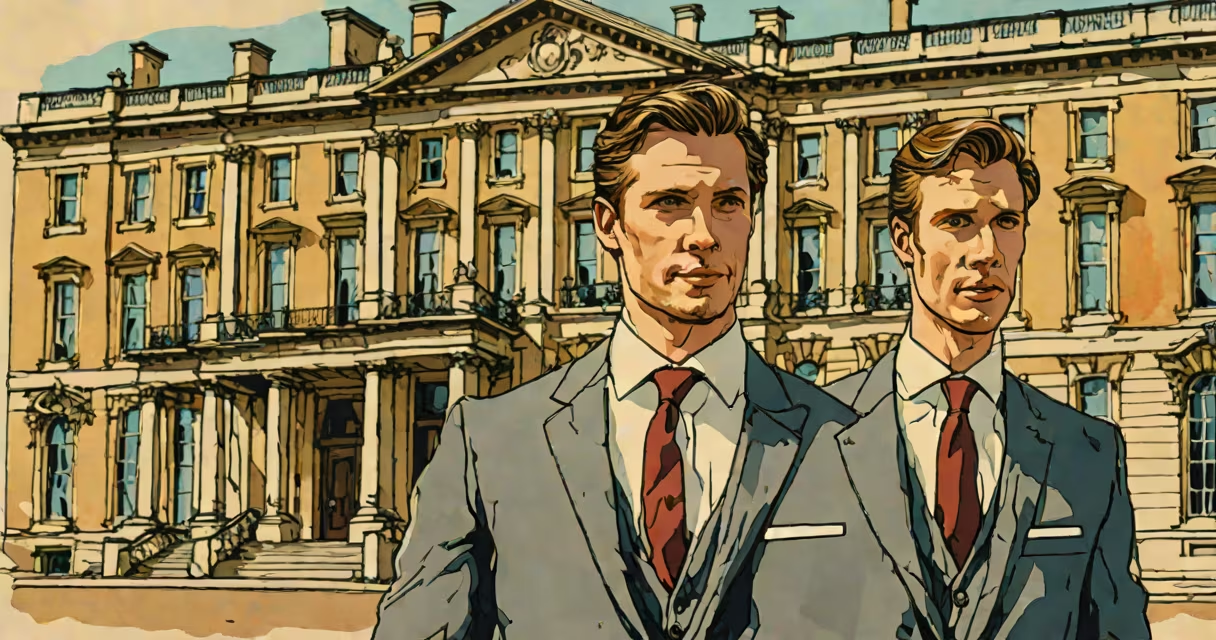
Sebastian Croft is a British actor known for portraying young versions of historical and fictional figures in major television series, most as Prince Charles in "The Crown" and as Uhtred's younger brother in "The Last Kingdom."
Croft began his acting career in 2016 with minor roles in British dramas. His breakthrough came in 2017 when he was cast as the teenage Prince Charles in the fourth season of "The Crown," a role that required him to embody the future king during a period of personal and political upheaval. He appeared in 10 episodes across two seasons, delivering a performance praised for its emotional restraint and authenticity.
His portrayal of young Charles was not a biographical recreation but a dramatized interpretation based on available records and interviews. The show's writers consulted historians and royal archives to ensure accuracy in dialogue and context, though character motivations were adapted for narrative flow. Croft's performance stood out for its understated intensity, particularly in scenes involving Charles's strained relationship with Princess Margaret and his growing awareness of public duty.
Croft's career centers on period dramas and fantasy epics that demand emotional nuance and physical maturity beyond his years. His performances are shaped by detailed preparation, including studying archival footage and working closely with dialect coaches to match the British upper-class accent of the 1970s and early 1980s.
The following table outlines his major television appearances:
| Title | Role | Network/Platform | Seasons | Episodes |
|---|---|---|---|---|
| "The Crown" | Prince Charles (young) | Netflix | 4, 5 | 10 |
| "The Last Kingdom" | Æthelwulf (younger brother of Uhtred) | BBC Two / Netflix | 4, 5 | 8 |
| "The Serpent" | Young Michael (supporting role) | BBC One / BBC iPlayer | 1 | 2 |
In "The Last Kingdom," Croft played Æthelwulf, a Saxon nobleman whose loyalty is tested during the Viking invasions of England. His character appears in Season 4 and 5, contributing to the show's exploration of identity, faith, and war. Unlike his role in "The Crown," where he portrayed a real historical figure, Æthelwulf is a fictional character created for the series. Nevertheless, Croft drew on research into Anglo-Saxon society and military life to ground his performance in historical plausibility.
A non-obvious distinction: Croft did not play the adult version of any character he portrayed as a youth. This choice reflects a deliberate casting strategy by producers to maintain continuity between different stages of a character's life. For example, in "The Crown," the adult Prince Charles was played by Josh O'Connor, who took over the role in Season 5. Croft's performance was specifically designed to represent Charles's formative years, not a smooth transition into adulthood.
Both "The Crown" and "The Last Kingdom" are produced under strict historical and narrative guidelines. "The Crown" uses a combination of archival material, royal correspondence, and interviews with former aides to inform its scripts. The production team at Netflix commissioned custom costumes and set designs to replicate 1970s British architecture and fashion. Croft wore period-accurate suits tailored to fit his frame, with details such as lapel pins and tie clips verified by costume supervisors.
For "The Last Kingdom," the production team collaborated with medieval historians and archaeologists to ensure authenticity. Croft trained in sword handling and horseback riding for his role, spending weeks at the show's filming base in Northern Ireland. The series' fight choreography was developed with input from fencing instructors and combat experts. His performance in a key battle scene-where Æthelwulf leads a small group against a Viking raiding party-was filmed using handheld cameras and natural lighting to improve realism.
One fully worked example: In Season 4, Episode 6 of "The Last Kingdom," titled "The King's Son," Croft's character delivers a monologue about honor and survival during a siege. The scene was shot in a single take across a 90-second sequence, requiring precise timing and emotional delivery. According to the show's director, the decision to film it in one continuous shot was made to emphasize the psychological pressure faced by young soldiers in wartime. Croft completed the take on the third attempt, with minimal retakes due to consistent performance.
Many viewers assume Croft played Prince Charles throughout "The Crown," but he only appeared in Seasons 4 and 5. The character's timeline spans, and Croft's portrayal covers roughly 1975 to 1981. The show's creators chose to age the character through casting rather than visual effects, which helped maintain audience immersion.
Another misconception is that Croft's roles are limited to historical dramas. While his most recognized work is in period pieces, he has also appeared in contemporary settings. In "The Serpent," a crime thriller about the serial killer Dennis Nilsen, Croft played a young man who encounters the suspect in a London flat. His performance was described by critics as "quietly unsettling," highlighting his ability to convey tension without overt expression.
I first saw Croft in a theater production of "King Lear" at the National Theatre in 2015, where he played Cordelia's son-a minor role in a large ensemble. Even then, his focus and vocal clarity stood out. When I later watched him in "The Crown," I recognized the same precision in delivery, even though the medium had changed dramatically.
All of Croft's major television roles are available on streaming platforms. "The Crown" is accessible on Netflix globally. "The Last Kingdom" is available on both Netflix and BBC iPlayer, with full seasons released in 2019 and 2020. "The Serpent" streams on BBC iPlayer and is also available on Amazon Prime Video in select regions.
Sebastian Croft TV shows remain a benchmark for young actor performances in high-stakes historical narratives. His work continues to influence casting decisions in period dramas, where authenticity and emotional truth are prioritized over star power.