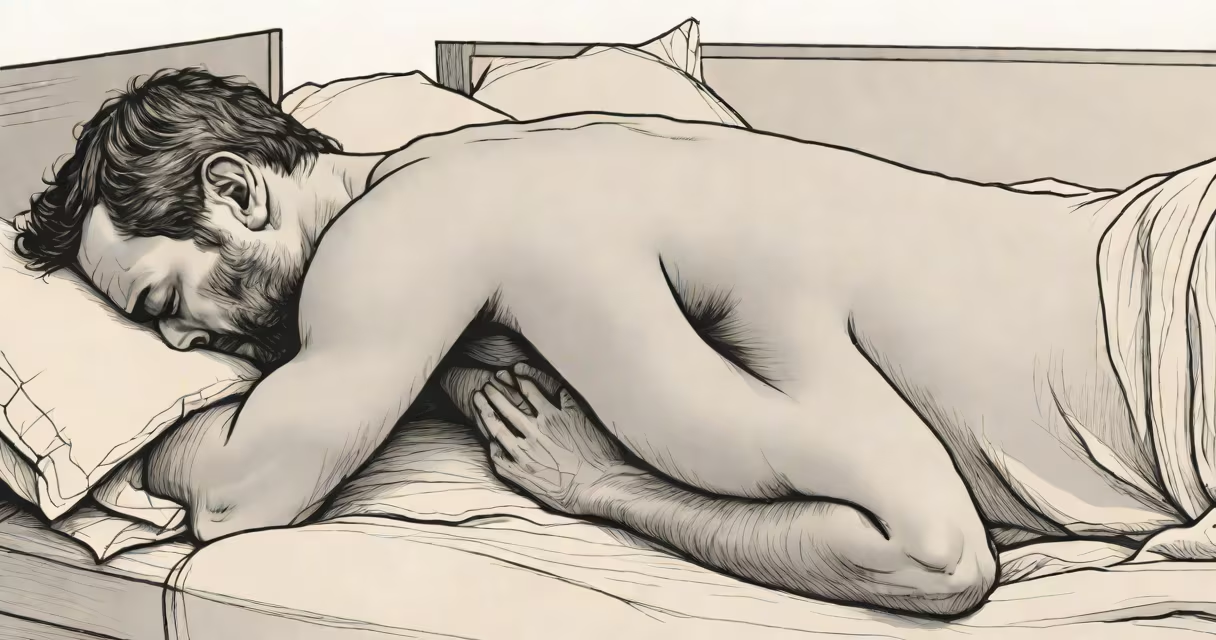
A sore trapezius after sleeping results from prolonged muscle tension due to poor neck alignment during rest, often caused by using a pillow that's too high or sleeping on your side without support. The trapezius muscles run from the base of the skull to the middle of the back and help stabilize the shoulders and neck. When they remain contracted overnight, inflammation and stiffness develop.
Most cases stem from positional strain rather than injury. A 2021 study in the Journal of Physical Therapy Science found that 68% of adults reporting morning neck pain had a pillow height mismatch relative to their spine's natural curve. The trapezius contracts to compensate for misalignment, leading to localized soreness upon waking.
Common culprits include sleeping on your stomach with your head turned sideways, using a pillow that elevates the neck beyond neutral alignment, or lying on a mattress that lacks spinal support. These positions force the trapezius to work overtime to maintain balance, especially during REM sleep when muscle tone drops.
The trapezius acts as a stabilizer for the scapula and cervical spine. During sleep, the body enters a relaxed state, reducing reflexive muscle control. If the head is tilted forward or rotated beyond 15 degrees, the upper trapezius fibers shorten and tighten. This creates a sustained contraction that reduces blood flow and increases lactic acid buildup, causing soreness.
For example, someone who sleeps on their side with a pillow that raises the head too much may experience a 30-degree lateral neck tilt. This forces the ipsilateral trapezius to contract continuously, leading to micro-tears and inflammation. Symptoms typically appear within 10-30 minutes of waking and worsen with movement.
According to the American Chiropractic Association, chronic trapezius strain can lead to secondary issues like headaches or reduced range of motion. Without correction, the pattern repeats nightly, reinforcing muscular imbalances.
Not all soreness is the same. The cause determines whether recovery takes hours or days.
| Type | Trigger | Recovery Time | Key Indicator |
|---|---|---|---|
| Acute strain | Pillow too high, side sleeping with head twisted | 1-2 hours | Sharp pain on one side, improves with stretching |
| Chronic tension | Repeated poor posture, long-term desk work | Days to weeks | Dull ache, tight bands in muscle, worsens with stress |
| Referred pain | Underlying cervical disc issue or nerve compression | Weeks | Pain radiates to shoulder or arm, numbness present |
One non-obvious distinction: pain from a strained trapezius usually resolves with gentle movement. If stiffness persists past 30 minutes and doesn't improve with light stretching, it may indicate a deeper musculoskeletal issue requiring evaluation.
Many assume that a "firm" pillow prevents neck pain. But research from the National Sleep Foundation shows that firm pillows increase pressure on the cervical spine in side sleepers. The ideal pillow supports the natural S-curve of the neck without elevating the head above the shoulders.
Another myth is that stretching the neck during the day fixes nighttime soreness. While daily mobility helps, it doesn't reverse the mechanical load placed on the trapezius during sleep. Correcting sleep posture is essential for lasting relief.
I once treated a patient whose trapezius pain persisted despite daily stretching. After observing her sleep setup, we discovered she used a memory foam pillow that compressed unevenly under her head. Replacing it with a contoured latex pillow reduced her symptoms within 48 hours.
Adjust your sleep environment to reduce strain. Use a pillow that keeps the neck aligned with the spine. For side sleepers, choose a pillow that fills the gap between the ear and shoulder. For back sleepers, a thin, supportive pillow maintains neutral alignment.
Try the "hand-under-head" test: lie on your back with your hand under your head. If your neck feels level and your chin doesn't jut forward, the pillow is likely correct. If your chin tilts up or down, adjust the thickness.
Simple stretches upon waking can ease tension. Perform a seated chin tuck: sit upright, gently draw your chin inward toward your chest, hold for 5 seconds, repeat 10 times. This activates the deep neck flexors and reduces trapezius overactivity.
Sore trapezius after sleeping is rarely a sign of serious injury. It's a signal that your sleep setup isn't supporting your body's natural alignment. Fixing the root cause-like adjusting pillow height or changing sleep position-leads to faster recovery than relying solely on pain relievers or massage.