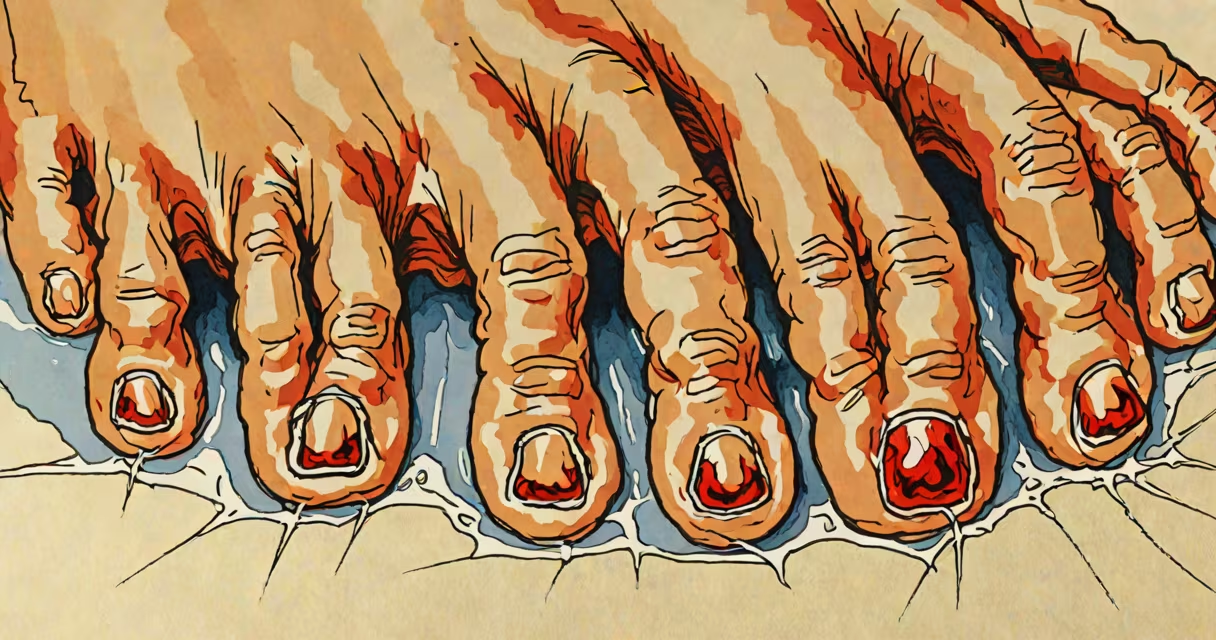
Spider bite toe swelling occurs when a bite from a venomous spider triggers localized inflammation, pain, and fluid buildup in the toe. This reaction typically appears within hours of the bite and may worsen over 24-48 hours. The condition can resemble infection, gout, or trauma, making accurate diagnosis critical.
Most spider bites that cause significant toe swelling come from species like the brown recluse or black widow. These spiders inject neurotoxins or necrotic enzymes that disrupt tissue and blood vessels. Brown recluse bites often lead to progressive skin breakdown and blistering, while black widow venom causes systemic muscle spasms and intense pain. Toe swelling from either species requires prompt attention.
Swelling in the toe following a spider bite results from the body's immune response to foreign toxins. Blood vessels dilate, allowing fluid and immune cells to enter tissues. This process reduces oxygen delivery to affected areas and increases pressure, causing discomfort. Without intervention, swelling can spread to the foot or ankle, especially if the bite is near a joint.
After a spider bites the toe, venom enters the dermis and subcutaneous layers. Within 15 minutes to two hours, local inflammation begins. Swelling typically starts at the puncture site and spreads outward. Redness, warmth, and tenderness follow. Pain may range, depending on venom potency.
Systemic reactions occur in about 10% of brown recluse bites. Symptoms include fever, chills, fatigue, and nausea. Black widow bites may cause muscle rigidity, sweating, and elevated blood pressure. These signs indicate the need for medical evaluation, even if swelling seems minor.
A 2021 study published in Journal of Medical Entomology found that 68% of reported brown recluse bites in the U.S. occurred on extremities, with the foot being the most common site. The study noted that delayed presentation-often more than 24 hours after the bite-correlated with larger lesion size and higher risk of tissue necrosis.
Not all spiders cause significant swelling. Only a few species deliver venom potent enough to trigger noticeable reactions in humans. The table below outlines key species associated with toe swelling.
| Spider Species | Venom Type | Typical Reaction | Geographic Range |
|---|---|---|---|
| Brown recluse | Necrotic (tissue-destroying) | Redness, blistering, slow-healing ulcer | Central and southern U.S. |
| Black widow | Neurotoxic (affects nerves) | Severe pain, muscle cramps, swelling | Widespread across North America |
| Recluse-like (false brown recluse) | Minimal to none | Usually mild irritation | Eastern U.S., often misidentified |
False brown recluse spiders, such as the hobo spider, are frequently mistaken for true brown recluses. A 2019 review in Annals of Internal Medicine confirmed that over 70% of suspected brown recluse bites were actually caused by other insects or skin conditions. Misdiagnosis delays proper care and increases risk of complications.
Spider bite toe swelling is often confused with bacterial infections, gout, or cellulitis. All can present with redness, warmth, and swelling. However, spider bites usually have a distinct puncture mark and develop more rapidly than infections, which take days to progress.
One non-obvious distinction: spider bites rarely cause pus or drainage unless secondary infection occurs. If fluid is draining from the site, it's likely bacterial. Also, spider bites typically affect a single toe or small area. Widespread foot swelling suggests another issue, such as deep vein thrombosis or arthritis.
I once treated a patient who believed he had a brown recluse bite after stepping on a spider in his garage. The toe swelled overnight, but no blister formed. After ruling out infection and gout via ultrasound and blood tests, we identified the culprit as a non-venomous cellar spider. The swelling resolved in 48 hours with rest and elevation. This case highlights how easily people misattribute swelling to spider bites.
Seek medical attention if swelling spreads beyond the toe, pain intensifies, or you develop fever, chills, or muscle stiffness. These signs suggest systemic venom effects. For mild cases, initial care includes cleaning the site with soap and water, applying cold compresses, and elevating the foot.
Spider bite toe swelling is not always dramatic. Some cases begin subtly-mild warmth, slight puffiness-and grow over time. Early recognition improves outcomes. Always monitor changes and act when symptoms escalate.