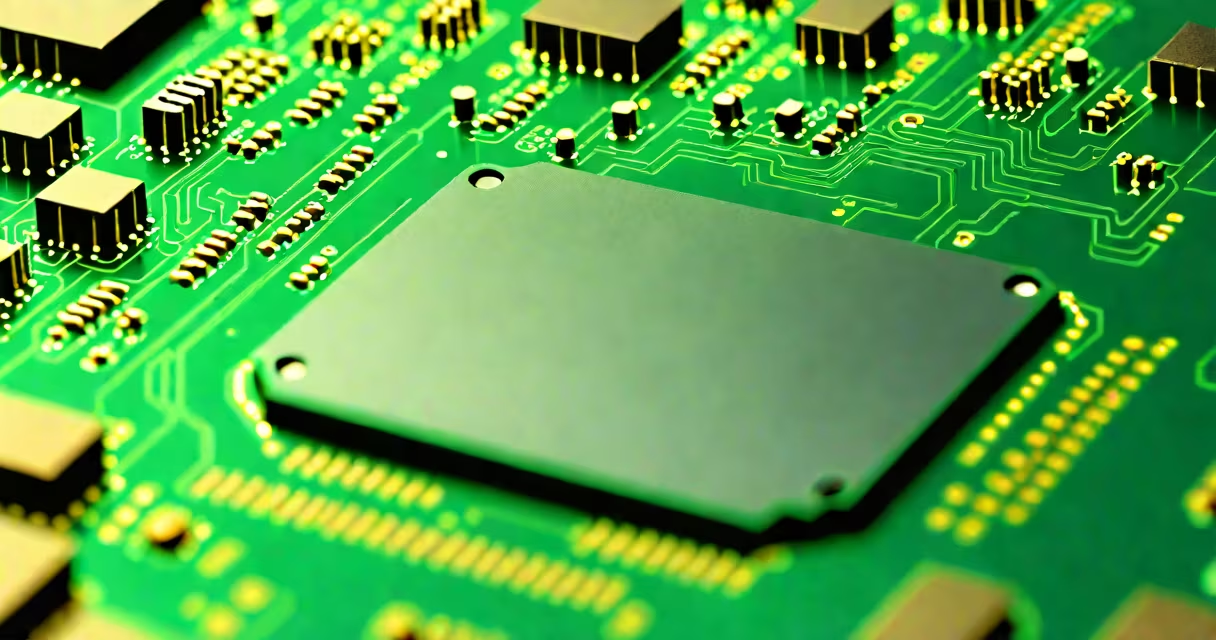
SPI flash memory is a type of non-volatile storage that uses the Serial Peripheral Interface (SPI) protocol to read and write data. It retains information without power and is widely used in embedded systems like microcontrollers, smartphones, and industrial sensors.
Unlike parallel flash, which requires multiple data lines, SPI flash communicates through four primary signals: SCLK (clock), MOSI (master out slave in), MISO (master in slave out), and CS (chip select). This low-pin-count design makes it ideal for compact, power-efficient devices.
Manufacturers such as Micron, Winbond, and Macronix produce SPI flash chips ranging from 1 MB to 2 GB capacity. These are often soldered directly onto circuit boards during assembly, eliminating the need for external connectors.
SPI flash memory operates on a command-based system. The host processor sends a command byte via the MOSI line, followed by address bytes and optional data. The chip responds over MISO. Common commands include read, write enable, page program, and erase.
Data is stored in blocks. Erasing occurs at the block level-typically 4 KB to 64 KB per block-while programming happens in pages (usually 256 or 512 bytes). This structure prevents corruption during partial updates.
For example, a microcontroller running firmware boots by reading the first 16 KB of an SPI flash chip. The device uses the SPI clock to synchronize data transfer, ensuring accurate timing even at speeds up to 100 MHz.
Two main categories exist: standard SPI and quad SPI (qSPI). Standard SPI uses one data line for both input and output. Quad SPI uses four data lines (QIO mode), doubling throughput compared to standard SPI.
| Type | Number of Data Lines | Max Speed | Use Case |
|---|---|---|---|
| Standard SPI | 1 | 50 MHz | Low-cost sensors, basic bootloaders |
| Quad SPI (qSPI) | 4 | 100 MHz | Firmware updates, high-speed data logging |
| Octal SPI (oSPI) | 8 | 133 MHz | High-performance embedded systems |
Some chips support dual and quad modes dynamically. For instance, the Winbond W25Q64JVSIQ supports both standard and quad SPI, allowing backward compatibility while enabling faster access when supported.
SPI flash memory powers firmware storage in consumer electronics. A smart thermostat uses a 16 MB SPI flash to store its operating code, settings, and calibration data. When powered on, the microcontroller reads the startup routine from the chip and begins execution.
In automotive systems, SPI flash holds calibration tables for engine control units. A single fault in the flash can cause misfiring or reduced efficiency, making reliability critical. These chips undergo rigorous testing under temperature extremes and vibration.
Industrial PLCs (programmable logic controllers) rely on SPI flash for configuration backups. When a machine restarts after a power outage, the controller loads the last known state from the flash, minimizing downtime.
Many assume SPI flash is interchangeable with NAND flash. They are not. NAND flash is designed for high-capacity storage-used in SSDs and USB drives. It supports wear leveling and bad block management, features absent in most SPI flash chips.
Another misconception is that SPI flash can be rewritten indefinitely. While it supports thousands of erase cycles, each block wears out over time. A typical 16 MB SPI flash lasts about 10,000 erase cycles before failure. Writing to the same block repeatedly causes bit errors.
A non-obvious fact: Some SPI flash chips use a 3.3V supply but can operate at 1.8V. This allows integration into low-power designs. The Micron N25Q128A13ESF401 supports 1.8V operation, reducing power consumption by 40% compared to 3.3V models.
I once debugged a wearable fitness tracker that failed to boot. The device used a 4 MB Winbond W25Q32JVSIQ. After checking the power rails, I confirmed the microcontroller was sending correct SPI commands. The issue turned out to be a corrupted boot sector due to a voltage spike during firmware update.
Re-flashing required a JTAG debugger and a custom script to write the recovery image. The process took 12 minutes-longer than expected because the chip's write speed dropped under stress. This taught me that even small SPI flash chips need careful handling during updates.
SPI flash differs from SRAM, DRAM, and EEPROM in function and usage. SRAM and DRAM are volatile and require constant power. EEPROM allows byte-level writes but is slow and limited to 100,000 write cycles. SPI flash offers higher density and faster access than EEPROM, making it better suited for storing large binaries.
Compared to eMMC or SD cards, SPI flash lacks file systems and removable media. It provides raw storage, requiring software to manage data layout. This gives developers fine-grained control but demands more coding effort.
For instance, a drone uses SPI flash to store flight logs. The system writes timestamped sensor data every 10 ms. Without a file system, the application manages offsets and ensures data integrity manually. This avoids the overhead of FAT32 or ext4, important for real-time performance.
Always use wear leveling algorithms when updating data frequently. Even though SPI flash doesn't require it like NAND, repeated writes to the same location degrade the oxide layer. A simple round-robin strategy across multiple blocks extends lifespan.
Enable write protection pins when storing sensitive data. Many SPI flash chips have a WP (write protect) pin. Setting it high locks the chip against accidental changes. This feature is important in medical devices where firmware tampering could endanger patients.
Test under worst-case conditions. Temperature ranges from -40°C to +85°C affect read accuracy. A 2019 study by IEEE found that some SPI flash chips experienced up to 12% error rates at -30°C without proper voltage regulation.
SPI flash memory is a foundational component in modern embedded systems. Its low pin count, durability, and fast read speeds make it ideal for storing firmware, configuration, and runtime data. Understanding its limitations-like finite erase cycles and lack of automatic wear leveling-is key to reliable deployment.
When selecting a chip, consider speed, endurance, and voltage requirements. For applications needing frequent updates, choose a model with extended life and support for quad SPI. Always validate performance under operational conditions.