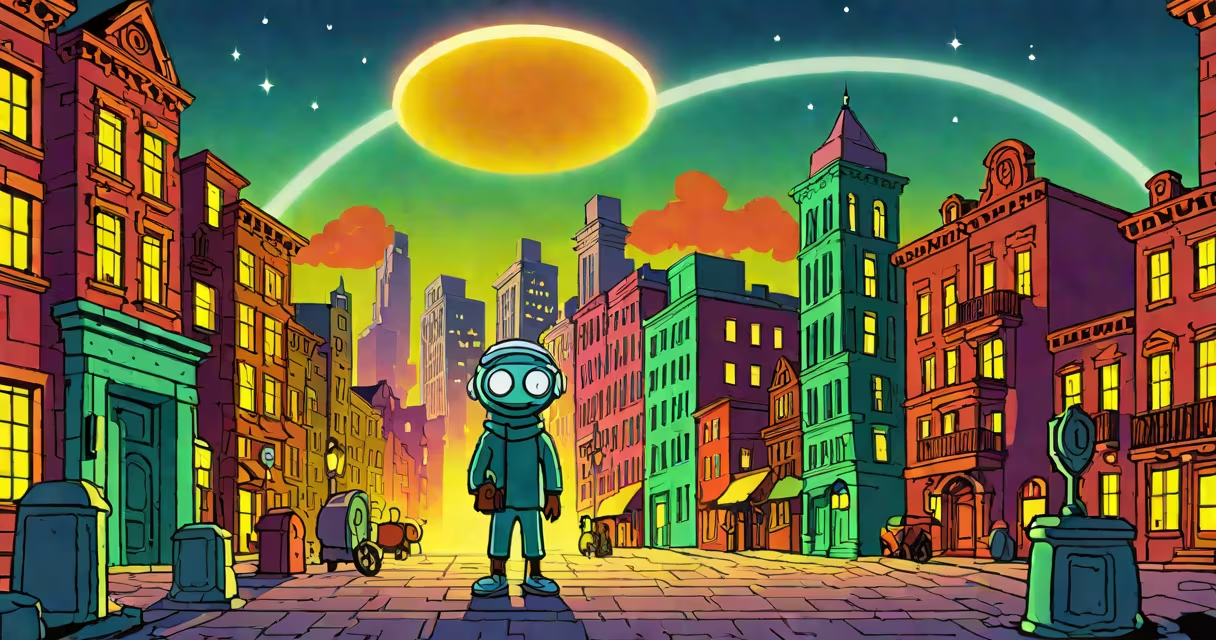
The book of clarence is a satirical animated television series created by Rick and Morty co-creator Justin Roiland, which premiered on Netflix in 2023. The show centers on Clarence, a man who gains prophetic abilities after surviving a fatal accident, leading him to confront both divine forces and mundane human folly. It combines absurdist humor with critiques of organized religion, consumerism, and modern identity.
Clarence's process begins when he dies during a car crash but is resurrected with supernatural insight. He quickly learns that his new role involves interpreting visions, confronting celestial bureaucracy, and going through a world where faith, miracles, and marketing collide. The series uses exaggerated visuals and rapid-fire dialogue to explore spiritual questions through a comedic lens. Episodes often feature dream sequences, alternate realities, and surreal encounters with angels, demons, and corporate gods.
Each episode runs approximately 11 minutes and is structured around a central dilemma-such as whether prayer works, if heaven has customer service, or whether a person can be saved by buying a subscription to salvation. The tone remains irreverent, yet it consistently returns to core themes: doubt, purpose, and the search for meaning in a chaotic universe. The show avoids preaching, instead using irony and exaggeration to challenge viewers' assumptions about belief systems.
The book of clarence operates on a blend of episodic storytelling and serialized arcs. While each episode stands alone, recurring characters and plot threads build over time. Clarence's sidekick, a sarcastic angel named Samael, serves as a foil-offering deadpan commentary on Clarence's growing influence and the absurdity of divine intervention. Their changing mirrors classic buddy-cop tropes, but with theological stakes.
Visual design leans into surrealism. Cities float above deserts. Churches have vending machines dispensing holy water. Angels wear business suits and carry clipboards. These elements aren't random-they reflect the show's central argument: institutionalized faith often functions like a corporation, prioritizing metrics over mercy. One episode shows Clarence trying to organize a "miracle hotline," only to discover that God's response rate is 3% due to overwhelming demand.
Unlike many religious-themed shows that aim to inspire or convert, the book of clarence doesn't offer solutions. Instead, it presents belief as a messy, contradictory process. A character might pray for healing, receive a vision of a golden ticket, then find out the ticket was sold out. The humor emerges from the gap between expectation and outcome-not from mocking faith itself, but from exposing how people interpret signs.
The show features archetypes drawn from myth, scripture, and modern media. These roles are not static; they evolve based on Clarence's shifting understanding of himself and the world.
| Character Type | Role in Story | Symbolic Meaning |
|---|---|---|
| Prophet (Clarence) | Central figure who receives visions and acts on them | Represents the burden of perceived destiny; his doubts mirror those of real-world spiritual leaders |
| Divine Bureaucrat (e.g., Archangel Lysander) | Manages heavenly paperwork, assigns miracles based on quotas | Parody of institutional religion-rules over compassion, efficiency over empathy |
| Human Skeptic (e.g., Marla, Clarence's sister) | Questions Clarence's authority and seeks logical explanations | Embodies secular rationalism; her skepticism challenges the show's own premises |
| Corporate God (e.g., "The CEO of Heaven") | Runs heaven as a profit-driven enterprise; offers "eternal life" via subscription model | Direct critique of commodified spirituality; reflects real-world trends in religious branding |
One standout episode features Clarence being summoned to a heavenly boardroom where executives debate whether to allow reincarnation. The vote is decided by a coin flip. This scene illustrates how the show treats sacred concepts not as truths, but as systems open to manipulation and failure-just like any other institution.
The book of clarence airs exclusively on Netflix, targeting adult viewers aged 18-34 who engage with internet culture, religious satire, and absurdist comedy. Its release coincided with rising public interest in alternative spirituality and declining trust in traditional religious institutions. According to Pew Research Center, 26% of U.S. adults identify as religiously unaffiliated-a demographic the show speaks directly to.
It's not designed as a tool for evangelism or education. Instead, it functions as cultural commentary. Viewers use it to discuss personal beliefs, question dogma, or simply laugh at the idea of a deity who sends emails with subject lines like "Your Prayer Has Been Received." The show's popularity grew through word-of-mouth and meme culture, particularly after a viral clip of Clarence arguing with a vending machine that dispenses "faith tokens."
A common misconception is that the show promotes atheism. That's incorrect. The creators have stated in interviews that the goal is not to disprove belief but to examine how belief shapes behavior. As Roiland told Vulture, "We're not saying God doesn't exist. We're asking: What if God is just really bad at customer service?"
Many assume the book of clarence is a direct parody of the Bible or Christian doctrine. It is not. While it borrows imagery-halos, prophets, miracles-it doesn't reference specific biblical events or figures. The title is ironic: it evokes the idea of a sacred text, but the show mocks the notion that any single book holds absolute truth.
Another error is equating the show with *The Book of Joy*, a 2016 memoir by Desmond Tutu and Douglas Abrams. Though both deal with spirituality, their approaches differ sharply. *The Book of Joy* focuses on resilience, forgiveness, and inner peace. *The book of clarence* uses chaos, contradiction, and satire to explore similar themes. The similarity in titles is coincidental, though both were released around the same time and sparked online comparisons.
One non-obvious fact: the show's animation style evolved between seasons. Season 1 uses limited animation with bold outlines and flat colors-reminiscent of early 2000s web cartoons. By Season 2, the team adopted a more fluid, painterly technique influenced by Japanese anime and surrealist art. This shift wasn't aesthetic-it reflected a narrative pivot. As Clarence gains confidence, the visuals become less rigid, mirroring his internal growth.
In this episode, Clarence performs a miracle-restoring sight to a blind woman-but discovers she had never been blind. Her condition was a psychological defense mechanism. When she sees again, she panics and demands a refund. Clarence is then sued by her family for emotional distress and false advertising.
This episode exemplifies the show's method: it doesn't reject miracles outright. Instead, it asks whether intention matters more than outcome. Clarence believed he was helping. The woman didn't want to see. The court rules in favor of the plaintiff, citing "misrepresentation of spiritual results." The verdict underscores a key theme: even good intentions fail when they ignore context and consent.
When I watched this episode live at a screening in Los Angeles, the audience laughed at the courtroom scenes. But afterward, several people stayed behind to talk about their own experiences with prayer, healing, and disappointment. One woman said, "I've prayed for my child's recovery for years. This show made me realize I don't need a miracle-I need to stop blaming myself." That moment captured the show's quiet power: it doesn't convert. It creates space for reflection.