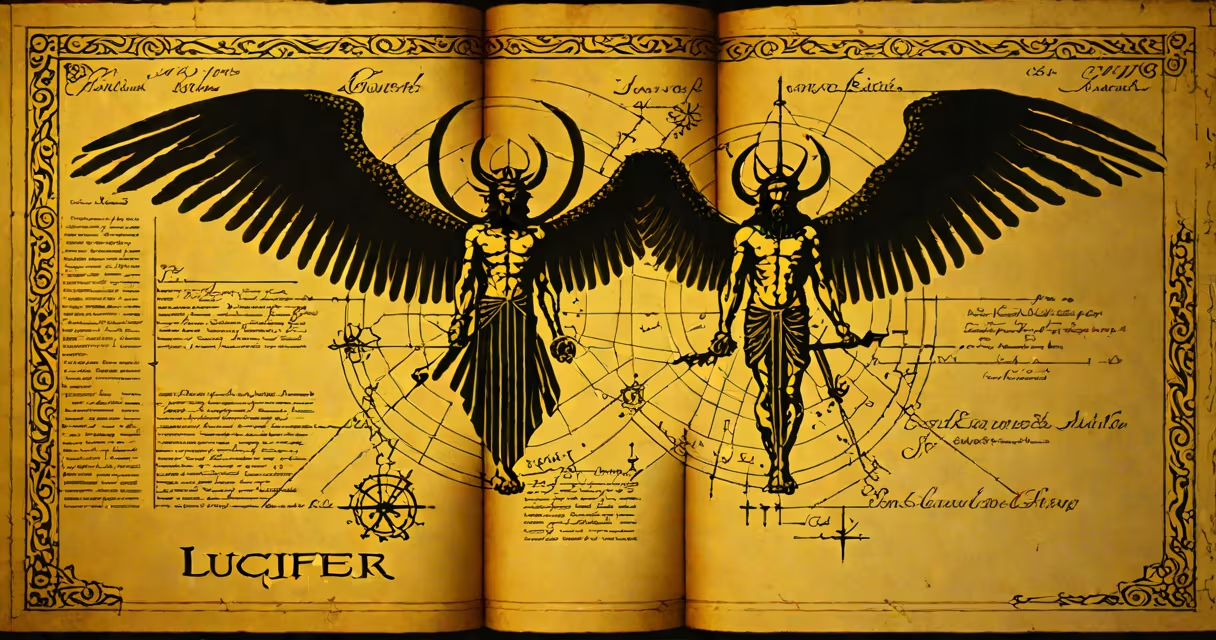
The term "lucifer" originates from the Latin Vulgate translation of Isaiah 14:12, where it describes the fallen king of Babylon as "morning star" or "light-bringer." It was never a proper name for Satan in early Christian tradition, though later interpretations conflated the two.
Latin scholar Jerome rendered the Hebrew word helel in Isaiah 14:12 as "lucifer," meaning "light-bearer" or "morning star." This was a poetic reference to the planet Venus at dawn. The passage condemns the pride of a human ruler, not a supernatural being. The connection between this verse and Satan emerged centuries later through theological interpretation, not biblical text.
Modern usage often treats "Lucifer" as a personal name for the Devil, especially in literature and media. But in its original context, the term had no association with evil or rebellion. The confusion stems from misreading a metaphor about human arrogance as a narrative about a celestial being's fall.
Early Church Fathers like Augustine and Ambrose interpreted Isaiah 14:12 allegorically, applying it to Satan's fall. This reinterpretation gained traction during the Middle Ages. By the time of Dante's *Inferno* (c. 1300), Lucifer was depicted as a monstrous figure frozen in ice-symbolizing ultimate damnation.
Reformation theologians such as John Calvin rejected the idea that Lucifer was a personal name. Calvin's commentary on Isaiah explicitly states that the passage refers to a historical king, not a spiritual entity. He wrote: "The prophet speaks of a man who exalted himself above all others."
Despite this, the name "Lucifer" became entrenched in Western culture. The 19th-century Romantic movement portrayed him as a tragic rebel, inspiring works like Milton's *Paradise Lost*. In that poem, Lucifer is a complex figure whose ambition leads to downfall-a literary creation, not a doctrinal claim.
"Lucifer" is a Latin compound: lux (light) + ferre (to bring). It literally means "light-bringer." The same root appears in "luciferous" (producing light) and "luminous." The term was used in classical Latin for Venus in its morning appearance.
Hebrew scripture uses the word *helel*, which means "shining one" or "morning star." The Septuagint (Greek translation) rendered it as *phōsphoros*, the same word used in Jude 1:13 for "morning star." This term later influenced the Latin Vulgate's choice of "lucifer."
Modern translations avoid equating the verse with Satan. The New Revised Standard Version says: "How you are thrown down to the earth, you who once laid low the nations!" The NIV reads: "How you have fallen from heaven, O morning star, son of the dawn!" The phrase "son of the dawn" reflects the Hebrew *ben shahar*, not a name.
| Textual Source | Original Language | Translation in Context | Interpretive Use |
|---|---|---|---|
| Isaiah 14:12 | Hebrew (*helel*) | "O morning star, son of the dawn" | Metaphor for a proud king |
| Isaiah 14:12 | Greek (Septuagint) | *phōsphoros* | "Light-bringer" - applied to Venus |
| Isaiah 14:12 | Latin (Vulgate) | *lucifer* | "Morning star" - later associated with Satan |
Many assume "Lucifer" is a biblical name for Satan. This is incorrect. The Bible never calls Satan "Lucifer." The name appears only once in the Latin Bible, and even then, it refers to a human ruler's hubris.
A key error is treating Isaiah 14:12 as a direct account of Satan's fall. The chapter is a taunt against the king of Babylon, using cosmic imagery to mock his arrogance. The lines "I will ascend to heaven... I will make myself like the Most High" reflect human pride, not angelic rebellion.
Another misconception is that Lucifer is a synonym for the Devil in all traditions. Catholic doctrine, as affirmed by the Catechism of the Catholic Church (§390), identifies Satan as a created spirit who fell due to sin-not as a being named Lucifer. The term remains a descriptive title, not a proper name.
In 2018, a Vatican document clarified that the term "Lucifer" should not be used in liturgical settings to refer to Satan. The Congregation for Divine Worship and the Discipline of the Sacraments stated: "The term 'Lucifer' is not a name but a title derived from a poetic image."
I observed this in practice during a parish retreat in Rome. A priest explained the difference between the original Hebrew context and later Latin interpretations. When asked why "Lucifer" appeared in hymns, he replied: "Because the Latin version shaped how people heard it-but we must return to the original intent."
Even in modern pop culture, the term persists in fiction. The TV series *Lucifer* (2016-2021) portrays the character as a charming, rebellious archangel. While entertaining, it reflects a mythological construct, not a scriptural one. The show's creators acknowledged this in interviews, stating they were drawing from literary tradition, not biblical authority.
Confusing "Lucifer" with Satan distorts the message of Isaiah. The chapter condemns human pride, not divine rebellion. It warns against leaders who seek power beyond their station. This theme echoes throughout prophetic literature: "Pride goes before destruction" (Proverbs 16:18).
Understanding the meaning of lucifer requires distinguishing between literal text and interpretive tradition. The Hebrew prophets spoke of earthly rulers, not fallen angels. Their warnings remain relevant: power unchecked leads to ruin.
The meaning of lucifer lies in its origin: a poetic title for a morning star, not a name for the Devil. Its process from Hebrew poetry to Latin translation to modern myth reveals how language shapes belief-and why precision matters.