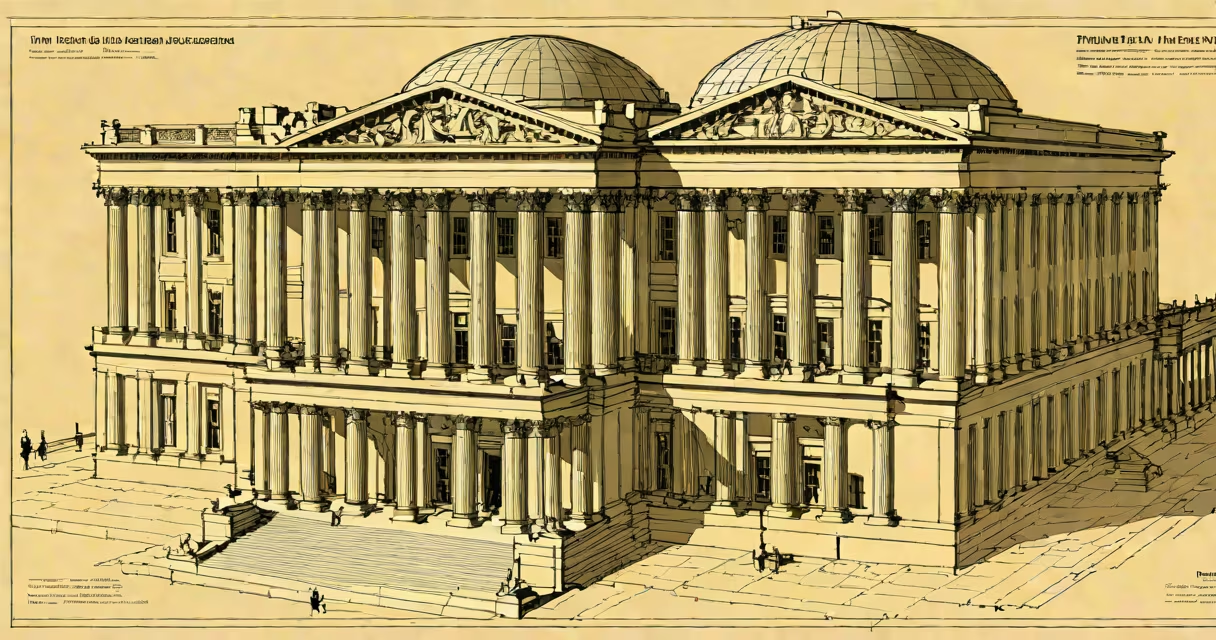
The national museum is a public institution designated by a country's government to collect, preserve, and display artifacts, artworks, and historical materials of national significance. These institutions serve as repositories of cultural memory, often housing collections that reflect a nation's heritage, scientific achievements, and artistic expression.
Each national museum operates under a governance structure that includes curators, conservators, educators, and administrative staff. Collections are accessioned through donations, purchases, archaeological excavations, or government transfers. Items undergo cataloging, conservation, and metadata tagging to ensure long-term preservation and accessibility.
Exhibitions are developed through research-driven planning. A team of subject experts, designers, and outreach coordinators collaborate to create immersive experiences. For example, the National Museum of African American History and Culture in Washington, D.C., uses oral histories, personal artifacts, and interactive displays to convey narratives of resilience and achievement.
Digitization efforts have expanded access. The U.S. National Archives' online portal provides high-resolution scans of documents held in national repositories. The British Museum's online collection database features over 4.5 million records, allowing global users to explore items like the Rosetta Stone or ancient Greek vases.
National museums fall into thematic categories based on their focus areas. The following table outlines major types and representative institutions:
| Type | Focus Area | Example Institutions |
|---|---|---|
| Art | Visual arts, sculpture, decorative arts | National Gallery of Art (Washington, D.C.), Musée du Louvre (Paris) |
| History | National events, political movements, military history | National Museum of American History (Smithsonian), Museo Nacional de Historia (Mexico City) |
| Science & Nature | Biology, geology, space exploration | Smithsonian National Museum of Natural History, National Museum of Science and Industry (London) |
| Cultural Heritage | Indigenous traditions, ethnography, language | National Museum of the American Indian (Smithsonian), National Museum of Ethnology (Osaka) |
Some nations maintain multiple national museums under a single umbrella. Canada's National Museums are managed by the Canadian Museum of History, the Canadian War Museum, and the National Gallery of Canada-all operating under federal oversight. In contrast, smaller countries may designate a single national museum to cover all disciplines, such as the National Museum of Finland in Helsinki.
Many assume that "national museum" implies ownership of all national treasures. This is incorrect. Ownership of significant artifacts often remains with the originating communities or countries. The Elgin Marbles, removed from Greece in the early 19th century and housed in the British Museum, remain a contested example of repatriation debates.
Another misconception is that national museums are static archives. In reality, they are changing spaces. The National Museum of African American History and Culture reopened in 2016 after a decade of construction and continues to update exhibits based on new scholarship and community input. Its "Slavery and Freedom" gallery was revised in 2022 to include recently uncovered testimonies from formerly enslaved people.
A lesser-known fact: many national museums rely on temporary loans and partnerships to rotate exhibits. The Metropolitan Museum of Art in New York, while not a national museum, collaborates with institutions like the National Museum of China to host rotating exhibitions on Tang dynasty ceramics. This model allows broader access to rare materials without permanent transfer.
In 2019, the National Museum of the American Indian hosted a traveling exhibition titled "Native American Voices: Stories from the Land." The exhibit featured 120 artifacts collected from 32 tribes across North America. Each piece was accompanied by audio recordings of elders sharing oral histories in native languages, including Navajo, Ojibwe, and Hawaiian.
One artifact-a 19th-century Lakota war shirt-was displayed alongside a video interview with a descendant who described its spiritual significance. The museum partnered with tribal councils to ensure cultural accuracy and ethical presentation. Attendance increased by 47% compared to previous years, according to internal reports.
"National museum" is not synonymous with "museum of national importance." The latter is a classification used in some countries to denote institutions with special funding or legal status. In the UK, the term "national museum" applies broadly to institutions like the Victoria and Albert Museum, while "museum of national importance" is a formal designation granted by Parliament.
Also, not all national museums are located in capital cities. The National Museum of Scotland in Edinburgh serves as the country's primary cultural institution despite being outside London. Similarly, the National Museum of the American Indian has branches in Washington, D.C., and New York City, reflecting regional engagement.
Finally, the term "national museum" does not imply exclusivity. Many countries allow international collaborations. The Louvre Abu Dhabi, opened in 2017, is a joint venture between France and the UAE. While not a national museum in the traditional sense, it functions similarly by showcasing global art and history under a shared cultural mandate.
The national museum is a living archive of a nation's past, present, and future. It combines preservation, education, and public engagement to make complex histories accessible. Whether through a fossilized dinosaur bone or a handwritten letter from a civil rights activist, these institutions connect individuals to collective memory. Their role extends beyond display-they shape how societies understand themselves.