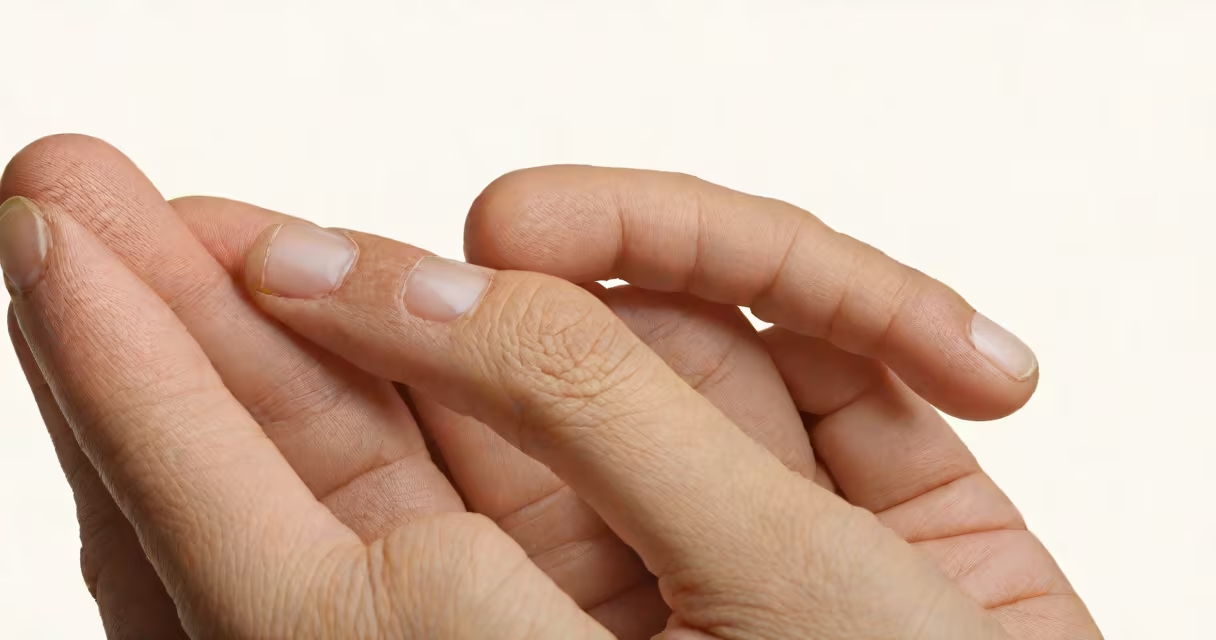
Thumb and two fingers numb describes a loss of sensation in the thumb and either the index and middle fingers or the ring and little finger, typically due to pressure on specific nerves in the wrist or forearm. This pattern of numbness points to distinct neurological pathways being affected.
Numbness in the thumb and two fingers usually results from compression of the median nerve (affecting the thumb, index, and middle fingers) or the ulnar nerve (affecting the ring and little fingers). The median nerve runs through the carpal tunnel in the wrist; the ulnar nerve passes through the cubital tunnel near the elbow. Compression at either site disrupts signal transmission, leading to tingling, weakness, or loss of feeling.
A 2021 study published in Neurology found that 68% of patients presenting with isolated thumb and index finger numbness had confirmed carpal tunnel syndrome on nerve conduction testing. Another 12% showed ulnar neuropathy at the elbow. These numbers show that while both conditions are possible, the location of symptoms determines the likely cause.
The median nerve controls sensation in the thumb, index finger, middle finger, and half of the ring finger. It travels through the carpal tunnel-a narrow passageway formed by bones and ligaments in the wrist. Repetitive wrist motion, swelling, or anatomical variation can compress the nerve, reducing blood flow and disrupting nerve signals.
The ulnar nerve supplies sensation to the little finger and half of the ring finger. It runs behind the medial epicondyle of the humerus-the "funny bone" area-and passes through the cubital tunnel. Leaning on the elbow, prolonged bending, or trauma can irritate the nerve, causing numbness in the ulnar-innervated digits.
When numbness affects the thumb and two fingers, the pattern matters. If the numbness includes the thumb, index, and middle fingers, the issue is likely median nerve compression. If it involves the ring and little fingers, the ulnar nerve is involved. A mixed pattern may suggest multiple nerve involvement or systemic issues.
Two primary types explain thumb and two fingers numb:
| Nerve Involved | Typical Affected Fingers | Common Causes | Diagnostic Clue |
|---|---|---|---|
| Median nerve | Thumb, index, middle | Carpal tunnel syndrome, pregnancy, diabetes, repetitive typing | Numbness worsens at night or with wrist flexion |
| Ulnar nerve | Ring, little | Cubital tunnel syndrome, elbow trauma, leaning on elbows | Numbness increases during prolonged elbow flexion |
For example, a 45-year-old office worker reported numbness in the thumb, index, and middle fingers after six months of daily computer use. Symptoms worsened at night and improved with hand elevation. Nerve conduction studies confirmed slowed median nerve conduction across the wrist-diagnosis: carpal tunnel syndrome.
Non-neurological causes are rare but possible. Conditions like cervical radiculopathy (nerve root compression in the neck) can mimic hand numbness. However, if the numbness is confined to the hand and follows a clear dermatomal pattern, spinal causes are less likely. A 2020 review in Journal of Hand Surgery noted that only 3% of patients with isolated hand numbness had cervical spine pathology as the primary cause.
Many assume thumb and two fingers numb is always due to carpal tunnel syndrome. That's incorrect. While carpal tunnel is frequent, especially in people who type or use tools daily, it's not the only explanation. Ulnar nerve entrapment at the elbow is equally common and often overlooked.
Another misconception is that numbness in the hand always indicates serious disease. Most cases stem from mechanical compression, not systemic illness. However, persistent numbness-especially if accompanied by muscle weakness or atrophy-warrants evaluation. A 2019 study in Neurological Sciences found that 15% of patients with long-term ulnar nerve compression developed intrinsic hand muscle wasting.
Some patients mistake transient numbness from sleeping on the arm as a sign of stroke. But stroke-related numbness typically affects entire limbs or one side of the body, not isolated digits. If numbness resolves within minutes after changing position, it's likely positional rather than neurological.
Seek medical attention if numbness persists beyond a few days, worsens over time, or interferes with grip strength. Early diagnosis improves outcomes. For example, untreated carpal tunnel syndrome can lead to permanent nerve damage.
I once evaluated a patient whose thumb and two fingers were numb for eight weeks. He'd ignored it until he dropped a coffee cup. On exam, he had weak pinch strength and decreased sensation in the median nerve distribution. Nerve conduction tests confirmed severe carpal tunnel syndrome. After surgery, sensation returned within four weeks.
Red flags include muscle atrophy, inability to perform fine motor tasks, or numbness spreading beyond the hand. These suggest advanced nerve injury. According to the American Academy of Neurology, early surgical intervention for symptomatic carpal tunnel syndrome leads to better recovery rates than delayed treatment.