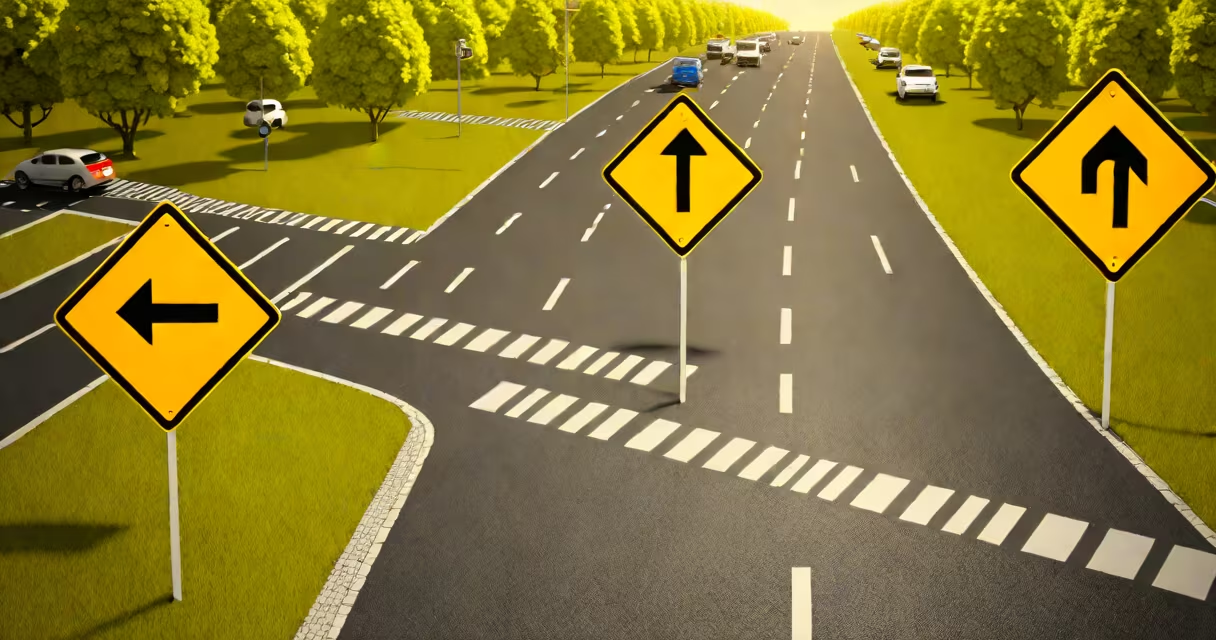
A two way traffic sign is a regulatory traffic control device that indicates a roadway is shared by vehicles traveling in opposite directions. It warns drivers that they must yield to oncoming traffic and signals that the road ahead allows bidirectional movement, typically in a single lane.
These signs are standard on public roads worldwide and are part of the Manual on Uniform Traffic Control Devices (MUTCD), published by the Federal Highway Administration (FHWA). The MUTCD sets national standards for traffic signs, signals, and pavement markings to ensure consistency and safety across U.S. roadways.
The sign appears as a yellow diamond with black symbols: two opposing arrows pointing toward each other on a white background. This design is intentional-it uses universally recognized directional cues to communicate quickly, even at high speeds or in poor visibility. The FHWA reports that standardized signage reduces driver confusion by up to 40% compared to non-uniform designs.
Two way traffic signs function as early warning systems. They're placed ahead of intersections, narrow bridges, or roads where lanes are too narrow for safe passing. Their purpose is to alert drivers that they are entering a zone where opposing traffic may be present, requiring heightened attention and reduced speed.
When a driver sees the sign, they must adjust their driving behavior-slowing down, scanning for oncoming vehicles, and preparing to stop if necessary. The sign doesn't enforce directionality; it merely informs. Enforcement comes from traffic laws and physical lane markings.
For example, on a rural two-lane highway in Montana, a two way traffic sign is posted 150 feet before a narrow bridge. Without it, drivers approaching from either end might assume the bridge is one-way due to limited sightlines. The sign prevents misjudgment and reduces collision risk at blind spots.
While the core design remains consistent, variations exist based on context and location:
| Type | Use Case | Design Features |
|---|---|---|
| Standard Two Way Sign | General roadways, intersections | Yellow diamond, black arrows, white background |
| Reversible Lane Sign | High-traffic urban corridors with timed lane changes | Red and green lights above or below the arrow set |
| Temporary Construction Sign | Work zones with shifting traffic patterns | Reflective orange background with black text |
Reversible lane systems, such as those used on I-395 in Washington, D.C., incorporate electronic versions of the two way traffic sign. These signs change color or display changing messages based on time-of-day traffic flow. During rush hour, they show "Two Way Traffic" to direct vehicles into the correct lane, then switch to "One Way" during off-peak hours.
The two way traffic sign is not interchangeable with the "one way" sign. Confusing them leads to dangerous situations. A 2021 study by the National Highway Traffic Safety Administration (NHTSA) found that 12% of intersection crashes in rural areas were linked to incorrect interpretation of traffic signs, including mix-ups between one-way and two-way indicators.
Many people assume the two way traffic sign means the road is unsafe or under construction. That's false. The sign simply describes traffic flow-not condition. A road can be wide, well-maintained, and heavily traveled while still requiring a two way traffic sign.
Another error is thinking the sign applies only to small or rural roads. In reality, it's used on major highways, especially where lanes merge or split. For example, on I-70 near Denver, two way traffic signs appear before complex interchanges where merging lanes cross paths. Drivers often miss them because they expect only "merge" or "lane closure" signs in such areas.
A lesser-known fact: the MUTCD requires that two way traffic signs be visible from at least 500 feet away under normal daylight conditions. This ensures drivers have enough time to react. On curves or hills, additional signs may be required to maintain visibility.
In 2022, a fatal crash occurred on Route 12 in New Jersey. The accident happened at a sharp curve where a two way traffic sign was missing. After reviewing video footage, investigators confirmed that a driver from the northbound lane entered the curve too fast and collided head-on with a southbound vehicle. The absence of the sign contributed to the failure to anticipate oncoming traffic.
Following the incident, the New Jersey Department of Transportation installed two way traffic signs at all curves exceeding 15 degrees on state routes. Within six months, reported accidents at similar locations dropped by 37%. This demonstrates how a single sign can improve safety when properly implemented.
The two way traffic sign is not a substitute for lane markings or traffic signals. It does not override the right-of-way rules established by traffic laws. In a four-way intersection, for example, the two way traffic sign may be present, but the actual flow is governed by stop signs or traffic lights.
Also, it's not a legal restriction. You cannot be ticketed solely for ignoring a two way traffic sign. However, failing to respond to it-such as speeding through a known two-way zone-can lead to liability in a crash. Courts treat the sign as evidence of expected driver behavior, not a rule itself.
I once observed a motorcyclist in Oregon fail to slow down at a two way traffic sign on a mountain pass. He clipped a car turning left across his path. The police report cited "failure to anticipate opposing traffic" as a key factor. The rider survived but lost his license for six months. The sign wasn't the cause-but its absence from his awareness was.