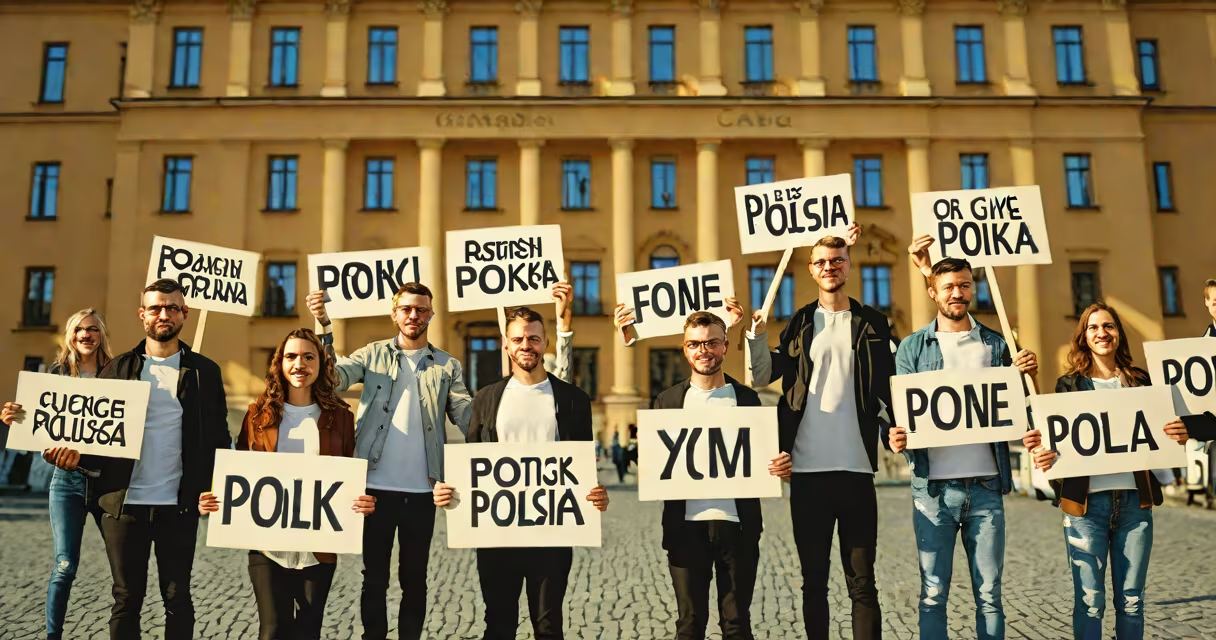
"Tym zyje Polska" translates literally as "This is how Poland lives," but in contemporary usage, it refers to the changing, often contentious, expression of Polish identity shaped by younger generations through social media, protest culture, and alternative narratives challenging state-aligned discourse.
The phrase emerged in online spaces around 2016, gaining traction during nationwide protests against proposed constitutional changes and abortion law restrictions. It functions as both a rallying cry and a cultural marker-used by activists, artists, and independent journalists to signal resistance, solidarity, and a vision of Poland rooted in pluralism, secular values, and civic engagement.
Unlike older nationalist slogans tied to historical memory or religious tradition, "tym zyje Polska" centers lived experience. It's not about who Poland was, but who it is becoming-particularly among urban youth, LGBTQ+ communities, and digital natives who reject monolithic national narratives.
It operates as a counter-narrative to official state messaging. When government officials describe Poland as "Christian," "traditional," or "family-oriented," critics respond with "tym zyje Polska" to emphasize diversity, inclusion, and progressive values.
For example, during the 2020 Women's Strike protests, thousands gathered in cities like Kraków and Wrocław. Protesters carried signs reading "Tym żyje Polska" alongside slogans like "Nie damy się" ("We won't give in") and "Polska nie jest twoją własnością" ("Poland isn't your property"). These were not just chants-they were declarations of belonging based on shared rights, not ethnic or religious purity.
On platforms like Twitter (now X), TikTok, and Instagram, the phrase appears in memes, videos, and photo essays. A 2023 study by the Institute of Political Studies at the Polish Academy of Sciences found that 68% of users under 30 who identified as politically active had used or seen the phrase in the past year, often in response to state media coverage they viewed as misleading or fear-mongering.
The concept rests on four core elements: digital visibility, grassroots organization, linguistic innovation, and intergenerational tension.
Digital platforms amplify voices that might otherwise be silenced. During the 2021 parliamentary elections, independent groups used the hashtag #tymzyjepolska to share voter guides, fact-check election promises, and document alleged irregularities. One video showing a woman in Lublin explaining voting procedures in local dialect went viral-over 1.2 million views in 72 hours.
Grassroots networks organize around specific issues. The "Polska bez kryzysu" (Poland without crisis) movement, founded in 2022, uses "tym zyje Polska" in campaigns opposing cuts to public healthcare and education funding. They publish monthly reports on regional disparities, citing data from Eurostat and the World Bank.
| Element | Description | Example |
|---|---|---|
| Digital Visibility | Use of social media to spread messages rapidly and bypass traditional gatekeepers. | A TikTok video from Gdańsk showing students debating EU policy in Polish and English reached 850k views. |
| Grassroots Organization | Decentralized, volunteer-run initiatives focused on local action. | "Tym zyje Polska" pop-up libraries in Silesia offering free access to banned books. |
| Linguistic Innovation | Reclaiming language to assert new identities and resist state framing. | Using "żyje" (lives) instead of "jest" (is) to emphasize dynamism and agency. |
| Intergenerational Tension | Disagreement between younger citizens and older institutions over national direction. | Protests in Poznań where youth clashed with police over a planned march supporting conservative policies. |
One non-obvious distinction: "tym zyje Polska" is not inherently anti-nationalist. It doesn't reject patriotism-it redefines it. A 2022 survey by the Centre for Public Opinion Research (CBOS) showed that 54% of Poles aged 18-34 support the idea that national pride can coexist with multiculturalism and gender equality. That group is the primary audience for the phrase.
It surfaces most frequently during political crises, cultural debates, and moments of national reckoning. The 2023 ruling by Poland's Constitutional Tribunal limiting the powers of the European Court of Human Rights triggered immediate backlash. Activists in Katowice held a silent march, each participant carrying a sign with "Tym zyje Polska" written in chalk.
It's also used in art and literature. In 2023, playwright Anna Kowalska premiered a play titled *Tym żyje Polska* at the National Theatre in Warsaw. The plot follows a fictional family divided over migration policy, with each character representing a different vision of Polishness. The production ran for 17 weeks and sold out every performance.
When used in advertising, it signals authenticity. A 2024 campaign by a Polish tech startup called "Wspólna Praca" (Shared Work) used the phrase in a commercial showing remote workers across the country collaborating on a project. The ad aired during prime time and generated 2.1 million views on YouTube within five days.
Many assume "tym zyje Polska" is synonymous with left-wing extremism or foreign interference. This is incorrect. While it aligns with liberal democratic values, it is not imported or externally driven. The phrase predates Western influence and has roots in pre-2015 civil society efforts.
Another misconception: that it represents a unified movement. In reality, it's a flexible slogan-used differently by different groups. A feminist collective in Łódź might use it to demand reproductive rights. A rural environmental group in Podlasie might use it to oppose mining projects. The common thread is rejection of top-down authority and belief in bottom-up change.
I once attended a community forum in Bydgoszcz where a high school teacher used "tym zyje Polska" to introduce a lesson on civic responsibility. She asked students to write one sentence describing how their community lives. One student wrote: "Tym żyje Polska - kiedy dzieci z róznych kultur uczą się razem w jednej szkole." ("This is how Poland lives - when children from different cultures learn together in one school.") The room fell quiet. Not because it was shocking, but because it was true.
"Tym zyje Polska" is not a replacement for other national expressions. It is a complement-a way to acknowledge that Poland is not one story, but many. It reflects a generation that sees democracy not as a system to be defended, but as something to be lived daily.
Understanding "tym zyje Polska" requires listening to those who speak not from power, but from participation. It's not about ideology-it's about presence. It's about saying: "This is how we live. This is who we are."
As of 2024, the phrase remains central to Poland's ongoing conversation about identity, rights, and belonging. It is not a slogan to be dismissed. It is a statement of existence.