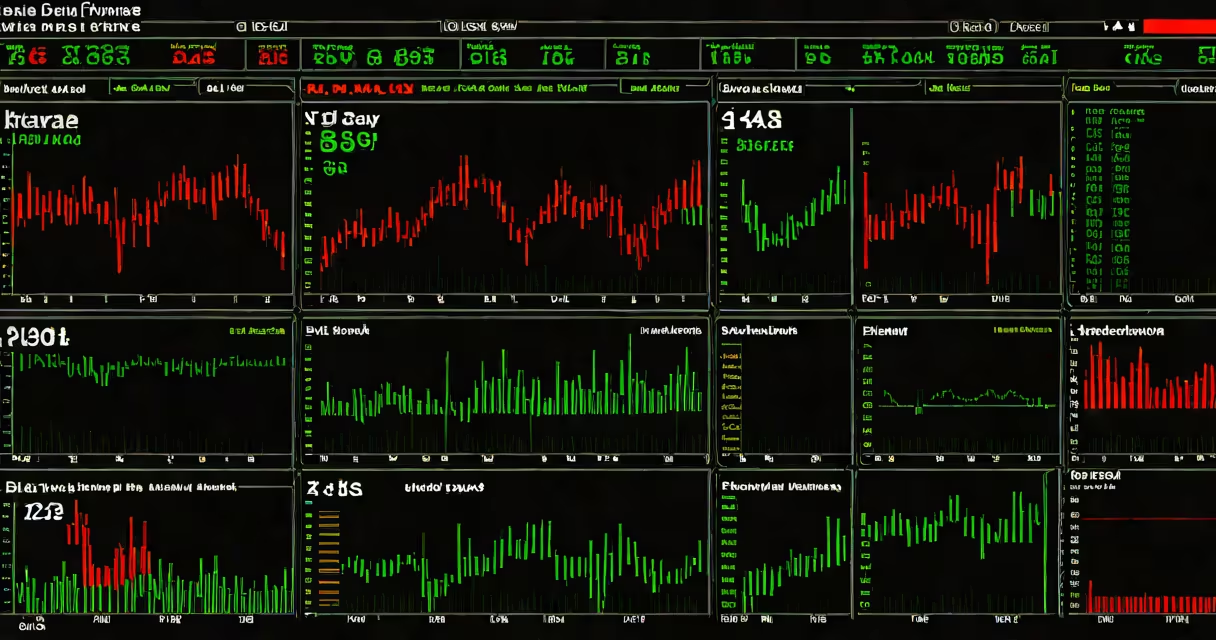
tuesday morning stock futures are contracts traded before the regular U.S. stock market opens that reflect investor expectations for the S&P 500, Dow Jones Industrial Average, and Nasdaq Composite indexes. These derivatives trade on exchanges like CME Group's Globex platform and provide insight into market sentiment before the open.
Futures prices are derived from supply and demand in electronic markets, often reacting to economic reports, geopolitical developments, or earnings from international markets. For example, if the U.S. jobs report shows stronger-than-expected employment numbers on Monday evening, Tuesday morning futures may open higher, signaling bullish momentum.
These contracts settle at the close of the regular trading session, but their values fluctuate throughout the pre-market hours. A 0.3% rise in S&P 500 futures at 7:00 AM ET typically indicates that investors expect the S&P 500 to open higher, though actual movement depends on volume and news during the first 30 minutes of trading.
Stock futures are standardized agreements to buy or sell a financial index at a set price on a future date. Unlike options, they obligate both parties to fulfill the contract. The most widely tracked are S&P 500 E-mini futures (ES), Dow Jones futures (YM), and Nasdaq-100 futures (NQ).
Trading begins at 6:00 PM ET Sunday and continues through Friday at 4:15 PM ET, with the most volatile periods occurring between 6:00 AM and 9:30 AM ET. During this window, futures prices adjust based on new information from overseas markets, central bank statements, or commodity shifts.
For instance, on May 14, 2024, the S&P 500 E-mini futures dropped 1.2% after a surprise inflation reading came in above forecasts. This move preceded a 1.1% decline in the S&P 500 at the open. The correlation between futures and the actual index is strong-historically, about 87% of days show directional alignment within the first 15 minutes of trading, according to research from the CME Group.
The three primary stock index futures are:
| Index | Contract Symbol | Multiplier | Used For |
|---|---|---|---|
| S&P 500 | ES | $50 per point | Tracking large-cap performance and broad market trends |
| Dow Jones Industrial Average | YM | $5 per point | Monitoring industrial and blue-chip stocks |
| Nasdaq-100 | NQ | $20 per point | Assessing tech-heavy sector momentum |
Traders use these contracts for hedging, speculation, and arbitrage. A portfolio manager holding $1 million in tech stocks might short 50 NQ futures contracts to offset potential losses if the Nasdaq declines. Conversely, a day trader might buy ES futures based on a positive earnings season preview.
A lesser-known fact: futures prices incorporate time value and interest rate differentials. The "cost of carry" includes interest earned on cash collateral and dividends expected from the underlying index. This factor can cause futures to trade at a premium or discount to the spot index. On average, S&P 500 futures trade at a 0.1% annualized premium due to this effect, per CME Group's 2023 market analysis.
Many assume that futures prices predict the day's market direction with certainty. That's incorrect. While futures often align with the open, reversals happen frequently. On January 3, 2023, S&P 500 futures rose 0.6% before the open, but the index closed down 0.4% after a surge in Treasury yields. The gap between futures and actual performance was driven by late-breaking data on consumer spending.
Another confusion is equating futures with individual stock movements. A 1% drop in Dow futures doesn't mean all 30 component stocks fall. Some may rise due to company-specific news. For example, in March 2024, Dow futures fell 0.8% on Tuesday morning, but Apple rose 1.2% after a product launch. The index level reflects weighted averages, not uniform movement.
Also, futures don't represent real ownership. Buying a futures contract doesn't give you shares in a company. It's a derivative tied to an index's value. You're betting on price changes, not dividends or voting rights.
On April 16, 2024, at 7:15 AM ET, S&P 500 E-mini futures were trading at 5,180. The S&P 500 spot index was at 5,175. This 5-point premium suggested mild optimism. Over the next 20 minutes, futures climbed to 5,185 as news broke that the Federal Reserve had paused rate hikes.
At 9:30 AM ET, the S&P 500 opened at 5,182. The difference between the futures price and the open was only 3 points-within normal range. But by 10:15 AM, the index dropped to 5,168 after a weak retail sales report. The initial futures signal held, but the market corrected quickly.
This example shows that while futures offer early insight, they are not infallible. Traders who acted solely on the 7:15 AM level missed the reversal. Successful strategies combine futures signals with real-time volume, news flow, and technical indicators.
I once monitored a portfolio using only futures signals during a volatile stretch in 2022. I saw a 1.5% drop in ES futures and sold my long positions. The market opened lower, but then reversed sharply after a Fed chair statement. I lost 3% on the day. Since then, I've layered in real-time news feeds and volatility filters before acting.
Stock futures differ from options, ETFs, and forward contracts. Options give the right-but not the obligation-to buy or sell at a set price. Futures require execution. ETFs track indices but trade like stocks on exchanges. Futures are traded on regulated derivatives platforms.
Unlike forwards, which are customized and privately negotiated, futures are standardized and cleared through central counterparties. This reduces counterparty risk. The CME Group guarantees settlement, meaning even if a broker defaults, the exchange covers losses.
For context, a 2023 study by the Securities and Exchange Commission found that 98% of futures trades settle without default. This reliability makes them essential tools for institutional investors managing billions in assets.
Understanding tuesday morning stock futures helps investors gauge market mood before the bell. They are not predictions, but early indicators shaped by global data, central bank policy, and investor behavior. Watching them gives an edge-but only when paired with real-time analysis.